Can finding a job after graduation really lead to New Zealand residence? Your complete guide to skilled migration, with real cases from a former immigration officer
YIJU has invited former immigration officer and experienced immigration lawyer Sonny Lam to explain, across three areas, how graduates can secure permanent residence in New Zealand through skilled migration. Keep this guide handy to help you avoid being misled.

Since New Zealand's major skilled migration reforms, many people hoping to stay through work have been left bewildered by information from agents, classmates and former students. The more they hear, the more confused they become. Rather than seeking help indiscriminately out of desperation, it is better to understand the immigration system yourself and actively identify professionals who can best support your path to residence.
This article is divided into 3 main sections:
1. The six-point system explained in detail: Understanding the immigration system in plain language.
2. How to avoid risks: Learning from real cases and the experiences of others.
3. Is this a reliable path to residence? Predictions and analysis from a former immigration officer.

Many of you will have heard of the six-point skilled migration system and know a little about it, but do you really understand the details?
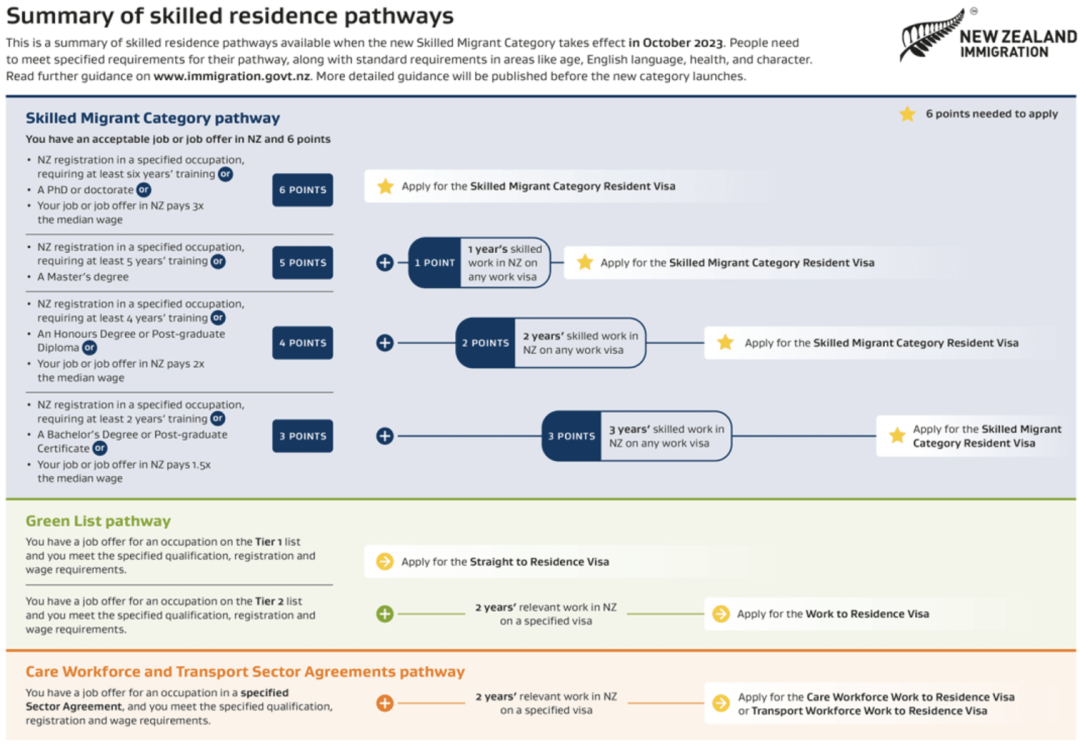
The six-point immigration system is a relatively simplified points system that officially took effect on 9 October 2023. Its central requirement is that applicants must accumulate 6 points to be eligible to apply for a resident visa.
How points are awarded
|
Points for qualifications: A level 7 qualification (bachelor's degree) earns 3 points; a level 8 qualification (bachelor's honours or postgraduate qualification) earns 4 points; a level 9 qualification (master's degree) earns 5 points; and a level 10 qualification (doctorate) earns 6 points.
Or
Points for income: The median wage earns 0 points; 1.5 times the median wage earns 3 points; 2 times the median wage earns 4 points; and 3 times the median wage earns 6 points.
And
Points for a current skilled job offer and work experience: Each year of skilled work in New Zealand earns 1 point.
Please also note that all skilled migration applicants must have a job in New Zealand with an accredited employer or a job offer from an accredited employer, and earn at least the median wage(applicants in ANZSCO skill level 4 or 5 roles must earn at least 1.5 times the median wage).
|
|
Tip: What are ANZSCO skill levels?
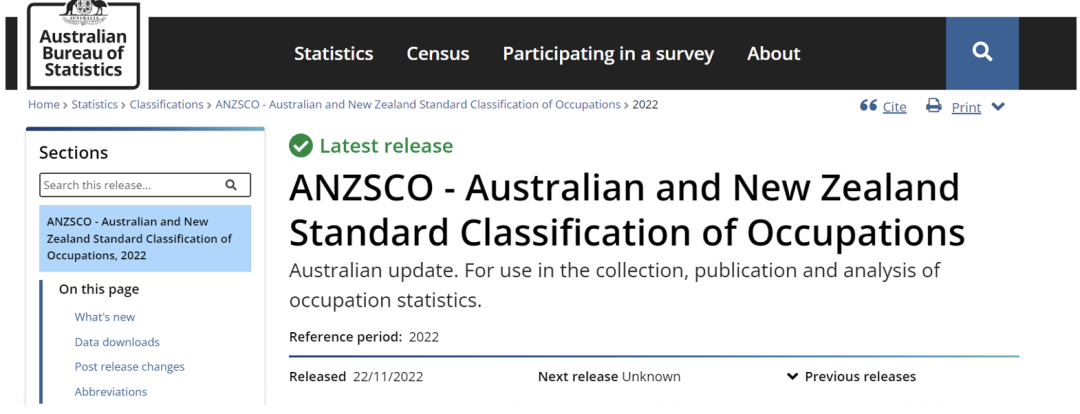
ANZSCO, the Australian and New Zealand Standard Classification of Occupations, was developed jointly by the Australian Bureau of Statistics (ABS) and Stats NZ. It is a hierarchical system that classifies occupations into 8 major groups. Each occupation is assigned a skill level reflecting the range and complexity of the tasks required to perform it.
To find out the wage level required for your job offer, search for keywords relating to your role on this webpage:
|
In addition to the points criteria above, applicants must meet a range of basic requirements, including age, English proficiency (IELTS 6.5 or equivalent), health and character checks. Current temporary visa holders whose visas expire while they are applying for a Skilled Migrant Category Resident Visa will receive a Skilled Migrant Category Interim Visa, allowing them to remain in New Zealand while their applications are processed.
The policy aims to simplify skilled migration applications and make pathways clearer, while attracting and retaining skilled people to fill New Zealand's skills shortages. However, simplifying the policy does not mean lowering standards. Compared with the previous system, the new 6-point system may make applications more challenging in some respects.
|
Tip: What is an accredited employer?
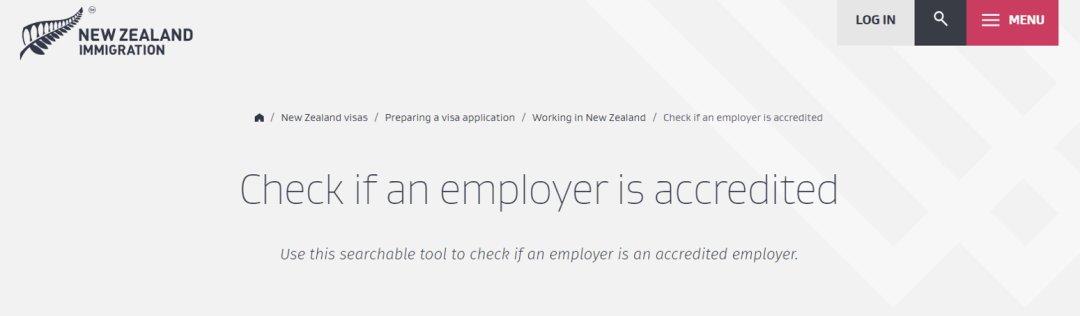
An accredited employer is an employer certified by a government department or relevant organisation as meeting specified standards and requirements, and able to provide overseas employees with a lawful, compliant working environment. This generally includes ensuring pay and working conditions comply with national law, being able to provide stable employment and, in some cases, supporting employees through the immigration application process.
Before accepting an offer, we recommend checking the Immigration New Zealand website to confirm that the employer is accredited:
|
Examples of the 6-point system:
Bob has a bachelor's degree in business. He finds an analyst job in Auckland paying $94k a year (1.5 times the median wage). Under the 6-point system, he can claim 3 points for his degree or 3 points for his salary. He can apply after working in New Zealand for 3 years, earning 3 points for New Zealand work experience to reach 6 points, with 3 points from his bachelor's degree or 3 points from earning 1.5 times the median wage.
Amy has a programming background but no formal degree. She receives an offer for a cybersecurity specialist role paying $190k a year (3 times the median wage). She can apply immediately because she already has 6 points: 6 points for earning 3 times the median wage.
Trevor is an executive chef earning $124k a year (2 times the median wage). He worked in New Zealand for two years, from 2021 to 2023. He can apply immediately because he already has 6 points: 4 for his salary and 2 for New Zealand work experience.
June has a master's degree. She can claim 5 points for her qualification and apply for residence after a year of skilled work in New Zealand.
These examples show that finding a qualifying job or holding a bachelor's or master's degree does not mean you can immediately begin a residence application. Unless your salary is more than 1.5 times the median wage, you will still need to accumulate points through work experience. While building up points for residence, you will probably need to apply for an Accredited Employer Work Visa (AEWV) if you do not hold another type of work visa. AEWVs last between 2 and 5 years, depending on your pay level.

During the skilled migration application process, the two main sources of worry and anxiety are:
1. Having the application declined;
2. Immigration New Zealand raising concerns about the applicant, such as issuing a concerns letter or conducting an interview.
Next, we examine these issues through real cases handled by immigration lawyer Sonny, showing how to avoid risks and secure residence more smoothly. Sonny has more than ten years of immigration litigation experience and has also served as an immigration officer. His cases offer a glimpse of how a lawyer who understands Immigration New Zealand's approach to processing applications can address specific concerns and resolve problems.
Case 1: Post Study Work Visas (PSWVs) after the pandemic
After three years of online classes, Jacky was finally able to come to New Zealand for his last semester and complete his studies on campus. However, Immigration New Zealand declined his PSWV application.
Reason for the decline: Under Immigration New Zealand's latest operational manual, graduates must have completed at least 30 weeks of full-time study in New Zealand to qualify for a PSWV.
Solution: Sonny recommended postponing graduation and enrolling in another course to extend the study period and meet the 30-week visa requirement. After enrolling in an additional elective, Jacky completed the required 30 weeks of full-time study and successfully obtained his PSWV.
Key point: Many recent graduates completed most of their studies online from China during the pandemic. If they now want to work in New Zealand, they must understand the specific requirements for certain visas. Graduating from a New Zealand university does not automatically qualify someone for a PSWV.
Case 2: How should you respond to a concerns letter during a residence application?
Ms Wang graduated from AUT with a bachelor's degree in hospitality management, then completed a master's degree in business. After graduation, she worked as a store manager at a tea drinks shop for two years before applying for residence. Following her application, she received a concerns letter from Immigration New Zealand, which subsequently interviewed both her and her employer by telephone.
Immigration New Zealand's reasoning: Ms Wang's duties did not meet ANZSCO's classification criteria for a retail manager and more closely resembled those of an ordinary supervisor.
The lawyer's approach: On taking the case, Sonny immediately requested access to Immigration New Zealand's internal processing records for the visa application. He found that the problem lay in the job overview in the cover letter: the agent's letter had not conveyed the importance of the role. Addressing INZ's concerns, Sonny explained the position in greater detail and set out why Ms Wang's role met the skilled migration requirements, providing the key supporting evidence. After receiving the submission, Immigration New Zealand agreed to reassess her application.
Key point: If the agent submitting an application lacks professional expertise and does not understand the classification requirements for the applicant's role, it is easy to encounter what feels like INZ 'making things difficult'. Seeking professional help and thoroughly understanding the requirements for your skilled migration role are therefore very important.


Anxiety and worry are inevitable during the long wait through the application process. What if the policy changes? If I no longer meet the new criteria, will I have to start all over again?
We put these questions to Sonny and asked him to draw on his extensive experience and immigration expertise to make some bold predictions, giving us an idea of where New Zealand immigration policy may be heading:

Sonny: There may be no changes for the next five years, rather than just in the short term. The current six-point system is simpler and more efficient, and has produced no negative feedback or outcomes during its year of operation. Immigration New Zealand therefore has no reason to change a system it has only just revised. Its workload has also increased substantially since the pandemic, so it is unlikely to create more work for itself by changing a system already proven to improve efficiency.

Sonny: The greater impact is likely to fall on business owners who already hold employer accreditation. Suspected exploitation of overseas workers under the AEWV scheme has made Immigration New Zealand aware that many accredited employers do not live up to that status. This could lead to employer audits and renewed investigations. For AEWV applicants, the main effect may be slower approvals as numerous investigations proceed. They should also be careful to choose a company with sound cash flow and normal operations.

Sonny: My advice is to apply promptly for a variation of visa conditions. Use the Immigration New Zealand website to apply to change your employer, role or work location. Try to find your next employer within 1–2 months, and make sure that the next accredited employer still has a Job Token available. Given the nature of work visas, an extended gap between jobs may prompt Immigration New Zealand to assess your genuine intentions in applying for a work visa, potentially affecting your next residence application. Of course, having concerns raised does not mean all is lost. Professional legal assistance can still help you seek reconsideration from Immigration New Zealand on the grounds of special circumstances.

Sonny:There is no provision for partner points, which means there is no shortcut to accumulating the work experience needed to reach 6 points. Working outside Auckland also earns no extra points, and Auckland's local economy is expected to benefit. I believe Auckland in particular will develop rapidly as its population density increases substantially, benefiting construction and the property market.
About the expert
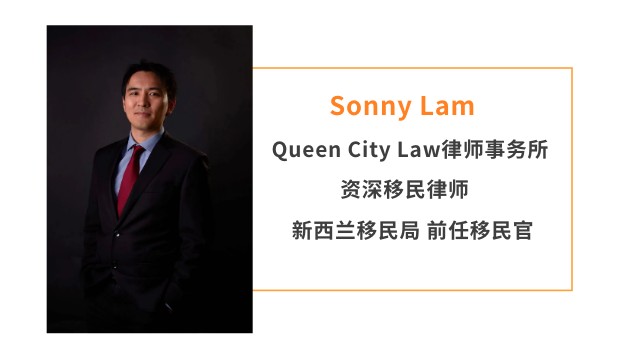
Sonny Lam is a consultant lawyer at Queen City Law. He has worked in employment and immigration since the last global financial crisis. He began in employment disputes, then became an immigration officer at the Ministry of Business, Innovation and Employment before returning to private practice in 2015. He specialises in niche areas of immigration and employment law. His clients range from major international businesses with New Zealand subsidiaries to individuals seeking to settle in New Zealand.
Scan the QR code to enquire about further information