
House prices nearly doubled in four years?! Revealed: Where in New Zealand have prices risen the most and least over the past four years?
Over the past four years following the COVID pandemic, New Zealand’s property market has experienced continual ups and downs.
Over the past four years following the COVID pandemic, New Zealand’s property market has experienced continual ups and downs. As the economy develops and the population grows, house prices across different areas continue to fluctuate. However, prices in some areas have risen far more than in others, attracting widespread attention and discussion.
The latest OneRoof figures show that most homeowners have still enjoyed healthy capital gains, even after New Zealand’s worst property market downturn in more than a decade. Property sales have steadily recovered since the downturn ended in June last year, allowing homeowners to retain most of the capital gains made during the post-pandemic housing boom. So which areas across the country have recorded the largest and smallest house price increases over the past four years? Let us take a closer look. Notably, the study excluded areas with fewer than 20 sales in the past 12 months.
Image
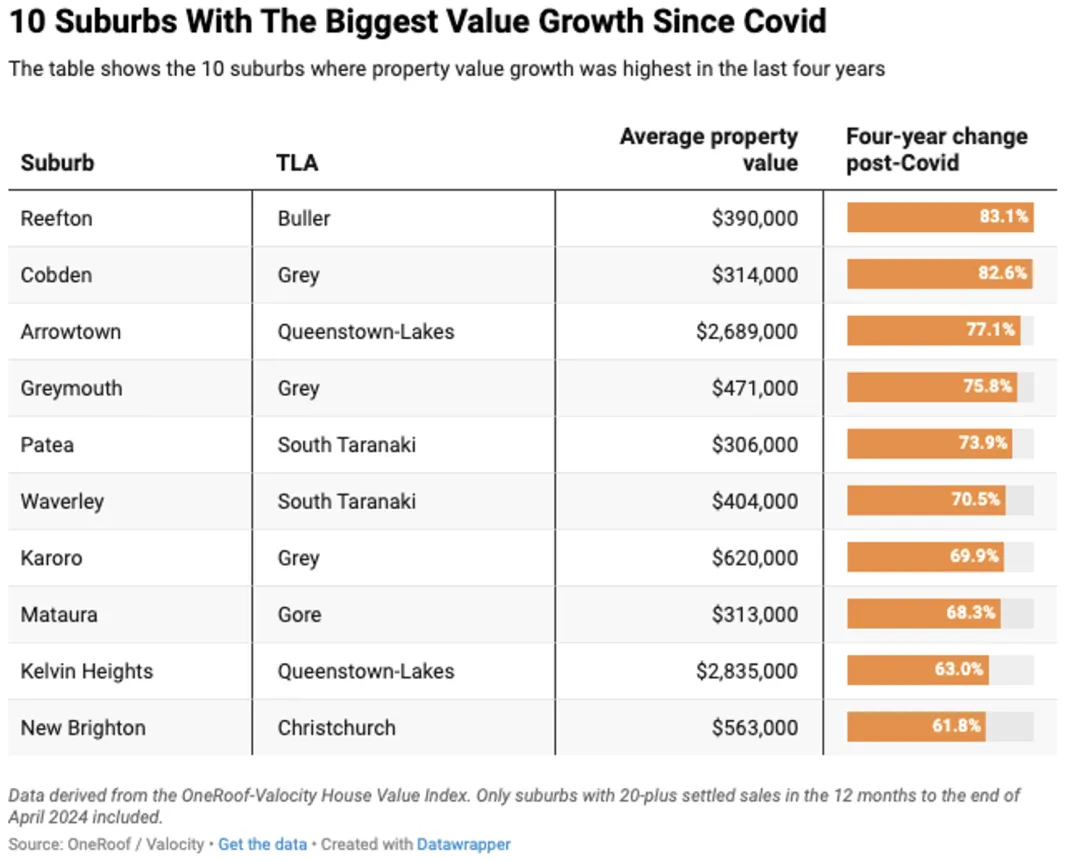
The top ten areas for house price growth in New Zealand over the past four years
(Source: OneRoof/Valocity)
By the end of April 2024, the national average property price was 29% higher than in May 2020. The study found that house prices in 57 suburbs had risen by more than 50%. Christchurch and the West Coast recorded the largest increases, with prices in many suburbs almost doubling. In Greymouth on the West Coast, for example, average house prices barely grew in the four years to the end of April 2020, rising from just NZ$247,000 to NZ$268,000, an increase of 8.5%. Over the past four years, however, prices in the area have jumped by nearly 75%, reaching an average of NZ$471,000, with growth of as much as 67.2%. Cobden on the West Coast and Southshore in Christchurch have also experienced major turnarounds in house prices. Every West Coast and Christchurch suburb included in the study recorded faster house price growth over the past four years than in the preceding four years.
Only three areas nationwide currently have lower house prices than four years ago: Totara Park in South Auckland (-7.1%), Newmarket in central Auckland (-3.4%) and Wellington Central (-0.3%). Prices in Auckland Central, Grafton and Koutu have also barely risen over the past four years.
Which areas were undervalued before the COVID pandemic?
In the four years before the COVID outbreak, the Christchurch and West Coast property markets were widely regarded as underperforming. Christchurch’s housing market was still experiencing the aftermath of the 2011 earthquake, while the West Coast was generally seen as less attractive than other relatively affordable areas such as Dunedin and Rotorua. Surprisingly, however, house prices in these areas have risen much faster over the past four years than elsewhere in New Zealand.
Several suburbs in Queenstown Lakes were also undervalued and have recorded strong house price growth since the COVID pandemic. Arrowtown’s house price growth rate over the past four years was 45% higher than in the preceding four years. Kelvin Heights’ growth rate was 27% higher, while Lake Hayes’ was 23% higher. House price growth in these affluent areas has largely been driven by New Zealand’s borders reopening after the pandemic and the recovery of Queenstown’s tourism market.
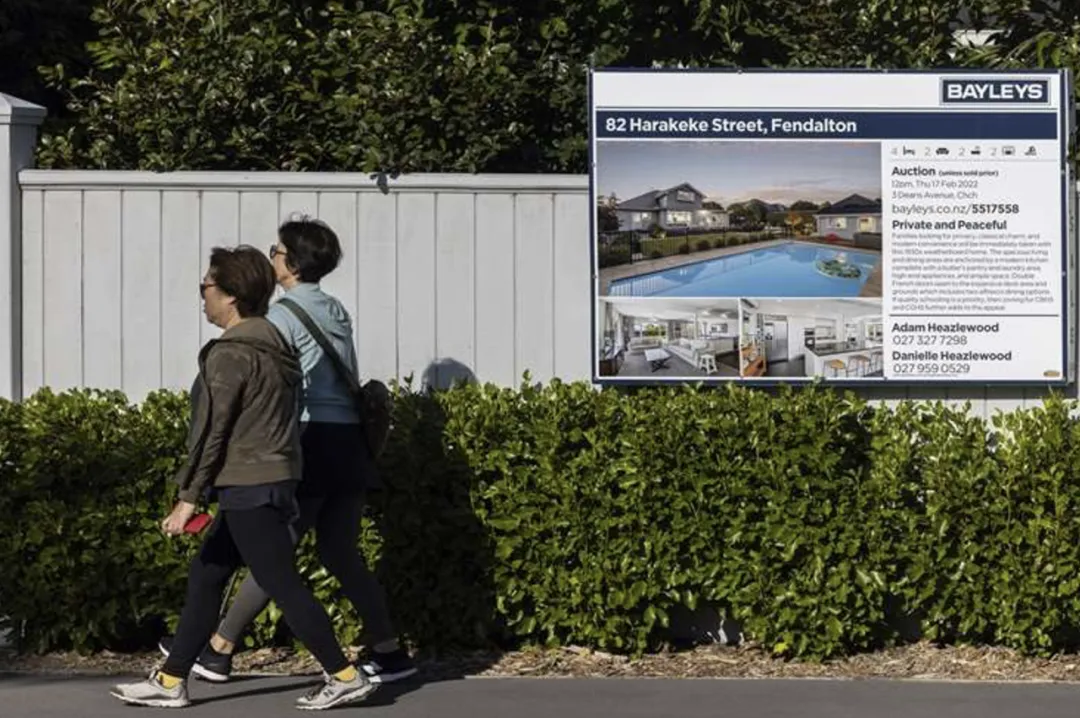
House prices in Christchurch’s Fendalton had just peaked in 2022
Around half of the 278 Auckland suburbs covered by the study recorded stronger house price growth after the COVID pandemic. This is unsurprising given that Auckland’s market peaked in 2016 and experienced a downturn in 2018 and 2019.
Which areas have been hardest hit by the economic downturn?
However, the study found that the continuing property market downturn had caused house prices to fall to varying degrees in more than half of the country’s areas. Over the past four years, house price growth in 484 suburbs nationwide was lower than in the four years before the pandemic.
Koutu in Rotorua was the most severely affected. Its current average house price of NZ$503,000 is only 0.6% higher than when the COVID pandemic ended in 2020. This is well below the suburb’s 136% growth in the four years before the pandemic. In fact, Rotorua’s entire housing market has fallen out of favour since the pandemic, with growth of just 13% over the past four years, a meagre increase compared with the 84% recorded in the four years before the pandemic.
Rotorua’s housing market has struggled since the COVID pandemic
Meanwhile, house price growth in Greater Wellington has also been modest over the past four years, 43% lower than in the preceding four years. Prices in the region soared after the pandemic began, but the falls during the economic downturn over the past four years were equally striking, leaving overall growth at just 16%.
Overall, while market performance varies between areas, both price increases and falls reflect the combined influence of local economic conditions, population trends, policies and other factors. New Zealand’s property market will continue to develop over time, and we look forward to further changes and challenges ahead.
So, are you happy with your area’s housing market performance over the past four years? Leave a comment below to join our discussion.