
Is now the best time to buy a home? Four key questions to clarify the current housing market
Opes Partners’ resident economist Ed McKnight suggests examining the following four key questions to assess whether the current market is really right for buying a home.

New Zealand’s housing market has faced severe challenges over the past three years. Falling house prices, tighter lending conditions and repeated Reserve Bank of New Zealand rate increases to 5.5%, despite the threat of recession, have all deterred buyers. Recently, however, following the Reserve Bank’s announcement of a cut to the Official Cash Rate (OCR), more buyers have begun watching the market and discussing whether housing will recover and whether they should seize this opportunity to enter the market. Although some are already looking forward to a recovery, reality may be far more complicated than we imagine. History shows that ultra-low interest rates once drove house prices to unprecedented highs, but markets often defy expectations. Is this a rare investment opportunity or a trap?
Opes Partners’ resident economist Ed McKnight suggests examining the following four key questions to assess whether the current market is really right for buying a home.
1
Has getting a mortgage become easier?
Lending policy has always been a key influence on homebuying decisions. In recent years, amendments to the Credit Contracts and Consumer Finance Act (CCCFA) made lending assessments exceptionally strict, with many potential buyers turned down because of their spending records, such as excessive takeaway or streaming expenses. However, policy easing in 2024 and lower bank serviceability test rates have increased buyers’ borrowing capacity. For example, ANZ’s serviceability test rate has fallen from 8.95% at the start of the year to 8.5%, meaning a borrower who could previously borrow only NZ$500,000 can now obtain approximately NZ$570,000 in lending. Even so, debt-to-income (DTI) restrictions remain in place. Under current policy, lending cannot exceed 7 times annual income. This may have little effect on high earners, but ordinary first-home buyers still need to plan carefully.
2
Where are interest rates heading?
Interest rates are another major concern for buyers. High rates have certainly placed considerable pressure on homebuyers and property investors, reducing their purchasing budgets. However, market expectations for interest rates are changing. According to Westpac data, most banks have already lowered their lending rates by 1 percentage point in 2024, with Westpac itself cutting its 18-month fixed rate several times this year. The latest forecasts suggest mortgage rates could fall to around 5% by June 2025. This trend will attract more buyers back into the market, particularly property investors encouraged by lower rates. However, market uncertainty remains even as rates fall, so buyers need to carefully assess how economic conditions affect their personal finances.
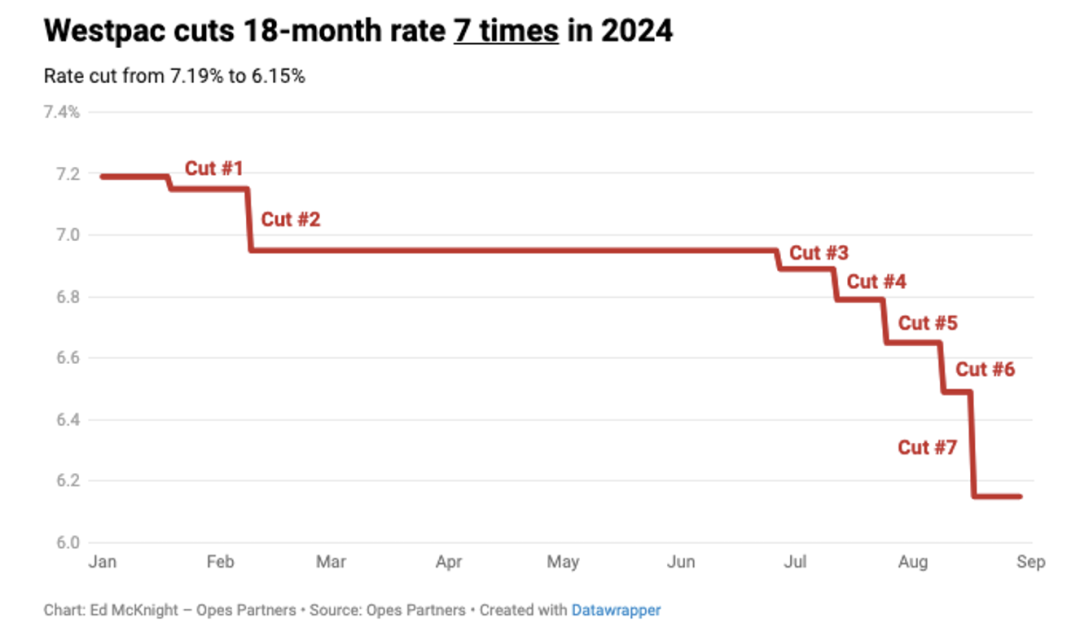
Westpac has cut its 18-month fixed mortgage rate 7 times this year
(Source: Ed McKnight)
3
Where are house prices heading?
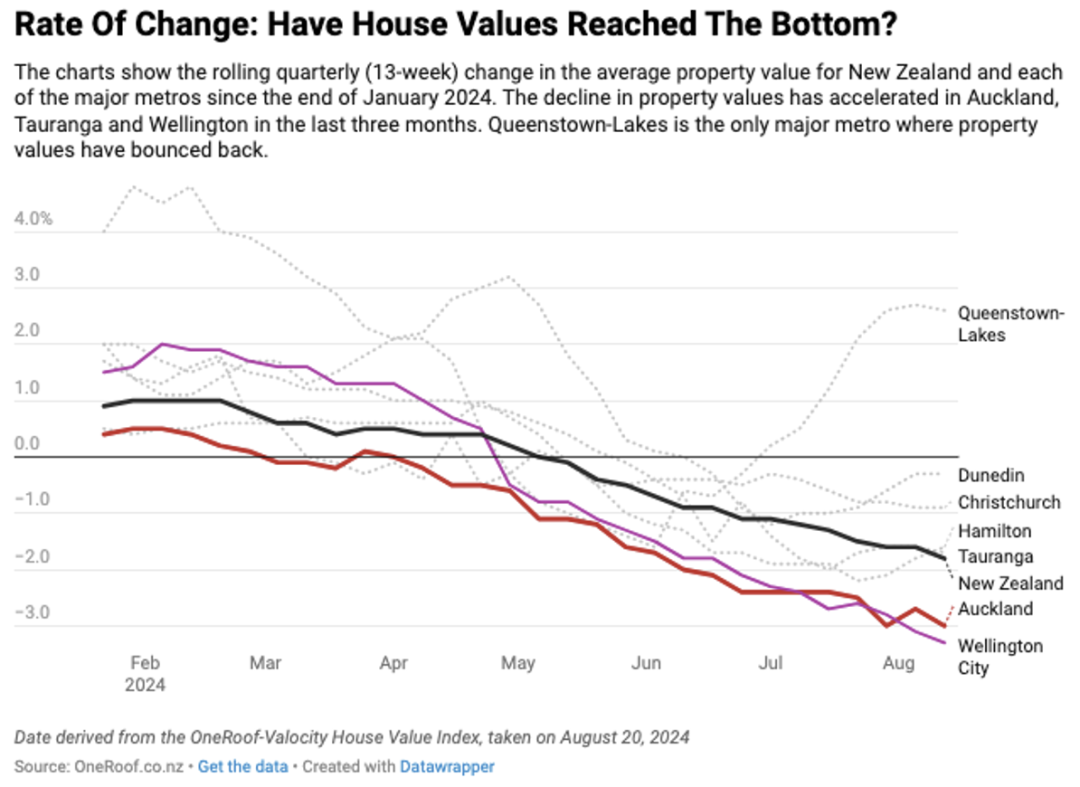
Chart showing house price changes in major New Zealand cities from February to August 2024 (Source: OneRoof)
House price movements also deserve attention. Since May 2023, house prices have fallen 17.8%, before recovering slightly in the second half of 2023. However, growing economic uncertainty in early 2024 saw prices fall again. Based on historical market cycles, the current ‘plateau’ could last two to two and a half years, and we are now 15 months into this cycle. House prices may therefore continue to fluctuate over the next 6 to 9 months.
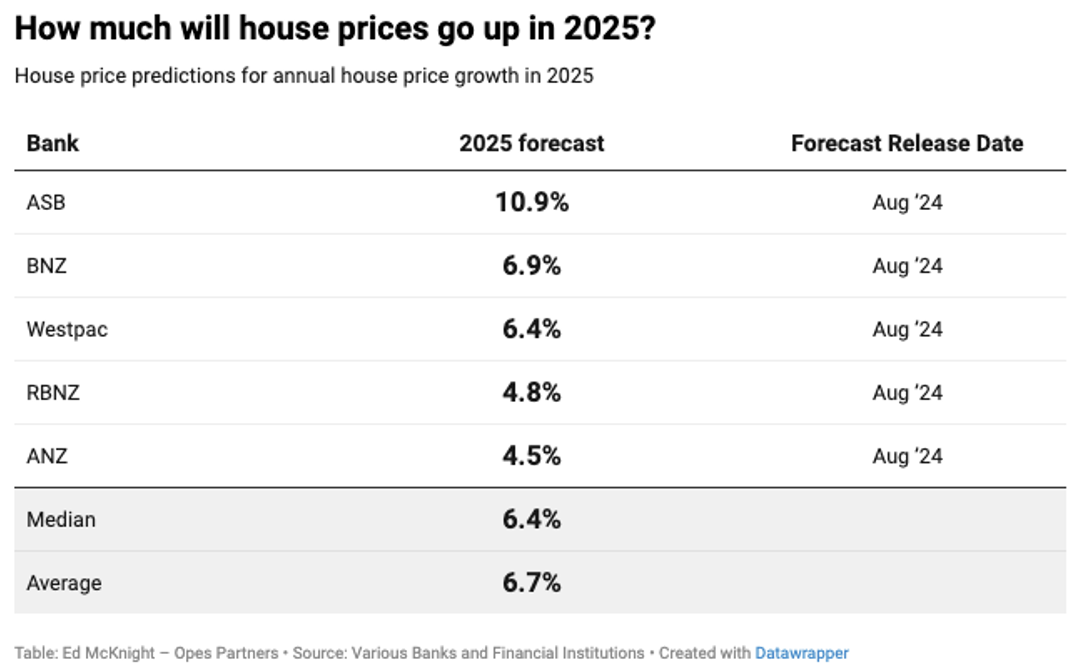
Comparison of commercial banks’ forecasts for house price growth in 2025
For first-home buyers, this period of fluctuation could offer a window of opportunity to enter the market. However, buyers should still carefully assess the downward trend in house prices to avoid taking on greater risks before prices eventually recover.
4
Are there enough homes on the market?
The availability of homes is an important influence on buyers’ negotiating power. At the end of August 2024, New Zealand had 38,511 homes for sale, up year on year by 28.8%. Although growth in new listings has slowed, supply remains plentiful. For first-home buyers in particular, this means more choice and greater negotiating power.
In Auckland, new listings in August 2024 fell year on year by 7.6%, suggesting some sellers are taking a wait-and-see approach amid intense market competition. This gives buyers more room to negotiate, particularly when sellers face fewer active buyers, allowing purchasers to enter the market at lower prices.
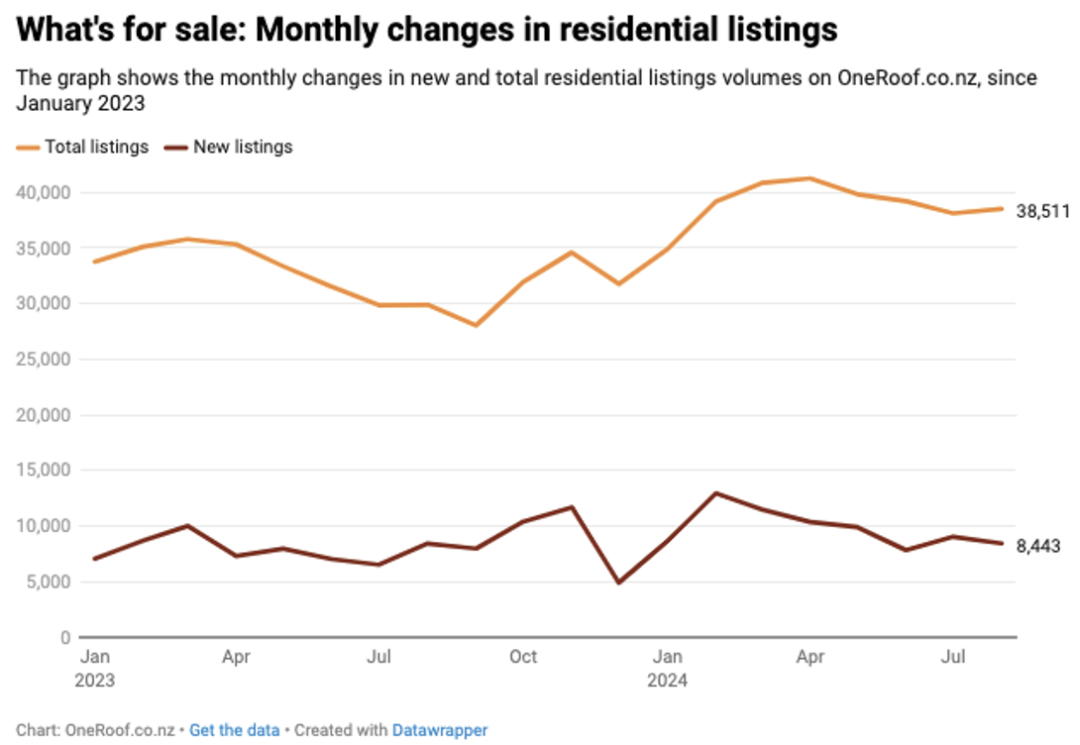
Chart showing changes in new property listings since January 2023
However, plentiful listings do not mean everyone should rush to buy. The economic environment remains uncertain, and some buyers are still waiting on the sidelines. For buyers in a sound financial position, the market does offer more opportunities. For most people, however, it remains wise to calmly observe market developments, consider their own finances and make a reasoned decision.
Opportunities come with risks
Taken together, these four key questions show that New Zealand’s current property market offers plenty of opportunities alongside risks. Improvements in lending policy and interest rates have created more openings for buyers, while plentiful listings give them more choice. However, price fluctuations and economic uncertainty still warrant attention. As investment guru Warren Buffett put it: ‘When the market is full of fear, it is a good time to buy.’ For well-prepared buyers, now could be a rare opportunity. For many other prospective buyers, however, careful observation and rational decisions remain the key to navigating the current market.