
First rate cut in four years! What will the US Federal Reserve’s easing cycle mean for New Zealand? New Zealand GDP shrinks 0.2% in the second quarter
Does the US rate cut mean the Reserve Bank of New Zealand (RBNZ) will be forced to follow suit in October? Will the New Zealand dollar’s value be affected? These questions are becoming a focus of market debate.
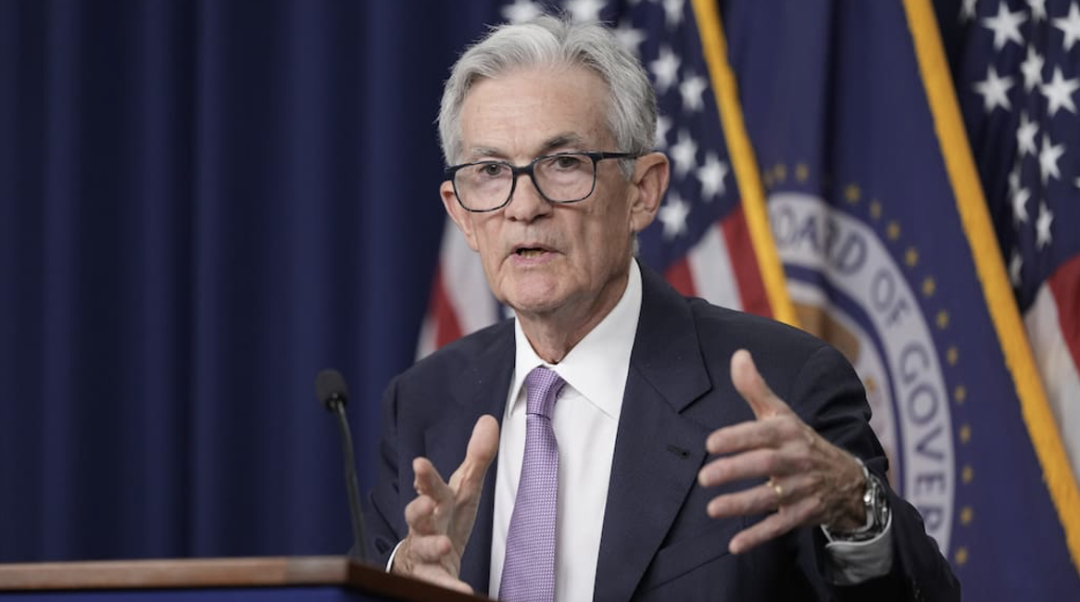
US Federal Reserve Chair Jerome Powell
The US Federal Reserve announced a few hours ago that it would cut its benchmark interest rate by 50 basis points and signalled several further cuts, marking the start of its first easing cycle since the outbreak of the COVID pandemic. The cut, its first in more than four years, brings the federal funds rate target range down to 4.75%–5%. Federal Open Market Committee (FOMC) member Michelle Bowman dissented, favouring a cut of only a quarter of a percentage point. The reduction was larger than the Fed’s usual quarter-point move, reflecting its concerns about the economic outlook. Signs of an economic slowdown had emerged after the Fed held interest rates at a 23-year high.
The last time the Fed cut rates by more than a quarter of a percentage point was in 2020, when the COVID pandemic severely hit the global economy. In its policy statement, the FOMC said that although inflation remained “somewhat elevated”, its confidence in the inflation trend had increased. US stocks rebounded swiftly after the announcement. The S&P 500 rose 0.9% that day, surpassing the intraday record set just a day earlier. Meanwhile, US Treasury yields fluctuated following a modest sell-off before the announcement.
Why is the US cutting interest rates?
The Fed began raising interest rates in early 2022 to counter the rapid rise in inflation in 2021. US inflation peaked at 9.1% in June 2022 and has now fallen to 2.5%. With an inflation target of 2%, the Fed believes the current trend is moving in the right direction.
However, falling inflation was not the only factor prompting the Fed to act. US unemployment has also risen this year, from 3.7% in January to 4.2% last month. Economists predicted that the Fed might begin cutting rates before inflation reached 2%, because interest rate changes take considerable time to affect the economy. Waiting until inflation fully reached its target before cutting rates could deliver an excessive shock to the US economy, potentially pushing it into recession.
Federal Reserve Chair Powell had made it clear as early as last month that US rate cuts were being planned, saying, “The time has come for policy to adjust.” The decision also has significant political implications, particularly against the backdrop of the presidential election. Lower borrowing costs are positive for Democratic candidate Kamala Harris’s campaign, which has been affected by voter dissatisfaction with the high cost of living.
How will the Fed’s rate cut affect New Zealand?
Does the US rate cut mean the Reserve Bank of New Zealand (RBNZ) will be forced to follow suit in October? Will the New Zealand dollar’s value be affected? These questions are becoming a focus of market debate.
The Fed’s decision means it is joining the European Union, the United Kingdom, Canada, New Zealand, Denmark, Switzerland, China and many others in gradually easing monetary policy. The Fed had held its policy rate within a target range of 5.25%–5.5% for a year, and this cut lowers that range to 4.75%–5%.
For New Zealand, the Fed’s cut could prompt the Reserve Bank of New Zealand to reconsider its monetary policy. Although New Zealand’s official cash rate (OCR) was only lowered by 25 basis points to 5.25% last month, the global wave of monetary easing could pave the way for further cuts here. New Zealand’s commercial banks will inevitably adjust their mortgage rates following the Fed’s cut, showing that the country’s financial markets are actively responding to changes in the global economic environment.
More broadly, the US rate cut could put pressure on the New Zealand dollar as global investors may turn to currencies and markets offering higher returns. At the same time, lower rates could provide some relief for homeowners under pressure from high borrowing costs. Whether New Zealand follows the US, however, remains for the Reserve Bank to decide based on domestic economic conditions. Overall, the US rate cut has significant implications for the global economic recovery, market stability and the direction of New Zealand’s monetary policy.
BNZ becomes
the first commercial bank to cut mortgage rates after the Fed’s move
BNZ has made further adjustments to its home loan rates after the Fed announced its benchmark rate cut last night. The bank lowered its one-year fixed mortgage rate by 0.16 percentage points to 6.29%, and its two-year fixed rate by 0.10 percentage points to 5.79%.
In fact, New Zealand’s major banks had already begun lowering lending rates when the Reserve Bank of New Zealand cut the official cash rate (OCR) last month. The Reserve Bank reduced the OCR by 25 basis points, from 5.5% to 5.25%, its first cut since March 2020. With wholesale interest rates falling and markets expecting another OCR cut, all mainstream banks, including ASB, ANZ, Westpac, BNZ and Kiwibank, are expected to continue lowering their mortgage rates.
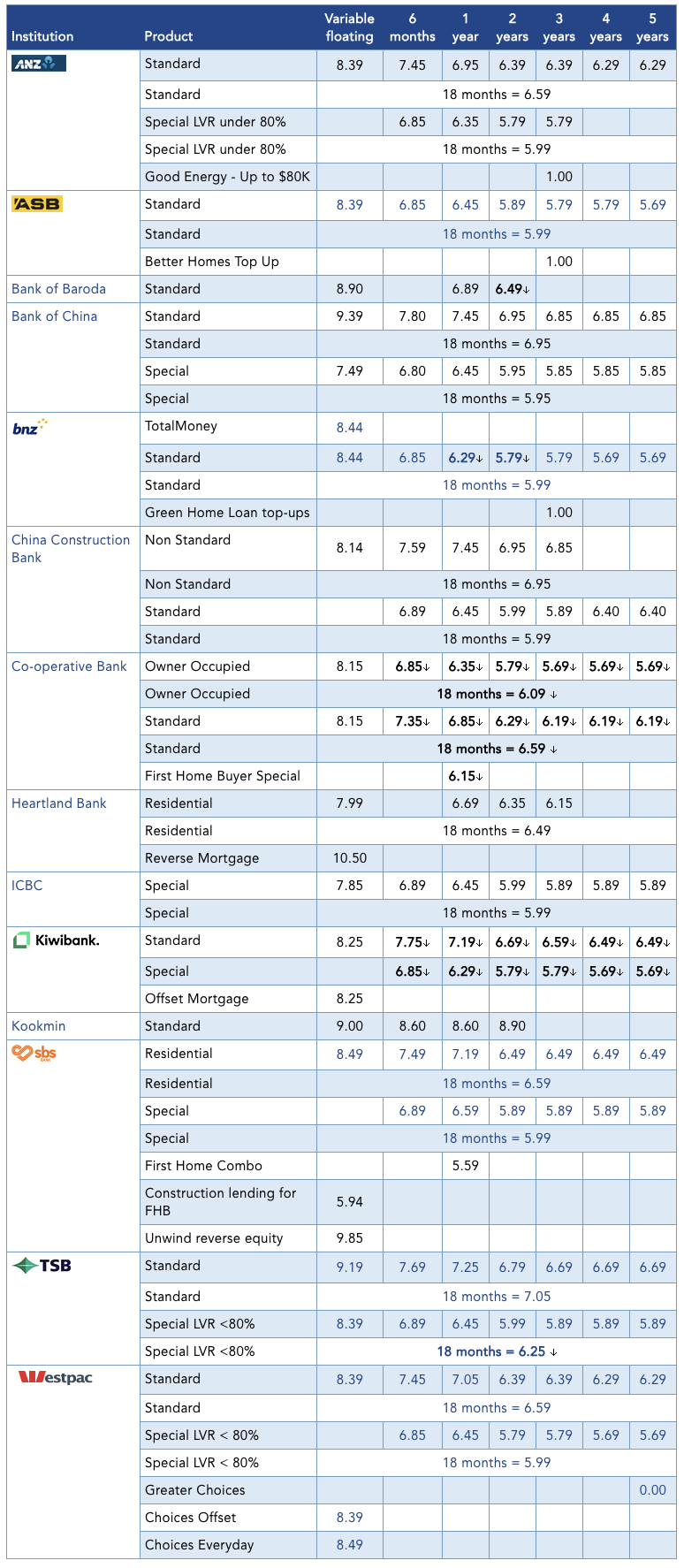
Overview of the latest bank mortgage rates
Overall, the Fed’s decision marks the start of a new easing cycle in global monetary policy. For New Zealand, this move could influence future interest rates and have flow-on effects for economic growth, inflation control and exchange rate fluctuations. As monetary policy adjusts, the direction of interest rates will continue to influence homeowners’ and investors’ decisions. Whether the Reserve Bank of New Zealand follows the global trend towards lower rates deserves close attention.
Reserve Bank confirms: New Zealand GDP fell 0.2% in the second quarter this year,
avoiding a technical recession
The latest economic data released by Stats NZ today shows that New Zealand’s gross domestic product (GDP) fell 0.2% in the second quarter of 2024, narrowly avoiding a technical recession. First-quarter economic growth was also revised down from the initially reported 0.2% to 0.1%. GDP per capita fell 0.5% during the quarter and 2.7% in the year to June 2024. Although the Reserve Bank had forecast a contraction of 0.5% and some bank economists had predicted a decline of 0.4%, the actual result was slightly better than expected. ANZ was the most optimistic, forecasting a 0.1% decline, but warned that this would not be enough to change expectations of OCR cuts. Despite the weak economic data, Westpac senior economist Michael Gordon noted improvements in the July and August figures and expected the Reserve Bank to cut the OCR by 25 basis points in each of October and November.
By industry, retail trade and accommodation, agriculture, forestry and fishing, and wholesale trade all declined. Ruvani Ratnayake, senior manager for national accounts industry and production, said: “Activity in retail trade and wholesale trade has continued to decline since 2022.” Forestry and logging were the main drivers of the decline in agriculture, forestry and fishing, with exports of primary forestry products also falling. Despite the overall GDP decline, 7 of the 16 industries grew. Manufacturing recorded the largest increase, with growth in transport equipment and machinery and equipment manufacturing particularly contributing to the recovery in manufacturing activity. This was manufacturing’s largest increase since December 2021.
Meanwhile, household spending rose 0.4%, mainly on non-durable goods such as fruit and vegetables, and on services. Spending on durable goods fell for the fourth consecutive quarter, particularly spending on new cars and telecommunications equipment such as mobile phones.