
Could the housing shortage ease? Auckland's home building now outpaces population growth! Will building consent applications become easier?
Auckland's housing stock increased by 64,000 homes, a rise of 11.9%, while its population grew by just 5% over the same period
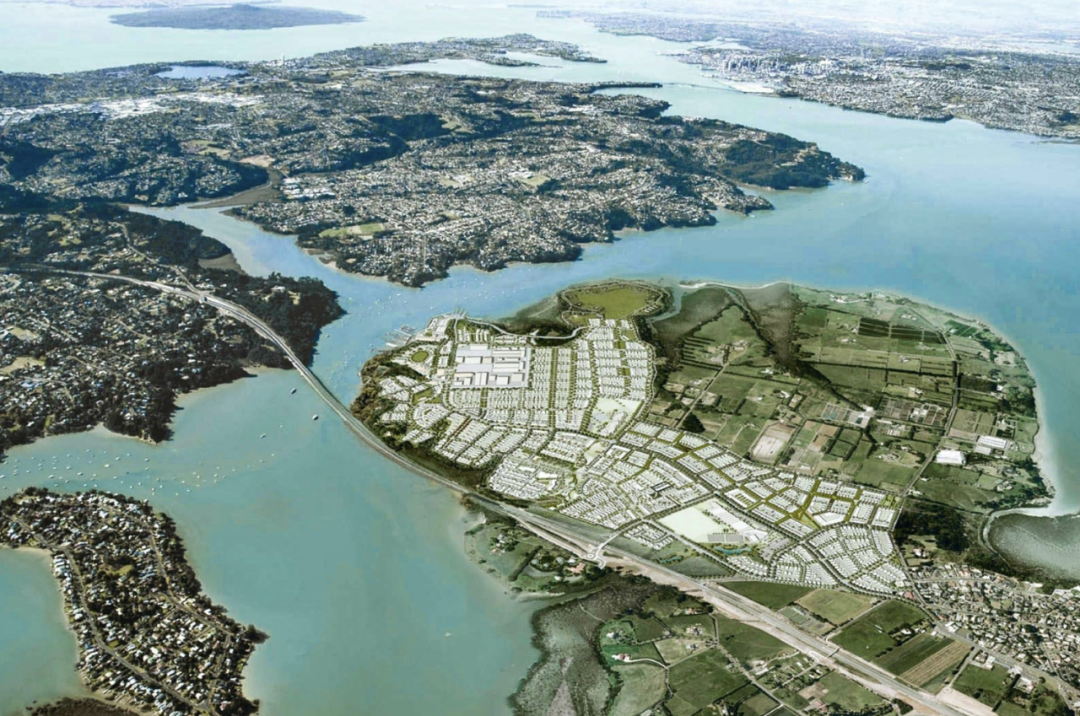
Ryan Greenaway-McGrevy, an associate professor of economics at the University of Auckland, recently stated publicly that home building in Auckland was now outpacing population growth. According to 2023 Census data, between 2018 and 2023, Auckland's housing stock increased by 64,000 homes, a rise of 11.9%, while its population grew by just 5% over the same period, helping to ease Auckland's housing shortage and affordability problems.
He said it was encouraging to see such strong growth in a city that had faced a severe housing shortage for decades. He attributed this to zoning provisions in Auckland's Unitary Plan, introduced in 2016, which rezoned many residential sites for higher-density housing and encouraged urban intensification. Although Auckland's population growth slowed after the COVID pandemic began, he believed the main factor was the unprecedented construction boom sparked by Auckland's 2016 rezoning. This reversed the city's longstanding pattern of population growth outpacing housing supply.
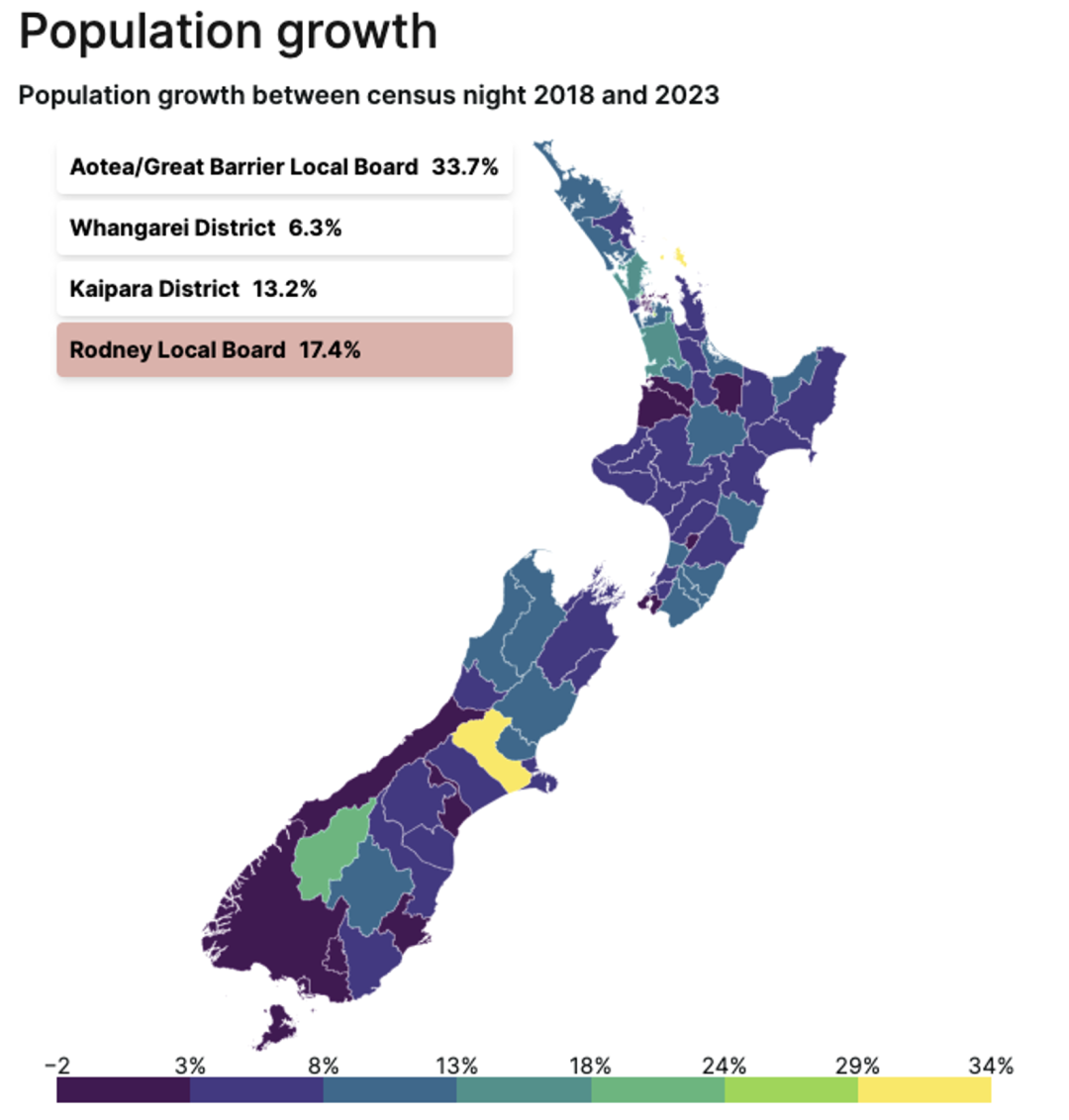
Population growth across New Zealand's regions from 2018 to 2023 (Source: NZ Herald)
The 2018 Census recorded 547,059 dwellings in Auckland. By the 2023 Census, that number had risen by 11.9%, or 64,836 homes, to a total of 611,895.
Note: Housing includes townhouses, apartments, units and standalone houses.
Which areas had the fastest housing growth?
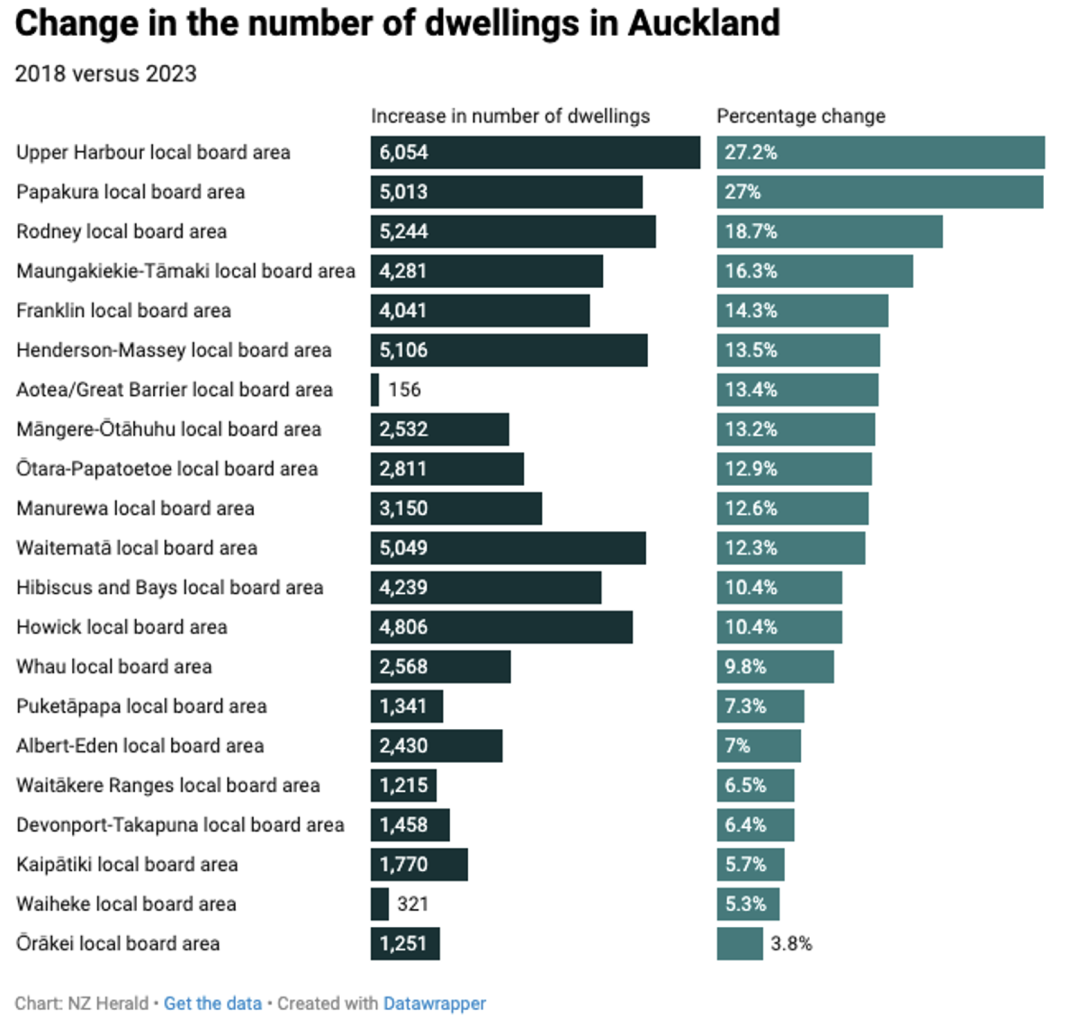
Comparison of housing growth rates across Auckland between 2018 and 2023
(Source: NZ Herald)
The data shows that between 2018 and 2023, Auckland's fastest housing growth occurred on the fringes of the North Shore, west Auckland and south Auckland. Upper Harbour grew fastest, with the number of homes rising from 22,000 to 28,000, an increase of 27.2%. The area includes Whenuapai, Herald Island, Hobsonville, West Harbour, Paremoremo, Greenhithe, Albany, Rosedale, Northcross, Unsworth and Pinehill.
Papakura had the second-fastest housing growth, at 27%, with the number of homes increasing from 18,000 to 23,000 over 5 years. The area extends from Drury in the south to Alfriston in the north, encompassing Takanini, Hingaia, Red Hill, Pahurehure and Papakura town centre.
Rodney ranked third, with the number of homes rising from 28,000 to 33,200 over 5 years, an increase of 18.7%. The area includes Kumeu/Huapai, Helensville, Warkworth, Kawau Island, Matakana and Wellsford.
Over the same period, Maungakiekie-Tāmaki ranked fourth with housing growth of 16.3%, as the number of homes rose from 26,000 to 30,500. The area includes One Tree Hill, Royal Oak, Onehunga, Penrose, Mt Wellington, Panmure and Glen Innes.
Franklin ranked fifth, with housing numbers growing 14.3% over 5 years, from 28,000 in 2018 to 32,000 last year. The area includes Pukekohe, Waiuku, Beachlands, Awhitu Peninsula, Karaka, Ardmore, Clevedon, Whitford, Maraetai, Kawakawa Bay and Orere Point.
Over the same period, the number of homes in Māngere-Ōtāhuhu rose from 19,000 to 21,600, an increase of 13.2%, while Ōtara-Papatoetoe's housing stock grew from 21,700 to 24,500, up 12.9%.
Manurewa also recorded solid growth, with housing numbers rising 12.6% over the same period, from 25,000 to 28,000. The area includes Clendon Park, Hillpark, Randwick Park, The Gardens, Rata Vine, Totara Heights, Manukau Heights, Weymouth and Wattle Downs.
Waitematā's housing stock grew by 12.3%, from 41,000 to 46,000 homes. The area includes Westmere, Grey Lynn, Herne Bay, Ponsonby, Arch Hill, St Marys Bay, Freemans Bay, Newton, Eden Terrace, the CBD, Grafton, Newmarket and Parnell.
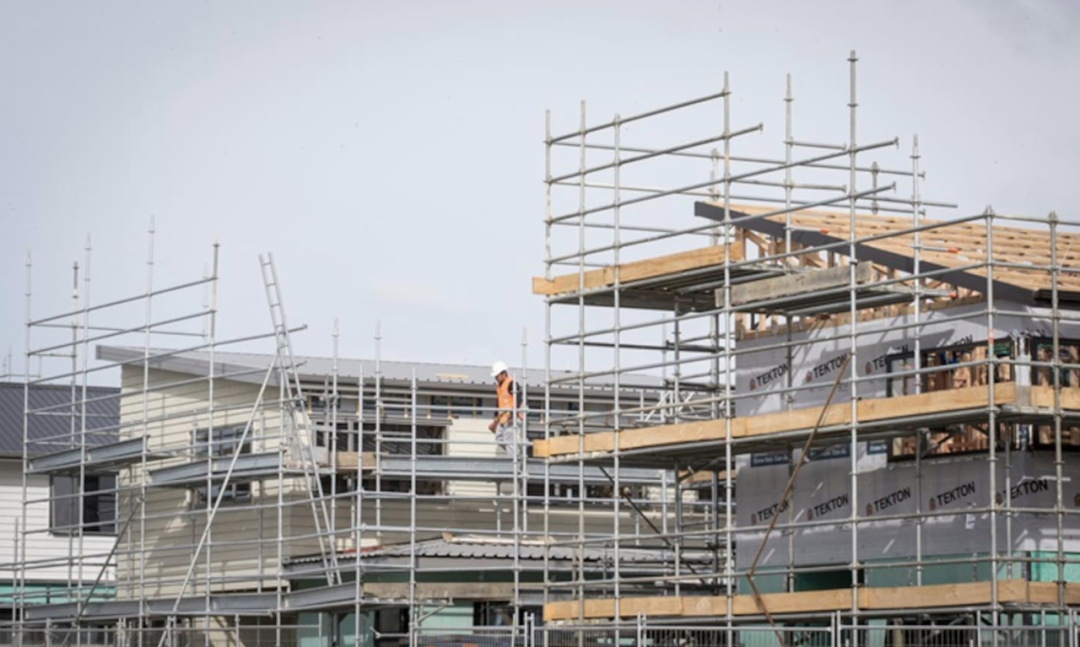
Silverdale and Millwater are also popular areas for new housing, with many new apartments and townhouses springing up in recent years
Which areas had the slowest housing growth?
Ōrākei had the slowest housing growth. Between 2018 and 2023, its housing stock grew by just 3.8%, from 32,000 to 34,000 homes. It is also one of Auckland's most expensive areas, encompassing Ōrākei, Mission Bay, Kohimarama, St Heliers, Glendowie, St Johns, Stonefields, Meadowbank, Remuera and parts of Ellerslie.
Over the same period, housing numbers on Waiheke Island grew by just 5.3%, from 6,045 to 6,300. Devonport-Takapuna recorded growth of only 6.4%, from 22,000 to 24,000 homes. Kaipātiki's housing stock grew by just 5.7%, from 30,800 to 32,500. Waitākere recorded an increase of 6.5%, from 18,700 to 19,900 homes.
The national picture
Across New Zealand, the regions with the fastest housing growth were Auckland (11.9%), Tasman (11%) and Canterbury (10.1%). Gisborne (4.4%) and Southland (4.6%) had the slowest growth. Notably, data released by Stats NZ in March showed a decline in the number of new homes receiving building consent, particularly in Auckland. After rising 16% in February, consent numbers fell 0.2% in March. In the year to March 2024, 35,236 new homes were consented nationwide, down 25% on the corresponding period a year earlier. In March this year, 2,931 new homes were consented, comprising 1,297 townhouses and units, 1,251 standalone houses, 224 apartments and 159 retirement village dwellings.
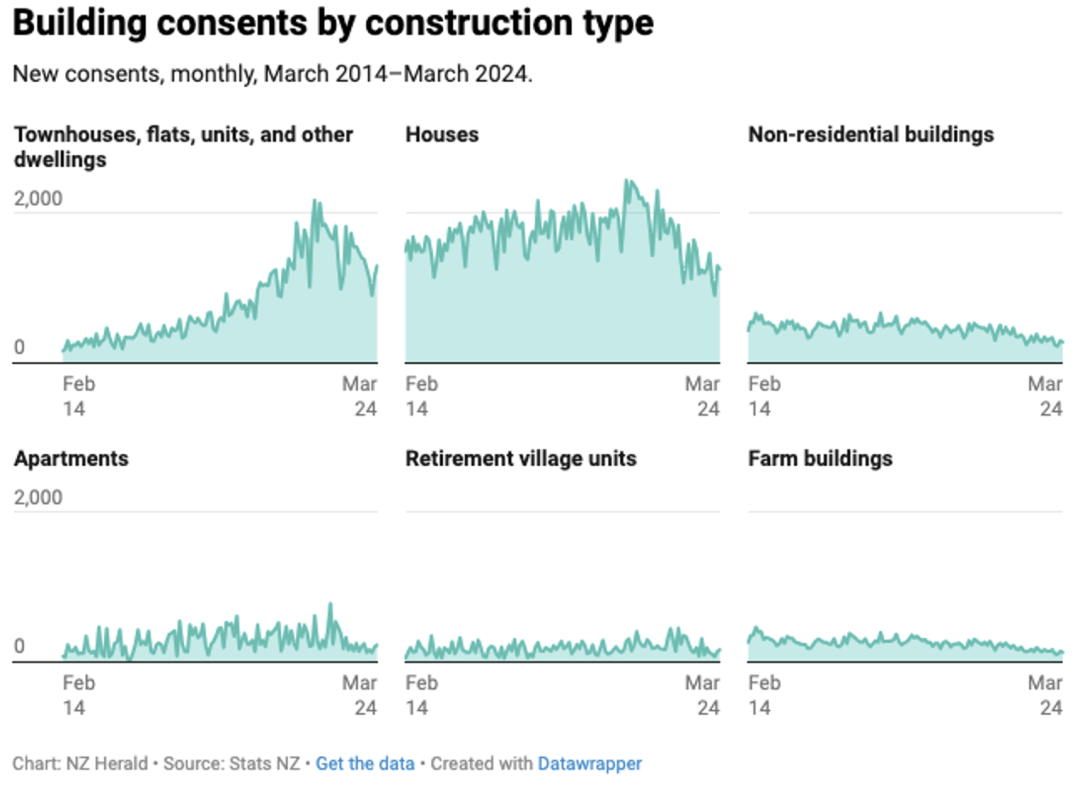
Trends in building consent categories over the past decade (Source: Stats NZ)
Westpac economists said on 2 May that the long-term trend clearly showed New Zealand's construction industry had entered a more difficult period, although building consent numbers appeared to be nearing a bottom. The bank expected medium-density developments, including townhouses, to show greater weakness in the future.
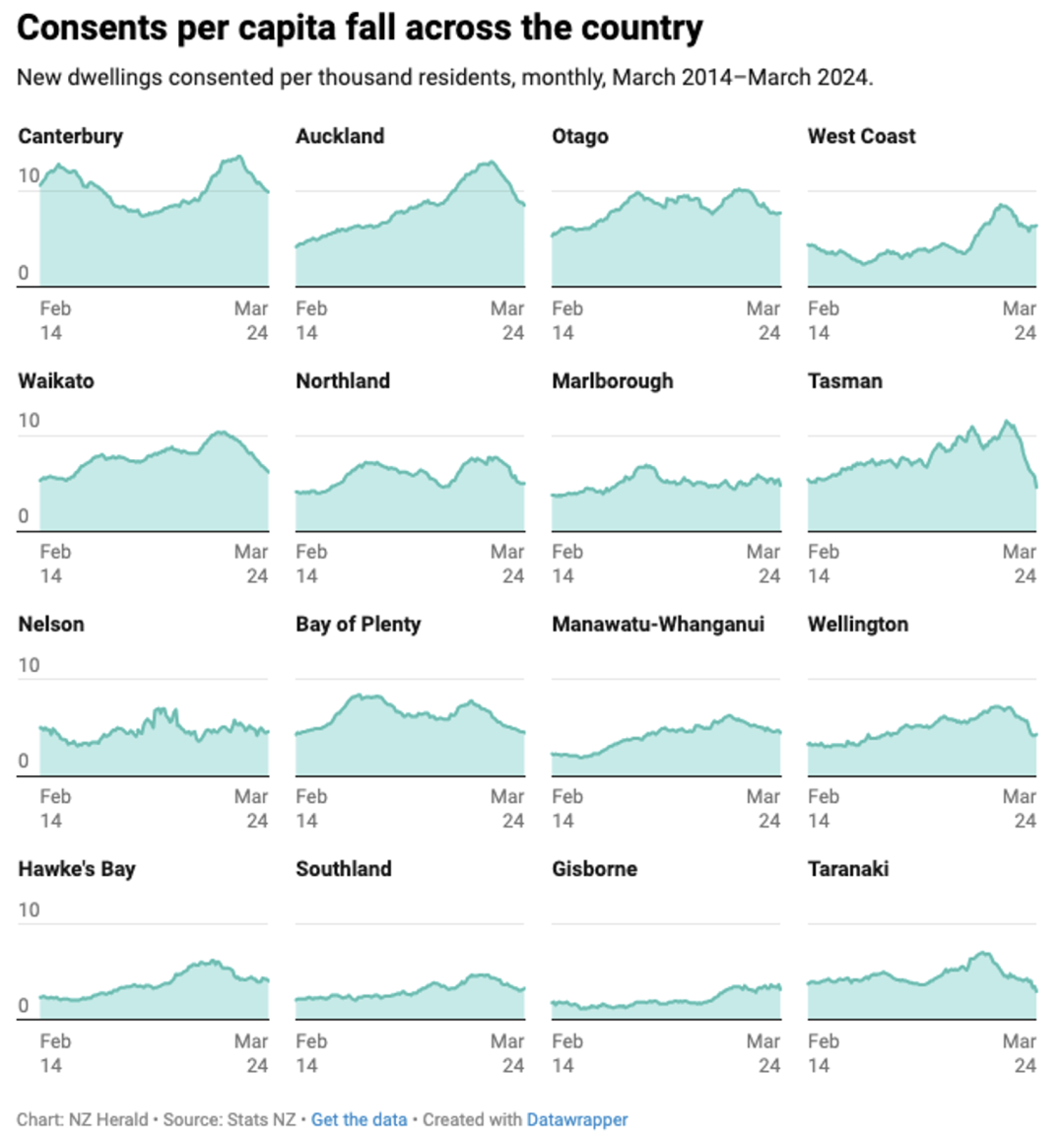
Changes in building consent numbers across New Zealand's regions over the past decade
(Source: Stats NZ)
In the year to 31 March, new home numbers by region were as follows:
-
Auckland: 14,699 new homes, down 28% year on year;
-
Waikato: 3,228 homes, down 28% year on year;
-
Wellington: 2,358 homes, down 35% year on year;
-
Rest of the North Island: 5,094 homes, down 19% year on year;
-
Canterbury: 6,575 homes, down 20% year on year;
-
Rest of the South Island: 3,281 homes, down 19% year on year.
Government to introduce “minor changes” to the Building Act
New building data released by Stats NZ in April showed that completing a home took an average of around 569 days after building consent was granted. Given housing and cost-of-living pressures, that is far too long.
To address this, New Zealand's coalition government announced last month that it would introduce new provisions under the Building Act to shorten construction times, allowing minor changes to building consents without requiring a new consent application. Building and Construction Minister Chris Penk said the government would clarify the definition of “minor changes” and introduce what it called “minor customisations” into the Building Act. This would provide greater flexibility, help reduce delays and lower construction and renovation costs. Building consent authorities would still need to assess the work to ensure it complied with the Building Code, but applicants would not have to submit a new consent application for minor product or design changes.