
Take note! Major property market changes take effect today. How will they affect you? This week’s key developments for property investors
ANZ’s latest survey shows consumer confidence edged down last month, despite already being at a low level.

1
Major regulatory changes
On 1 July 2024, several New Zealand policies were updated, alongside major changes to property market regulations:
- Bright-line test: The bright-line period has been shortened from 10 years to 2 years. This means owners selling properties on or after 1 July need only have held them for at least two years to avoid the tax. This could lead to a further increase in properties listed for sale.
- LVR rules: Relaxed LVR rules make it easier for investors with deposits of 30–35% to obtain loans. However, high mortgage interest rates and low rental yields remain the biggest challenges facing buyers.
- DTI limits: The introduction of DTIs will have little immediate impact on the current market because high interest rates have already curbed demand for large loans. However, DTIs will play an important role in the market when interest rates start falling.
2
Westpac cuts short- and medium-term mortgage rates
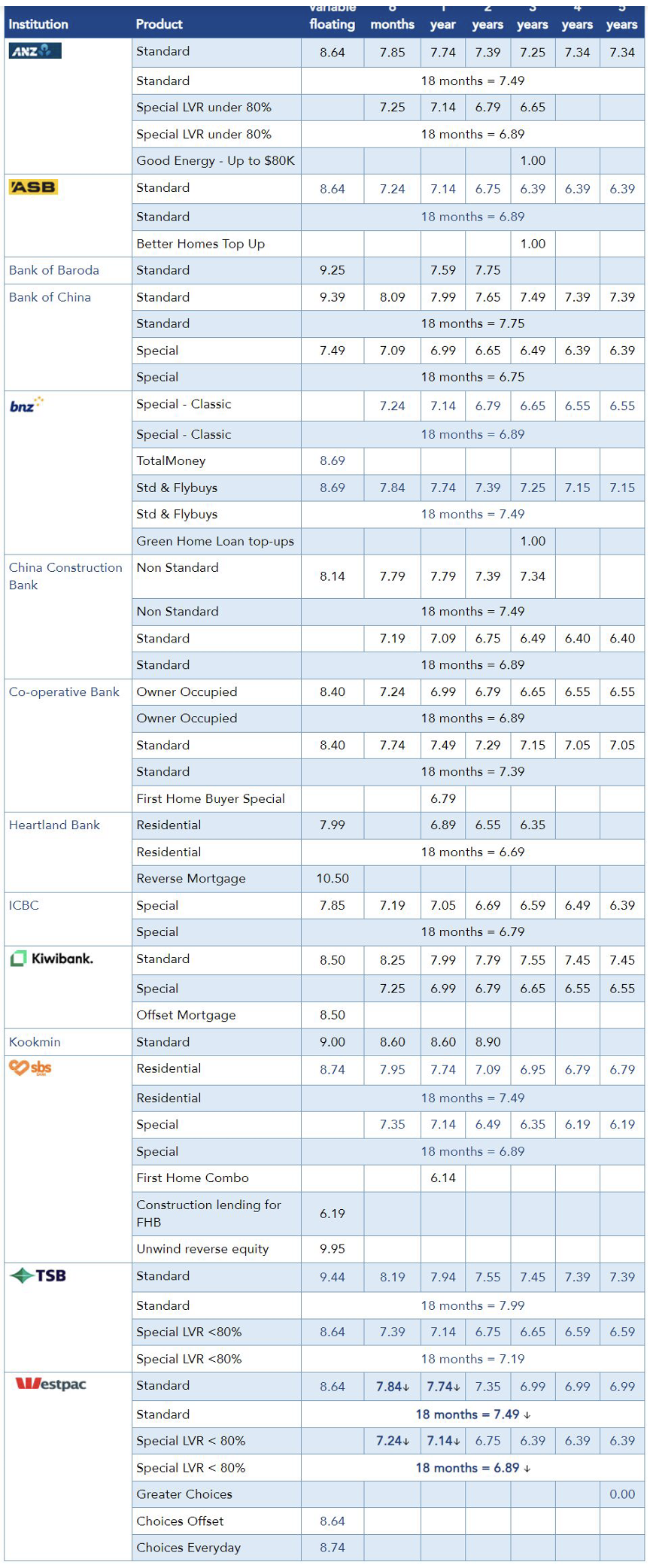
Last Thursday, Westpac cut its 6-month, 12-month and 18-month fixed rates by 5, 10 and 6 basis points respectively, bringing them into line with its three Australian-owned banking competitors. Among the major banks, Kiwibank currently has the lowest one-year fixed rate, 15 basis points below the Australian-owned banks. Fixed terms of 6 to 18 months also remain the most popular in the mortgage market.
3
Have lending conditions already eased?
The Reserve Bank of New Zealand released its latest lending figures last week. New lending totalled NZ$6,900,000,000 in May, up NZ$1,300,000,000 on the same period a year earlier. Annual growth was the strongest in a year, suggesting a modest market recovery. The proportion of lending to owner-occupiers with deposits below 20% is rising. This may indicate that banks have eased lending conditions, or that borrower demand for these loans has increased. The figures over the coming months will be well worth watching.
4
Mixed results from consumer and business confidence surveys
ANZ’s latest survey shows consumer confidence edged down last month, despite already being at a low level. Business confidence followed a similar pattern, slipping slightly. Consumers’ inflation expectations remain somewhat discouraging, but businesses’ inflation expectations eased in June, as did indicators relating to input costs and output prices. This is exactly what we want to see, because interest rates will not be cut until inflation falls within the central bank’s target range of 1% to 3%. Inflation figures for the second quarter of 2024 will be released on 17 July.
5
Is the number of jobs falling?
Stats NZ will release employment figures for May 2024 this week. Do not be surprised if the number of jobs has fallen. After all, employment growth has slowed in recent months, and businesses have been cautious about hiring. Job cuts in some industries will create greater headwinds for the property market.
6
Is there a glimmer of hope for New Zealand’s construction industry?
The employment figures may mark only the beginning of a downturn, but there are already some positive signs in the market for New Zealand’s construction industry. Let us see what the latest dwelling consent figures reveal when Stats NZ releases them this Tuesday.