
Why has the Prime Minister attacked ANZ's CEO? Capital gains tax debate flares again as political and business leaders disagree
Some believe a capital gains tax should be introduced alongside cuts to other taxes, although which taxes remains unclear. Others favour excluding the family home, but this raises further complications.

ANZ chief executive calls for a capital gains tax
ANZ New Zealand chief executive Antonia Watson told RNZ's 30 Minutes with Guyon Espiner yesterday that she believed it was fair to tax the sale of investment properties. Capital gains tax should apply once the money had been received, rather than to unrealised gains. Watson said: “People invest in property to achieve capital gains. If that is the main purpose of the investment, why not bring it into the tax system and tax the realised capital gains?”

ANZ New Zealand chief executive Antonia Watson
Prime Minister responds: growth is the only way out of recession
New Zealand Prime Minister Christopher Luxon was quick to respond to Watson's comments. In an interview, he said: “I really appreciate the idea of a CEO from a big Australian bank wanting to take more money from New Zealanders.” He added: “You cannot tax your way out of a recession. You can only solve economic problems through growth.”
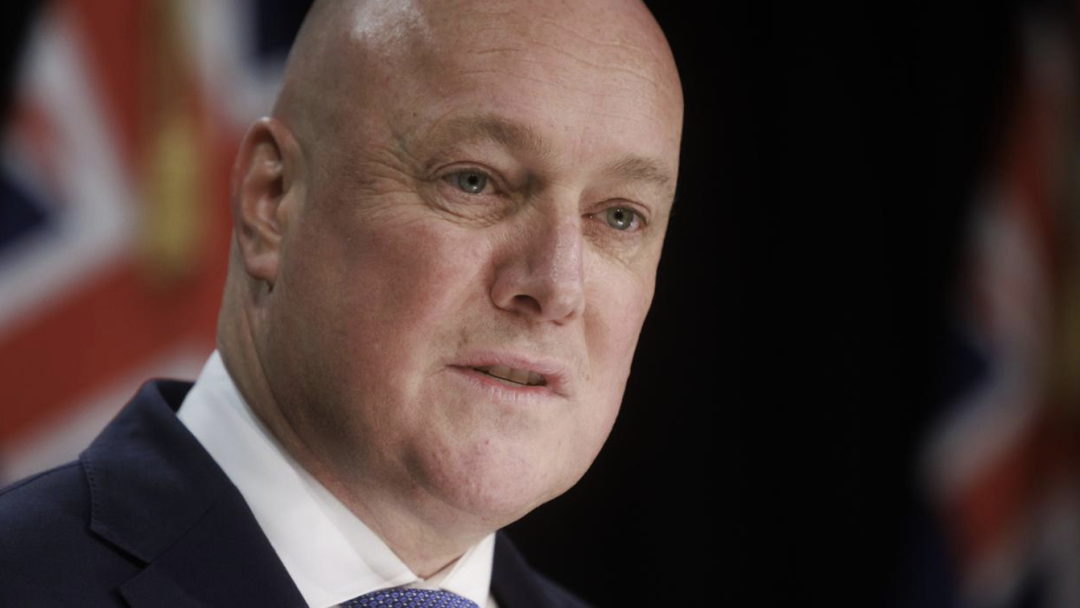 New Zealand Prime Minister Christopher Luxon
Luxon said that, as a former chief executive, he understood Watson's position. However, he argued that Australian banks had already made considerable wealth from New Zealanders and suggested Watson should refrain from taking more money from them.
Labour responds: a discussion about tax is necessary
Responding to the issue, Labour leader Chris Hipkins said a discussion about tax was necessary. He told the Tova podcast: “We do need an in-depth national discussion about tax. We need to start by discussing what we are funding, and then talk about how to fund it.”
Labour housing spokesperson Kieran McAnulty also criticised Luxon's comments, describing them as “poor leadership”. He said that, as a company's chief executive, Watson was perfectly capable of forming and expressing her own views and should not be attacked by the Prime Minister.
Finance Minister responds: taxation cannot deliver prosperity
Finance Minister Nicola Willis told Morning Report today that she did not support introducing a capital gains tax, arguing that “you cannot tax your way to prosperity”. Willis said New Zealand's current tax levels were already relatively normal, while government spending growth had spiralled out of control in recent years. Finding new sources of tax revenue was not the solution. She believed a capital gains tax could discourage investment. “If you own a car repair workshop or an interior decorating business and know you will face capital gains tax when you sell, that is a deterrent.” She believed the government needed to control spending rather than seek more sources of tax revenue.
Many economists believe too much money in New Zealand flows into the property market. Willis acknowledged that high house prices harmed the economy, but argued that the underlying causes were “extremely restrictive land-use laws, resource management legislation, high construction costs and policies that discourage housebuilding”, rather than the tax system itself.
Willis said economists and experts were “deeply divided” over the suitability and necessity of a capital gains tax. Some believed it should be introduced alongside cuts to other taxes, although which taxes remained unclear. Others favoured excluding the family home, but this raised further complications. She believed these complex differences needed to be resolved before a specific capital gains tax proposal could be developed; otherwise, it would struggle to attract broad support.

Finance Minister Nicola Willis
Could a capital gains tax help New Zealand's economic recovery?
Recently, Max Rashbrooke, a senior research fellow at the School of Government at Te Herenga Waka—Victoria University of Wellington, publicly shared his views on the issue.
He argued that New Zealand had long struggled to combine pragmatism with a long-term investment mindset. Governing parties were good at responding to immediate problems with limited resources, but performed poorly on long-term planning and investment. Underinvestment in infrastructure, ageing equipment and lagging research and development spending had left New Zealand falling behind in global competition. New Zealanders kept the economy running through hard work, putting in far more hours per person than many developed countries without a corresponding increase in productivity. In addition, 12% of children lived in poverty, which was not only a social problem but would also seriously affect the future labour market.
Against this backdrop, a capital gains tax could offer a way to address these problems. By taxing capital gains on assets such as property and shares, it could reduce tax inequities and increase government revenue. Estimates suggest that, ten years after its introduction, a capital gains tax could generate around NZ$5,900,000,000 a year for the government.
Although its initial impact would be limited, the tax could fund long-term investment, such as increased research and development tax credits and support for education and training programmes, helping promote sustainable economic development. However, the government's current investment cuts were concerning. Stalled social housing construction, shelved research projects and declining infrastructure investment all ran counter to long-term economic development goals. New Zealand needed a clear long-term development plan rather than more “temporary fixes”. A capital gains tax might not be a cure-all, but it could be an important step towards encouraging long-term investment. He urged that, to achieve sustainable economic development in New Zealand, we needed to start investing in the future now rather than continue responding to problems in the short term.