
ASB cuts short-term mortgage rates! Could the overseas buyer ban really be eased? Winston Peters signals a surprise shift! How could the overseas buyer proposal affect the future housing market?
The cuts to short-term mortgage rates should appeal to borrowers approaching refixing and to home buyers, particularly given the current strong demand for short-term rates.

ASB recently announced cuts to several short-term mortgage rates. Its six-month rate fell 36 basis points to 6.39%, its one-year rate fell 20 basis points to 5.99%, and its 18-month rate fell 10 basis points to 5.79%. Meanwhile, its longer-term four-year and five-year rates each rose 10 basis points to 5.79%.
Infometrics chief forecaster Gareth Kiernan said ASB’s adjustments suggested long-term rates might be approaching the bottom of the current cycle. Recent figures show New Zealand’s Consumers Price Index (CPI) has returned to the central bank’s 1% to 3% target range. This could prompt an Official Cash Rate (OCR) cut of at least 50 basis points in November, potentially as much as 75 basis points, in response to economic conditions over the coming months.
ASB executive general manager of personal banking Adam Boyd said the cuts to short-term mortgage rates should appeal to borrowers approaching refixing and to home buyers, particularly given the current strong demand for short-term rates.
Winston Peters’ overseas buyer proposal:
how could it shape the future?
Winston Peters was back in the media spotlight this week. At a recent party meeting, the New Zealand First leader suggested he might ease the ban on overseas buyers purchasing New Zealand property for the “right investors”. His comments attracted public attention and sparked widespread discussion about the future direction of New Zealand’s property market.

New Zealand First leader Winston Peters
National’s and Winston Peters’ policy visions
During the election campaign, National Party leader Christopher Luxon promised that, if elected, he would allow overseas buyers to purchase homes in New Zealand worth more than NZ$2,000,000, while imposing a 15% purchase tax on those buyers. The policy was designed to attract high-net-worth international investors while generating tax revenue to fill the fiscal gap left by other tax cuts. However, with the formation of the coalition government, Luxon’s proposal faced several challenges.
More recently, New Zealand First leader Winston Peters has gradually “changed his tune”, saying he would be willing to ease restrictions on overseas buyers for the “right investors”. At New Zealand First’s annual conference, Peters proposed an infrastructure fund of up to NZ$100,000,000,000, including investment from overseas. He made clear that the government would make no concessions for small investors, but could consider facilitating home purchases for those “bringing substantial funds”.
Peters further stressed that the world was full of capital and investors were looking for safe places to invest. Investors whose interests aligned with New Zealand’s could invest in infrastructure and also consider buying property. Undoubtedly, Peters’ remarks are opening the policy door for overseas buyers to re-enter the New Zealand market, particularly high-net-worth investors.

Winston Peters holds a party conference in Hamilton
The overseas buyer ban: controversy and reality
Although National and New Zealand First hold differing positions within the coalition government, both Luxon’s election pledge and Peters’ infrastructure investment proposal indicate that the government is considering reopening the market to overseas buyers. This policy adjustment has sparked widespread discussion about balancing New Zealand’s economic interests with housing affordability for local residents.
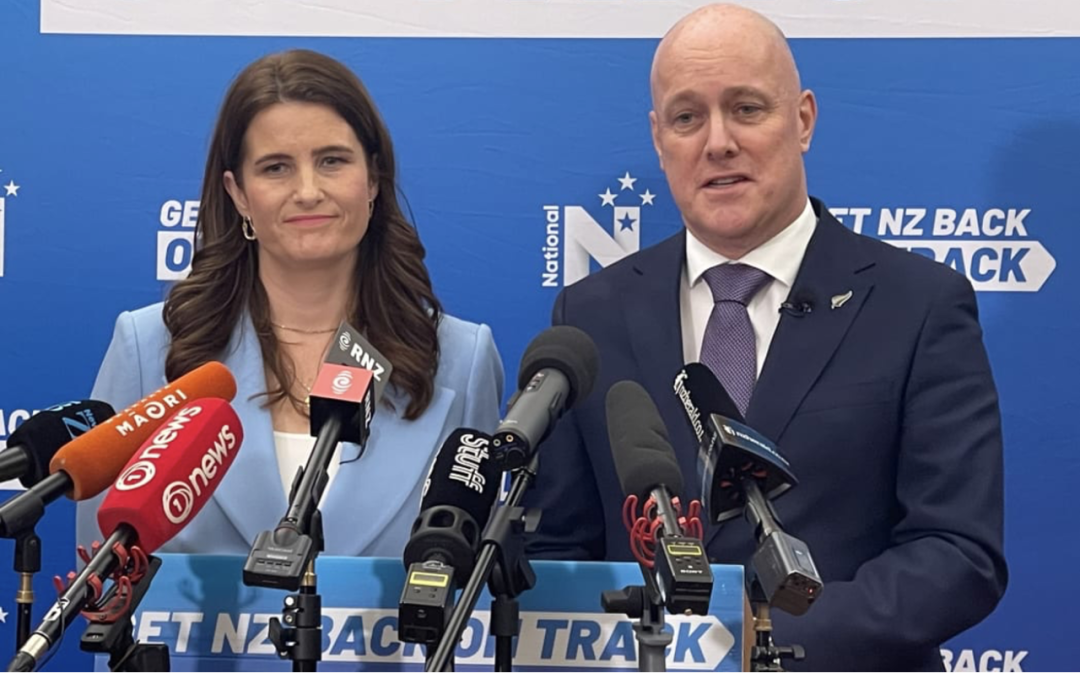
In August 2023, National announced a new policy to tax overseas buyers purchasing properties worth more than $2,000,000
Figures show that before the ban, overseas buyers accounted for just 3% of New Zealand’s housing market, with most concentrated in the premium segment. The Labour government introduced the ban to protect local residents from the pressure of high house prices, yet prices continued to rise after it took effect. This suggests overseas buyers were not the only factor driving prices higher; tight land supply, rising construction costs and growing local demand were the main reasons prices remained elevated.
On the other hand, both Luxon and Peters have stressed that allowing high-net-worth overseas investors to buy premium New Zealand properties would avoid direct competition with local residents while promoting economic development through taxation and investment in infrastructure. Anthony Morsinkhof, managing director of PQ Property Intelligence, noted that many overseas investors remained strongly interested in the New Zealand market, but current policy prevented them from legally buying residential property. Lifting the ban would attract these investors and help increase new home construction, creating more jobs in the construction industry.
The economic benefits and challenges of policy changes
New Zealand First’s infrastructure fund proposal and National’s overseas buyer policy objectives are driven by shared economic interests. Attracting overseas capital, particularly from buyers targeting the premium market, offers New Zealand an opportunity to fill infrastructure funding gaps and potentially address the current decline in new home construction. Peters said overseas funds could flow into New Zealand’s economy on a large scale, particularly into infrastructure, which was crucial to the country’s long-term development.
However, such a policy change also carries risks. Critics argue that reopening the market to overseas buyers could trigger a new property bubble, particularly in the premium segment. Although prices in that segment have little effect on most New Zealanders, market expectations and investor behaviour could indirectly drive up prices elsewhere. The government must therefore exercise caution when designing new policies, ensuring that the economic benefits of overseas buyers do not further increase the burden of buying a home for local residents.

Without overseas buyers, New Zealand’s luxury housing market has been subdued in recent years
The future direction of policy
Peters’ recent support for a proposal to ease overseas buyer restrictions appears to have cleared the final hurdle for National to fulfil its promise to reopen New Zealand’s property market to overseas buyers. However, balancing the attraction of foreign investment with housing affordability for local residents will be the main challenge for policymakers. If restrictions are lifted, the change must be accompanied by strict regulation and eligibility thresholds to ensure that only investors who truly benefit the national economy can enter the market. Ultimately, the policy’s success will depend on whether the government can strike a delicate balance between economic interests and social equity.