
A construction dispute? Want to avoid court? Try arbitration! A guide to construction arbitration in New Zealand
Arbitration is often mistaken for a lengthy, time-consuming High Court process. Indeed, some parties favour High Court procedures while overlooking the more efficient avenues offered by the 1996 arbitration legislation (Arbitration Act 1996).

In complex construction projects, underlying tensions between project participants often develop into disputes despite everyone’s good intentions. Completing a project on time while also managing these disputes is no easy task. However, tools are available to help parties reduce disputes’ impact on project timeframes and costs. In particular, where a dispute cannot be resolved through negotiation during or after a project, arbitration should be an option for the parties to consider.
For this article, YIJU invited specialist lawyers from MinterEllisonRuddWatts to discuss why arbitration suits construction disputes, ways to promote efficient and effective arbitration, and opportunities to use arbitration to resolve building defect disputes.

Why does arbitration suit construction disputes?
Arbitration is an alternative form of dispute resolution that allows parties to resolve their disputes finally without relying on traditional courts. A neutral arbitrator or panel appointed by the parties resolves the dispute, issuing a decision that is final, binding and enforceable.
Arbitration is a flexible process that allows parties to tailor procedures to the circumstances of their dispute. This makes it particularly well suited to complex construction disputes.
The main advantages of arbitration in construction disputes include:
1
Parties can choose their arbitrators
New Zealand has a strong pool of arbitrators with extensive experience in construction disputes. They include former High Court and Court of Appeal judges, as well as King’s Counsel.
New Zealand’s standard construction contracts contain arbitration clauses, and bespoke construction contracts frequently include them too. Construction disputes therefore fall squarely within local arbitrators’ expertise.
Parties can also choose an arbitration panel, allowing them to appoint an expert with relevant technical construction knowledge alongside a legally qualified arbitrator.
When choosing an arbitrator, parties can also consider their capacity: whether they can deal with the dispute promptly and meet the parties’ timing requirements.
2
Lawyers can define the procedural scope and tailor the steps
Lawyers establish the procedural scope of an arbitration and can tailor its steps to the particular dispute.
For example, discovery is often a substantial and expensive process. In arbitration, parties are not confined to tailored or standard discovery under the High Court Rules. They can choose other approaches to document disclosure, including those commonly used in international arbitration.
Arbitration also offers greater scope to determine certain matters as preliminary issues and/or hold separate hearings. The scope of cross-examination can also be limited.
3
Less room for procedural or delaying tactics
Arbitrators have greater ability to monitor procedural or delaying tactics. The High Court relies on case management to progress matters, which can make advancing proceedings difficult if a dedicated judge is not appointed early.
4
Adaptability and use of technology
Alternative dispute resolution (Alternative Dispute Resolution, abbreviated to ADR) forums, including arbitration, generally offer greater technological flexibility and can move to online platforms more easily. This is particularly beneficial when participants are in different locations.
5
Confidentiality
Arbitration is a confidential process. Unlike court proceedings, which attract public attention and create public records, arbitration is generally confidential. It allows parties to resolve disputes without concerns about publicity or external scrutiny. New Zealand’s construction market is relatively small, and businesses’ fortunes often depend on their reputation.
Arbitration is particularly attractive where a dispute involves sensitive commercial information or serious allegations that could damage a business if made public. A favourable outcome matters, but should not come at the expense of commercial reputation.
Improving efficiency
Efficiency, value for money and fairness are the cornerstones of arbitration. The Arbitration Act provides the flexibility to achieve these goals. However, we observe that parties commonly favour formal court procedures and fail to take full advantage of arbitration. This is a missed opportunity to benefit from the process.
Parties have a range of tools available. To resolve construction disputes more efficiently, they can consider the following approaches:
1
Bifurcation and procedural sequencing
Bifurcation means dividing an arbitration into separate stages, with an award issued at the end of each stage. In a construction dispute, this could involve dealing with liability and the amount of compensation in separate stages.
2
Targeted document production
Discovery is often time-consuming and cumbersome. Parties can consider whether a “request to produce” process, for example under the IBA Rules on the Taking of Evidence in International Arbitration, would better suit their dispute.
3
Presenting expert evidence
Parties can consider ways to present expert evidence more efficiently. Examples include “expert conferencing”, where experts in the same field give evidence concurrently, time limits on cross-examination, and agreement on whether evidence-in-chief can be taken as read.
4
Methods of presentation
Hearings and lawyers’ submissions can be tailored to the particular dispute. Available tools include:
- Using memorials, which combine a party’s submissions and evidence in a single document, rather than a pleadings-based process.
- Using Scott Schedules: tables summarising the claimant’s claims and the respondent’s defences to them.
- Setting page limits for submissions.
Lawyers need a thorough understanding of their clients’ commercial drivers and the theory of the case so they can tailor an appropriate arbitration process to the dispute.
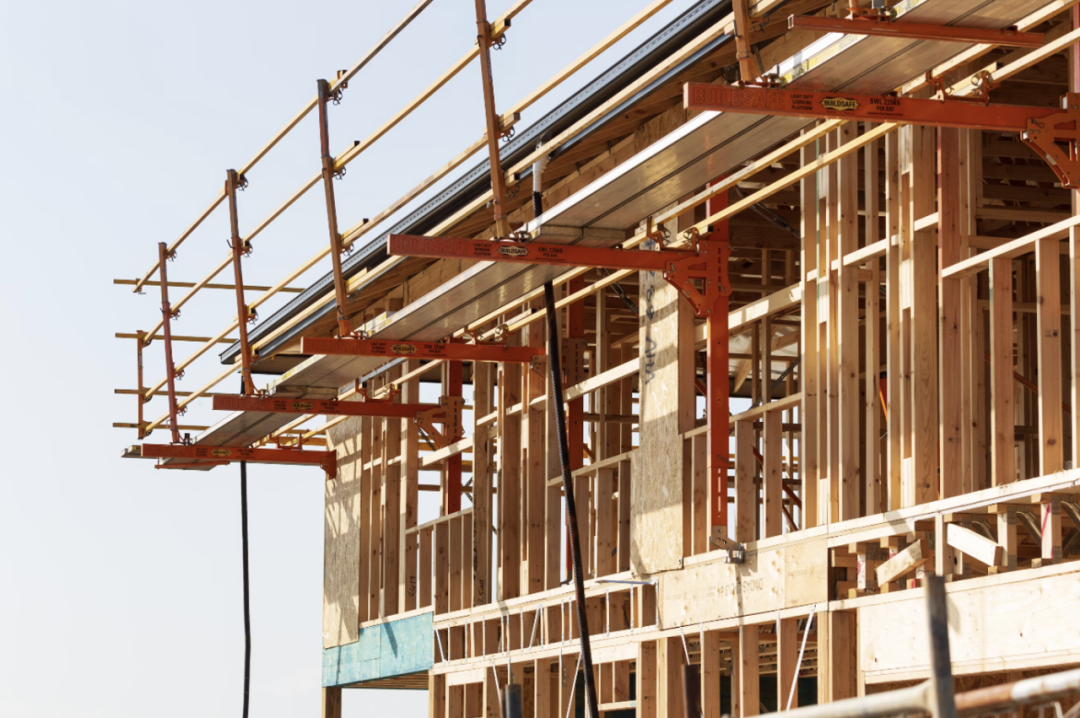
New Zealand has experienced serious leaky building problems. Although true “leaky building” cases are declining, we continue to see large numbers of latent defect cases progressing through the courts.
These cases are highly complex. They typically require extensive expert evidence, involve numerous parties and take weeks, sometimes months, to hear in court. Delays are costly and draining. Repeated handling of cases results in lost progress and efficiency, with associated costs, while relevant knowledge or information is also lost over time. Greater use of arbitration could ease pressure on the courts and resolve latent defect disputes effectively. There are barriers to using arbitration in latent defect cases, but they are not insurmountable.
Arbitration is contractual: the parties agree to resolve their dispute through arbitration. Because latent defect cases typically involve multiple parties, securing everyone’s agreement can be difficult. However, several approaches can ease this problem and encourage more latent defect disputes to be resolved through arbitration:
1. Agree to arbitration in advance in all project contracts. Although this cannot cover every party and will not apply where a third party takes over without an assignment of the contract, it would certainly cover more disputes than are currently arbitrated.
2. Obtain the parties’ agreement after a dispute arises.
3. Parties can also consider a hybrid approach, with the principal parties resolving the main dispute through arbitration and the High Court determining contribution claims afterwards. In the recent Beca Carter Hollings & Ferner Ltd v Wellington City Council case, the Court confirmed that the 10-year limitation period under the Building Act 2004 does not apply to contribution claims. This creates greater scope for such a hybrid approach.
This would also ease the burden on the courts, particularly given that New Zealand has no specialist construction court comparable to those in Australia and the United Kingdom.
Arbitration has long been a preferred dispute resolution method in construction. Parties and their lawyers should consider how to make the process work for them, resolving disputes swiftly and achieving their commercial objectives.
About us
MinterEllisonRuddWatts is a leading New Zealand specialist in construction, infrastructure and engineering disputes, drawing on specialist knowledge and deep industry experience to help clients resolve their most challenging disputes. We are New Zealand’s largest and most specialised construction and infrastructure disputes team, with the scale and resources to address and resolve the largest, most complex cases our clients face.

Our extensive experience handling New Zealand’s most significant infrastructure and construction disputes enables us to address the technical complexities underlying the most challenging cases. These include construction and design defects, extensions of time, variations, ground conditions, consenting issues, termination, force majeure, and claims under the Fair Trading Act and the Contract and Commercial Law Act.
The projects we advise on range from property to energy infrastructure, sports venues and transport infrastructure, including road and rail projects. This experience enables us to identify and resolve problems early, or even prevent them arising.
We have extensive experience in all forms of domestic and international arbitration, including a thorough command of New Zealand’s Arbitration Act 1996 and related court issues, as well as arbitration rules including ICC, LCIA, DIAC, AMINZ, SIAC and the UNCITRAL Rules.
About the authors

Janine Stewart
Partner Construction
+64 9 353 9922 +64 21 784 808
Janine.stewart@minterellison.co.nz
Janine is a lawyer specialising in construction, property and project disputes. A sought-after industry commentator and adviser, she is passionate about shaping New Zealand’s construction industry and legal landscape.
Janine primarily advises owners and consultants, while also advising other participants in the construction and property sectors. Her clients include Metlifecare and Generus Living, major New Zealand retirement village developers and operators, as well as international companies such as AECOM.
She has extensive experience in project disputes and arbitration, having led numerous complex arbitrations. Janine regularly handles building defect matters and advises on landlord and tenant obligations and disputed rent reviews. An experienced litigator, she also assists with risk management, aiming to identify and resolve issues before they escalate.
Known for her pragmatic approach, Janine uses litigation and/or dispute resolution to achieve commercially effective outcomes for clients. She specialises in complex, high-value construction disputes and efficiently manages large teams of lawyers and experts. She regularly appears in a range of dispute resolution forums, including mediations, arbitrations, and contested hearings and trials in the High Court and Court of Appeal. Janine also brings governance experience to her work, including serving as chair of Mercy Ships New Zealand from 2017 to 2022.
Janine won the Resene Women in Property Award in 2017 and is recognised in leading legal directories for her construction expertise. Clients praise her “excellent understanding of the relevant area” in Chambers Asia-Pacific’s 2022 edition. She is described as “very intelligent and very capable, with excellent commercial pragmatism” and “client-focused, with a strong emphasis on ensuring her work meets and exceeds client expectations” in Chambers Asia-Pacific’s 2021 edition.
Janine actively contributes to thought leadership on property and construction issues. She writes for several publications, speaks widely on complex construction and property matters, and teaches construction law at the University of Auckland and Auckland University of Technology. She served on the Construction Sector Accord steering group (2019–2022) and the New Zealand Government’s Building Advisory Panel, as its sole legal representative (2017–2022).

Kate Muldrew
Senior Associate Construction
+64 9 353 9748 +64 21 124 9058
Kate.muldrew@minterellison.co.nz
Kate is an infrastructure and construction lawyer specialising in project delivery and construction disputes.
An experienced advocate, Kate has represented clients in a range of dispute resolution forums, including arbitration, mediation, adjudication and court proceedings. She specialises in managing large, multi-party proceedings.
Kate is familiar with the main standard construction contracts, including the FIDIC and NZS suites, and regularly helps parties deliver projects successfully and resolve contractual disputes. She advises on disputed variation claims, extensions of time and delay, design and coordination issues, defective work, liquidated damages, force majeure and risk allocation. She also specialises in bringing and defending negligence claims and advising on property disputes.
Kate is a trusted adviser to a wide range of construction and infrastructure clients. She has extensive experience advising and representing consultants, regularly handling disputes during and after projects for global multidisciplinary engineering companies. She also advises public sector clients on disputes involving hospital, water, energy, road and prison projects.
Kate is known for her approachable, pragmatic manner and ability to build rapport with clients. She develops strong, lasting relationships and works to understand their commercial drivers, enabling her to provide practical, solution-focused advice. She has a keen eye for detail and excels at analysing legally and factually complex material.
Kate actively contributes to legal thought leadership. She has delivered numerous seminars on construction and dispute resolution for the Arbitrators’ and Mediators’ Institute of New Zealand (AMINZ) and the New Zealand Law Society, and regularly writes about key construction industry issues.
As a member of the Society of Construction Law and Infrastructure New Zealand, Kate closely follows legal and commercial developments in the industry.