
How tough is life for construction workers? High-risk work and high turnover! An authoritative report identifies the key issues…
New Zealand’s construction industry has experienced significant employment growth in recent years, but new challenges have followed: hazardous work and high staff turnover are among the issues holding back productivity growth.

The NZCBIA Construction Industry Annual Report provides a comprehensive investigation of New Zealand’s construction employment market. In issue 26 of YIJU magazine, we have prepared a series of articles introducing the report’s main findings.
We previously shared “Improving productivity in New Zealand’s construction industry: the causes of stagnant productivity and potential solutions”. Today, we turn to the second article, “Focusing on construction workers: high-risk work and high turnover—what can we do?” This article explores the high risks and high staff turnover facing construction workers and proposes potential ways to address these issues.
Employment growth and diversity in the industry
The data shows that construction employment has generally grown since 1950, with growth accelerating significantly from the early 2000s. Although the industry experienced several fluctuations and periods of stability between 1950 and 2000, with employment hovering between approximately 100,000 and 150,000, construction employment rose rapidly from around 120,000 to more than 350,000 between 2000 and 2024, nearly tripling.
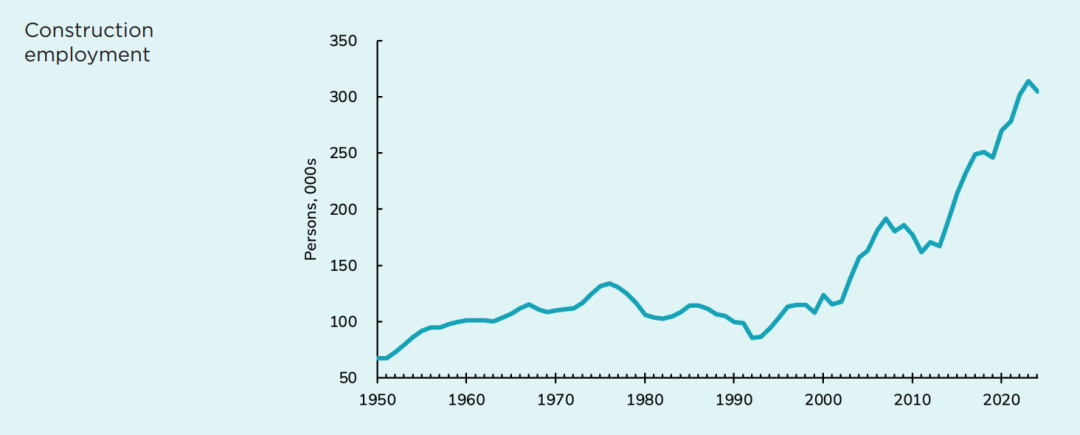
Figure 1: Strong growth in construction employment since the beginning of 2000
Employment supported through suppliers has also grown significantly. The construction industry not only employs large numbers of people directly, but also creates substantial employment through a range of suppliers. This layered employment structure reveals the industry’s far-reaching influence across the supply chain. From 2000 to 2020, total employment increased from approximately 300,000 to 600,000, almost doubling.
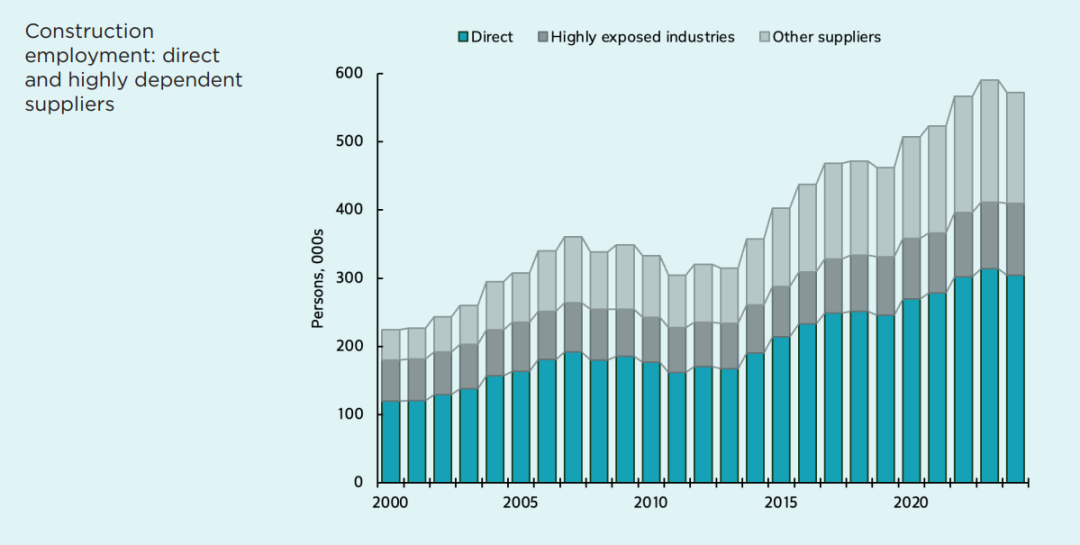
Figure 2: Jobs created across a range of suppliers extend the construction industry’s reach
Within construction’s subsectors, services account for the largest share, employing approximately 140,000 people. This shows that the industry encompasses not only physical construction and engineering, but also substantial service-related work, such as design, consultancy and management. By comparison, employment in building construction and heavy and civil engineering construction is roughly equal, at around 60,000 people each.
The report also identifies two major characteristics of the construction workforce: a marked gender imbalance and an above-average proportion of self-employed business owners.
Construction remains a predominantly male industry. Women make up just 15% of its workforce, compared with an all-industry average of 47% (see Figure 3). This marked gender imbalance shows that future recruitment needs to tap into a previously underused part of the labour market: women. Businesses need to invest in leadership and culture to recruit and retain a more diverse workforce.
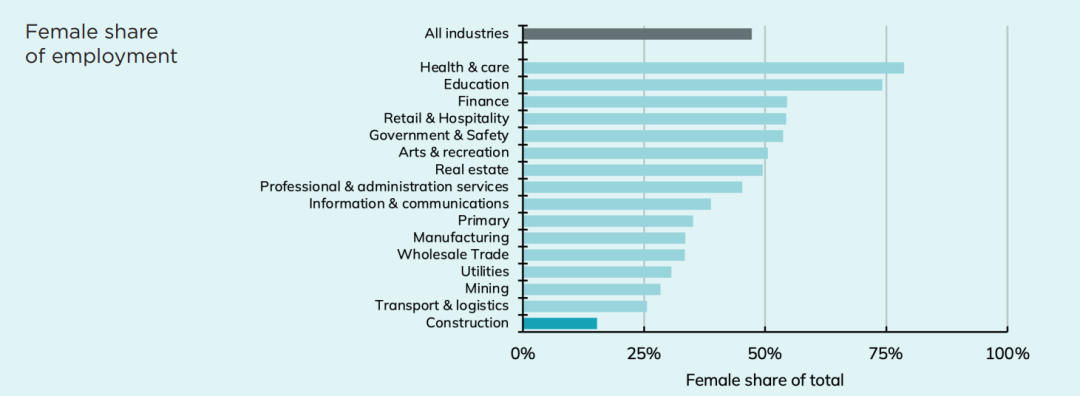
Figure 3: Construction remains male-dominated
The large number of self-employed business owners is another distinctive feature of construction. The industry has a high proportion of self-employed business owners, accounting for a quarter of total employment across all industries.
This has advantages and disadvantages. It creates employment opportunities for a broad range of people, but also slows the adoption and spread of innovation, as very small businesses tend to have lower productivity.
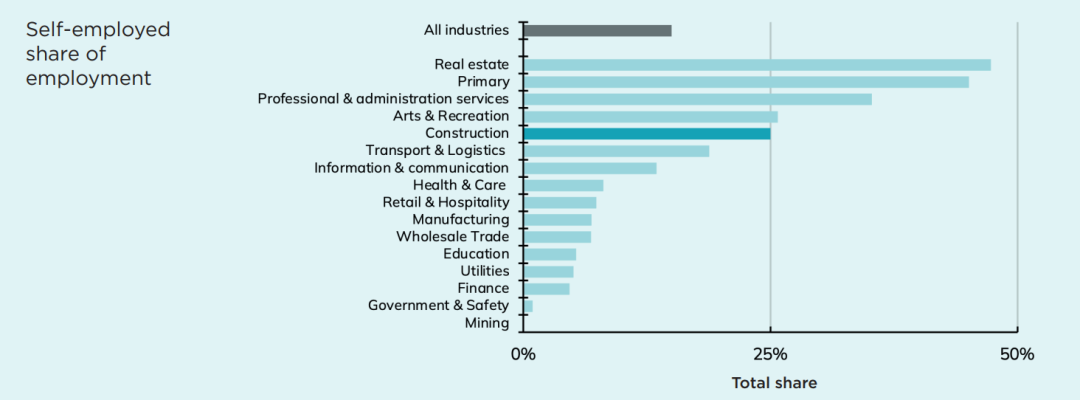
Figure 4: A quarter of construction workers are self-employed
Occupational safety and workforce turnover
Another feature of construction is the large number of people injured at work, making workplace safety a particularly important issue. In 2024, 22 out of every 1000 workers suffered a serious injury, a rate 70% above New Zealand’s all-industry average and 16% above Australia’s construction industry. This means New Zealand construction workers were 70% more likely to be injured than someone in a “typical job” in New Zealand, and 16% more likely than an Australian construction worker.
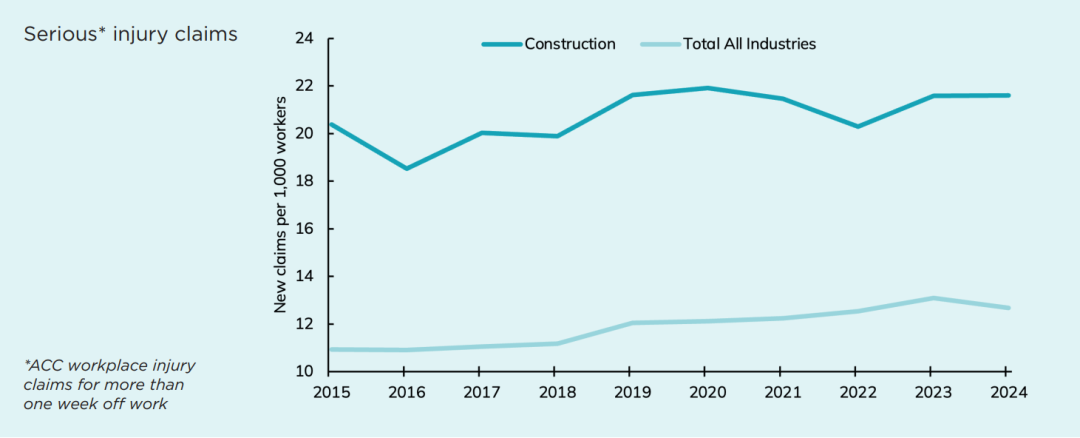
Figure 5: Construction workplace injury rates are 70% higher than the all-industry rate and 16% higher than in Australian construction
High staff turnover is one factor contributing to the industry’s poor health and safety performance. People are constantly joining and leaving construction. In 2022, nearly 40% of workers had worked in the industry for less than a year.
Although large numbers of people enter construction, most newcomers lack industry experience. Most are entirely new to construction, coming from other industries, education or unemployment, rather than moving between construction employers. Over the past year, around 80,000 people entered construction, with fewer than 10,000 coming from another construction company. Most came from other industries, had left education or had previously been unemployed.
This high recruitment rate highlights the need for businesses to have strong training systems and resources to develop employees’ skills, and ways to integrate new staff into their teams and workplace culture. They must also maintain training and upskilling, provide career and earnings progression, and improve retention to reduce recruitment, disruption and training costs while increasing productivity and profitability.
Interview with Site Safe
What can we do in such a high-risk environment? YIJU invited Site Safe Northern Regional Manager Chris Jobson to share his experience and knowledge.
YIJU: NZCBIA’s report shows that in 2024, 22 construction workers per thousand suffered a serious injury, a rate 70% higher than New Zealand’s all-industry average. What is your response?
Chris Jobson: The industry recognises the need to maintain its focus on health and safety. Construction is inherently a high-risk activity, and the changing nature of worksites means risks need constant monitoring. Barriers to entering construction are low, particularly for manual labour, which means workers frequently come and go—up to approximately 50,000 annually over the past decade.
Comparing construction with an all-industry benchmark is not particularly meaningful, because its physical nature results in a disproportionate number of strain injuries compared with more static, less dynamic industries. Construction is working to address this issue. Despite the influx of new and inexperienced workers, the serious injury rate has fallen by 15% over the past four years, according to Stats NZ data.
YIJU: NZCBIA’s report shows that in 2024, 22 construction workers per thousand suffered a serious injury, a rate 70% higher than New Zealand’s all-industry average. What is your response?
Chris Jobson: Workforce turnover in construction, particularly among frontline site workers, makes effective risk management extremely challenging. Many young workers enter the industry without understanding the actual risks of working on a construction site, while others come from backgrounds with very different risk management cultures. Responsible businesses actively address this challenge by ensuring all workers attend Site Safe’s Foundation Passport course before entering a site. This standardised training gives our workers a solid foundation, helping them recognise the risks they may face at work and develop a thorough understanding of effective controls.
YIJU: How does Site Safe define and identify high-risk work in construction?
Chris Jobson: Site Safe follows the accepted definition: “A high-risk workplace is one where the nature of the work involves high-risk activities and processes.” In construction, these activities often take place on sites with limited space, so effective controls must be implemented and their effectiveness actively monitored. We strongly advocate a site-specific risk assessment approach, identifying potential hazards and associated risks before work begins so that the work can be properly planned. Planning ensures the right equipment, materials, skills, knowledge and supervision are in place on site. Common high-risk construction work includes:
- Working at height
- Working in confined spaces
- Hot work
- Asbestos work
- Crane operations
YIJU: How can injured employees be better supported after an accident?
Chris Jobson: Develop an appropriate, supportive return-to-work plan and maintain regular contact while the injured person recovers. Statistics show that the longer workers are away from work, the less likely they are to return.
YIJU: What can companies and individuals each do to improve high-risk working environments in construction?
Chris Jobson: Effectively managing high-risk sites depends on everyone taking responsibility for the potential risks associated with their work. The “three Cs”—Communication, Coordination & Cooperation—provide a solid foundation for companies. Effective processes that give workers a voice in planning and carrying out work are essential.
YIJU: How has workplace safety in construction changed in recent years, and what has driven those changes?
Chris Jobson: As the industry’s leading health and safety organisation, Site Safe has advocated for the industry for 25 years. Attitudes towards health and safety have changed significantly during that time. Major legislative changes over the past decade have supported a more collaborative approach to managing site risks. The pandemic helped the industry recognise that “people are our most valuable resource” and that mental health deserves as much attention as physical health. We have seen active risk management throughout the supply chain, increasing assurance at every level. However, some parts of the industry, particularly residential construction, have yet to fully embrace the value of effective risk management, and this is reflected in injury rates.
YIJU: How does Site Safe help construction workers improve their safety awareness and skills?
Chris Jobson: Quality training and effective site supervision play an important role in reducing injuries by improving risk awareness and understanding. Other important factors also work together to ensure work is completed safely and efficiently: effective planning, realistic timeframes, aligned client and contractor expectations, adequate staffing and material resources, and workers with the right skills and supervision.
As the industry’s health and safety organisation, Site Safe has worked alongside construction for 25 years. During that time, we have collaborated with the industry to develop leading products and services focused on helping it manage site risks and providing greater assurance throughout the supply chain. We actively hold industry forums and working groups and collaborate on relevant research to support the industry’s development and challenge areas we believe fall short. A key focus of our training is actively empowering workers to speak up about site safety.
We also place great emphasis on health and safety education, laying the groundwork for future safety leaders. Site Safe is a Category One education provider, offering an NZQA-approved Certificate in Health and Safety programme with approximately 250 graduates each year. Site Safe also awards numerous scholarships to recognise and support diversity in our industry.
In recent years, we have focused on supporting mental health in the industry. We have undertaken extensive research with leading academic institutions and actively collaborate with key organisations in this important area. Examples include jointly developing a mental health awareness course with Hato Hone St John, actively supporting and working with Mates in Construction, and recently partnering with Ignite Aotearoa to provide Ignite’s online platform and counselling services to Site Safe member companies and their employees.
Site Safe focuses on providing expert advice and support to the industry, at both company and worker level. Our team of highly trained and well-qualified health and safety advisers and trainers works on construction sites nationwide every day, engaging with workers, conducting toolbox talks and providing support and advice.