
Major changes ahead for Auckland's development landscape! Watercare's new network rules take effect. Could development projects be forced to stop?
The capacity map not only helps developers quickly identify areas able to support development, but also highlights places currently facing bottlenecks, such as Warkworth.

Yesterday, Auckland Council released its latest water network capacity map, giving developers clear guidance on water supply and wastewater network capacity across different areas, particularly where additional housing can be supported and where capacity is constrained. The release of this policy is undoubtedly significant for developers and builders: with Auckland growing rapidly, the sustainable expansion of infrastructure directly affects project feasibility and effective planning.
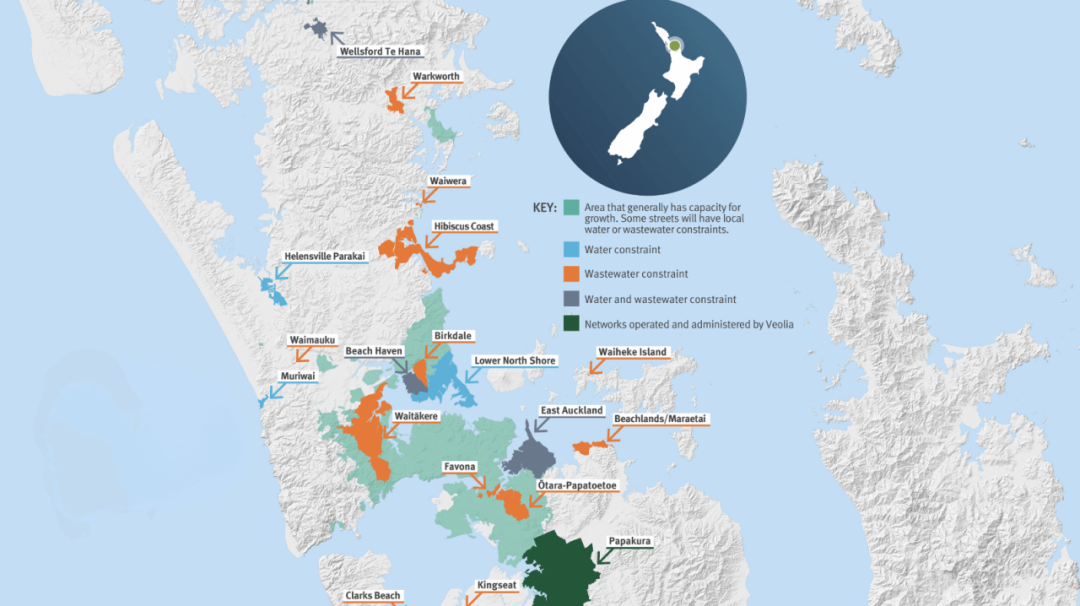
Click the link here for details: https://www.watercare.co.nz/home/about-us/latest-news-and-media/building-for-auckland-s-growing-water-needs

Auckland Council chief strategy and planning officer Priyan Perera
Auckland Council chief strategy and planning officer Priyan Perera said infrastructure across most of Auckland was ready to accommodate housing growth, although capacity constraints remained in some key areas. Perera stressed that the council's infrastructure programme would align with the Auckland Future Development Strategy, with NZ$13,700,000,000 to be invested in water and wastewater infrastructure over the next ten years, including NZ$6,800,000,000 specifically to support housing construction.
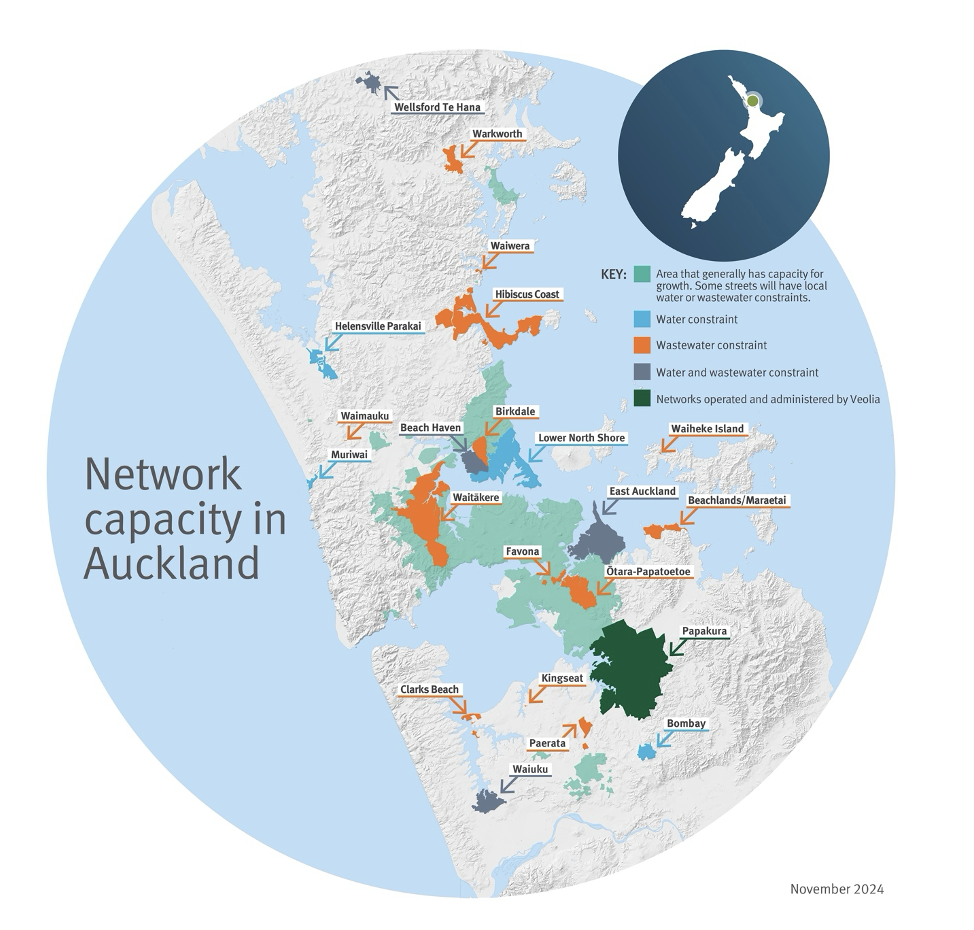
Auckland water network capacity map (Source: Auckland Council)
According to the 2024 construction report published by the New Zealand Chinese Building Industry Association (NZCBIA), New Zealand's construction industry generates annual turnover of up to NZ$9,940,000,000, directly employs more than 300,000 people and supports 270,000 jobs across its supply chain, accounting for 20% of total national employment. This scale highlights the industry's importance to the economy and employment, particularly as policy changes directly affect a large number of workers. The report also notes that New Zealand faces a persistent housing supply shortfall: an additional 31,000 homes are needed each year, but only 24,000 are added annually, creating a shortage. As one of the country's fastest-growing cities, Auckland has a particular need for infrastructure to support increasing demand for high-density residential development.
The capacity map not only helps developers quickly identify areas able to support development, but also highlights places currently facing bottlenecks, such as Warkworth. A NZ$300,000,000 wastewater infrastructure upgrade is currently under way there to meet future growth needs. The council has not imposed a blanket building ban in capacity-constrained areas, instead emphasising that each application will be assessed individually, giving developers some flexibility and hope.
As the table below shows, Watercare has classified some areas by their water supply and wastewater treatment capacity into “areas with currently limited water supply and/or wastewater treatment capacity”, “areas where water supply and/or wastewater treatment capacity is currently limited”, and “areas with no water supply and/or wastewater treatment capacity in the long term”.
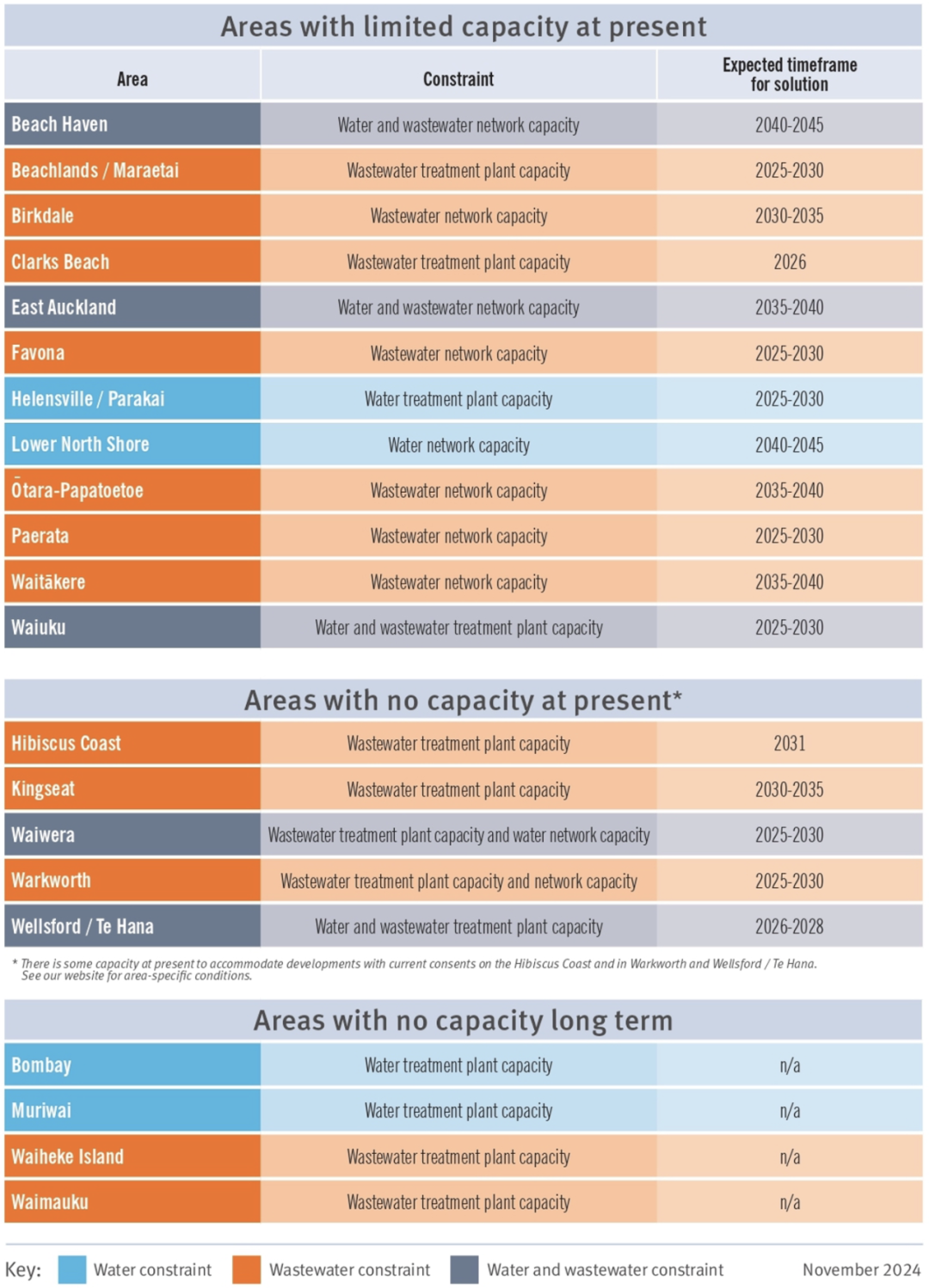
Current water network capacity across Auckland (Source: Auckland Council)
Auckland acting mayor Desley Simpson also welcomed Watercare's move towards greater transparency in releasing the map, praising its intention to support developers with planning and construction. Simpson said: “The transparency Watercare has shown enables the development community to plan more effectively. Developers can clearly see the direction of future housing development, giving them a degree of confidence.”
The council believes that, although developers face restrictions in some areas, it will progressively address these bottlenecks, giving developers clear expectations for future expansion plans.
To discuss the issue, YIJU New Zealand spoke exclusively with Dylan Huang, secretary-general of the New Zealand Chinese Building Industry Association, who said the move would cause unnecessary losses for developers and builders:
“Following the planned sharp increase in development contributions and changes under the new PC79 transport development rules, restrictions on urban water supply and wastewater infrastructure have now emerged unexpectedly. The power struggles and competing interests behind these changes have added considerable uncertainty to early development design work, leaving Auckland developers and builders to bear unnecessary losses beyond their control. Property owners preparing to develop and builders preparing to start work could all face projects suddenly being forced to stop。”
According to NZCBIA's report, Auckland is seeing growth in demand not only for housing but also for non-residential construction, particularly a sharp increase in demand for storage space. This further demonstrates the market's practical need for a diverse range of buildings.
In the short term, developers and builders may face some unplanned changes. In the longer term, however, developers can use the water capacity map to focus on areas able to support non-residential development, positioning themselves to seize market opportunities driven by long-term economic and population growth.
The council's investment has increased year by year in recent years, exceeding NZ$1,000,000,000 for the first time in the 2023/2024 financial year. This sustained infrastructure investment aims to meet growth needs while balancing environmental protection and healthy housing standards.