
Pressure mounts in Auckland's property market: over 13% of sellers sell at a loss in Q3?! This week's key developments for property investors
Meanwhile, mortgaged investors with multiple properties recovered to a 23% share of purchases in October, up from a low of less than 21% in April.

1
Shrinking profits on house sales present challenges for sellers
CoreLogic's latest Pain & Gain Report shows that in the third quarter (Q3) of 2024, more than 13% of Auckland residential properties sold for less than their purchase price, leaving sellers facing losses. This proportion exceeded the national average (9.8%), reflecting a market that continues to favour buyers.
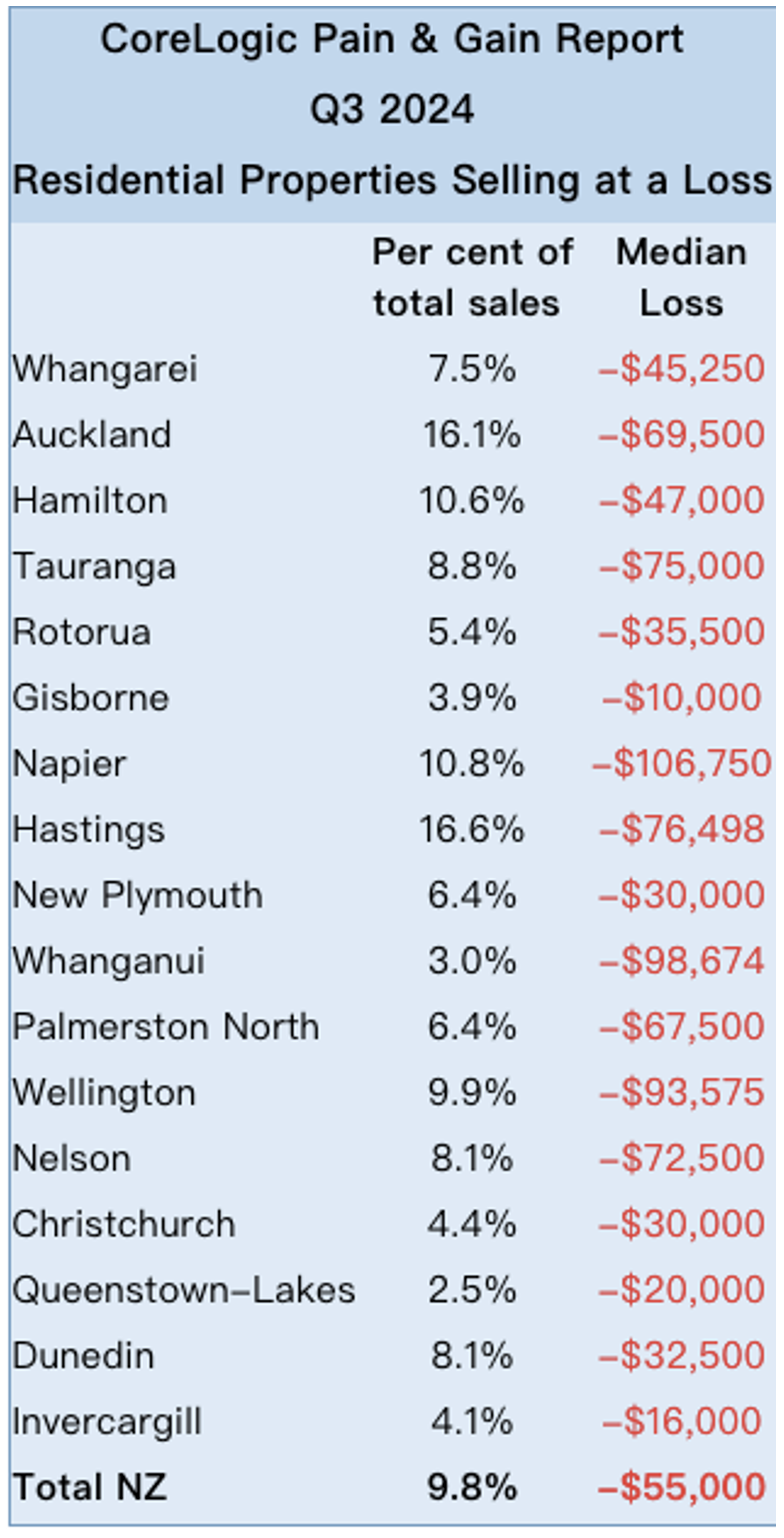
Property sales at a loss across New Zealand's main cities in the third quarter of 2024
(Source: CoreLogic)
The report notes that the proportion of properties sold at a loss nationwide ranged from 2.5% in Queenstown Lakes to 16.6% in Hastings, with Auckland's share remaining high at 13%. Median losses ranged from NZ$10,000 in Gisborne to NZ$106,750 in Napier, with transaction costs potentially increasing actual losses further. Although more than 90% of sales still made a profit, the report notes that this proportion is declining. CoreLogic chief economist Kelvin Davidson said buyers were increasingly gaining the upper hand in price negotiations, a stark contrast with the market peak in 2021. The data shows that properties sold at a loss had been held for an average of 2.9 years, compared with 8.5 years for those sold at a profit. Apartments also had a much higher proportion of loss-making sales (34.9%) than standalone houses (8.9%), highlighting the influence of property type on market performance.
Experts urge caution as the property market retreats from its 2021 peak, giving buyers more negotiating power and putting sellers under greater pressure. In the short term, sellers need to plan their sales strategies carefully to avoid unnecessary losses in the current market.

2
First-home buyers and investors both increase their market share
CoreLogic's latest buyer classification data shows that first-home buyers continue to strengthen their presence in the market. Their share of purchases rose from just below 27% in the third quarter to nearly 28% in October, a record high. Although taking the first step onto the property ladder remains challenging, many have achieved their homeownership goals by withdrawing KiwiSaver funds towards their deposits, using banks' low-deposit lending policies, and choosing new builds or cheaper properties in outlying areas.
Meanwhile, mortgaged investors with multiple properties recovered to a 23% share of purchases in October, up from a low of less than 21% in April. Although the recovery remains modest, falling mortgage rates, lower deposit requirements and the restoration of interest deductibility are all positive drivers. As 2025 approaches, investors could become a group to watch. However, despite easing cash flow pressures, some investors may struggle to secure loans because of debt-to-income (DTI) restrictions.
3
Falling interest rates have yet to drive a significant rise in borrowing
Although lower mortgage rates and bank serviceability test rates theoretically increase households' borrowing capacity, high-DTI lending remains subdued. It accounts for less than 5% of first-home buyer and investor activity, well below the 20% limit. Kelvin Davidson said this caution reflected a reluctance among both borrowers and lenders to take on large mortgages. House prices also remain weak, and buyers have shown no clear appetite for greater leverage.
4
Rents flatten, bringing good news for tenants
Rental market data shows weak growth. According to figures released by Stats NZ last week, annual rent growth measured by the flow measure for new tenancies was just 0.7%, the lowest since November 2022. Rents in Wellington and Auckland even fell by around 1%. Slower growth in rental demand, more rental listings and rents taking up an excessively high share of incomes have combined to produce this situation. This is good news for tenants, but could dampen enthusiasm among some investors.
5
The economic outlook remains challenging
New Zealand's economy remains weak, but this provides room for further cuts to the Official Cash Rate (OCR). Electronic card spending and manufacturing activity figures released last week remained subdued, and this week's BNZ–BusinessNZ services index and NZ Activity Index are expected to continue that trend. Persistently weak economic signals could mean market pressures continue.