
Major news: rates cut by 50 basis points! Reserve Bank says more cuts will follow! Market confidence is rebounding strongly, and time is running out for home buyers!
Leading economist Shamubeel Eaqub told YIJU that the Reserve Bank’s move was intended to support an economy already in recession, and that hopes of an economic recovery would become reality by the middle of 2025.
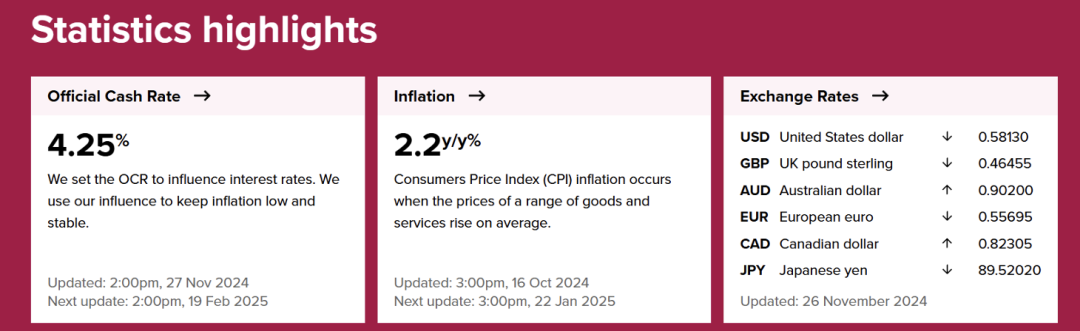
On 27 November, the Reserve Bank of New Zealand (RBNZ) announced a 50-basis-point cut to the Official Cash Rate (OCR), bringing it to 4.25%, in line with broad market expectations. This was the final OCR decision of 2024, with the next scheduled for 19 February 2025. Today, the bank also released its first Monetary Policy Statement since August, with far-reaching implications for lenders, home buyers and the wider New Zealand economy.
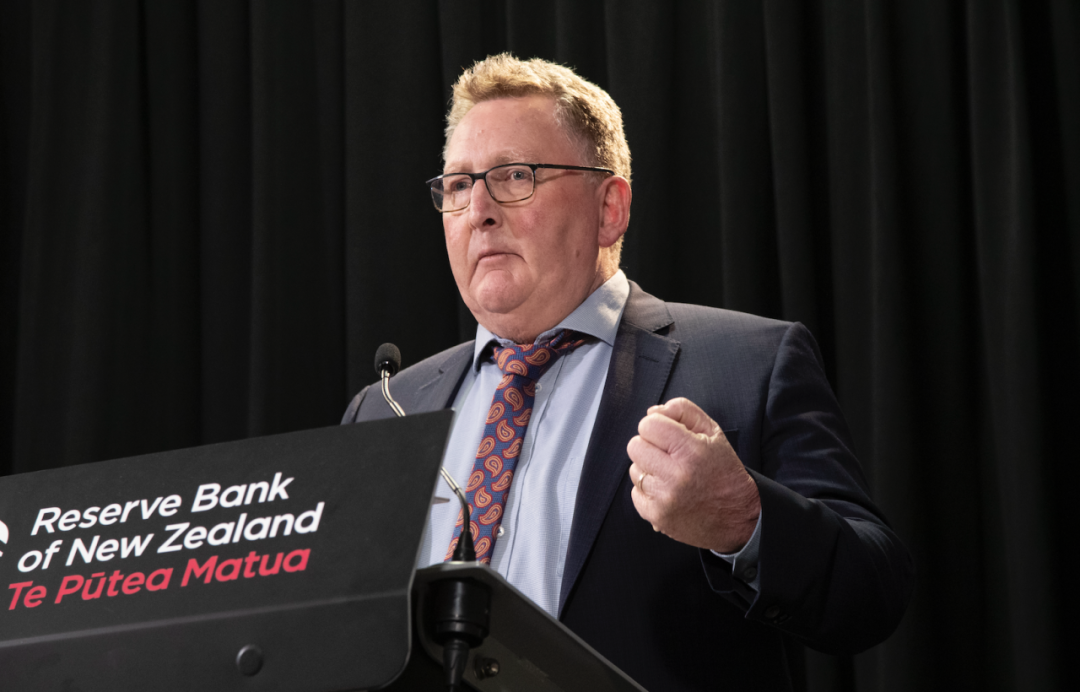
Reserve Bank Governor Adrian Orr
A 50-basis-point rate cut
More cuts to come
In its OCR update on 27 November, the Reserve Bank announced a 50-basis-point reduction in the Official Cash Rate to 4.25%. This is the third cut since August, bringing the OCR down from 5.5% to 4.25%.
The Monetary Policy Committee said in its Monetary Policy Statement: “With headline inflation close to the target midpoint and measures of core inflation gradually converging on it, the committee has greater confidence in continuing to remove monetary policy restraint.”
“The committee agreed that a 50-basis-point cut was consistent with its mandate to maintain low and stable inflation, while seeking to avoid unnecessary economic volatility, including fluctuations in output, employment, interest rates and the exchange rate. If economic conditions evolve as expected, the committee anticipates being able to lower the Official Cash Rate (OCR) further early next year.”
As the statement indicates, this rate cut is also a timely response to New Zealand’s economic conditions and inflation data. Inflation is currently approaching the Reserve Bank’s 2% target level. Data for the September quarter showed headline inflation falling to 2.2%, compared with the bank’s August forecast of 2.3% and its May forecast of 3.0%.
ASB economists said: “With inflation returning to the target midpoint and spare capacity emerging in the economy, the degree of monetary restraint needs to ease quickly. A 50-basis-point cut achieves this.”

Shamubeel Eaqub
Leading economist Shamubeel Eaqub told YIJU that the Reserve Bank’s move was intended to support an economy already in recession, and that hopes of an economic recovery would become reality by the middle of 2025.
His comments follow:
The Reserve Bank of New Zealand has cut the Official Cash Rate (OCR) by 0.5 percentage points to 4.25%. Further cuts are particularly necessary to address the deepest and longest recession on record.
Inflation surged during and after the pandemic, largely because of a series of shocks. Initially, the pandemic’s effects—illness—and related policies restricting movement created supply chain bottlenecks. Meanwhile, efforts to stimulate the economy through ultra-low interest rates and a substantial increase in government spending revived demand, while supply remained constrained by pandemic disruptions, driving sustained price increases. Russia’s invasion of Ukraine also caused sharp but brief price fluctuations in key commodities such as oil and grain, further fuelling inflation.
Central banks around the world raised interest rates to tackle high inflation. As inflationary shocks gradually fade, they are now turning to rate cuts to stimulate their economies, although inflation remains high relative to weak economic conditions.
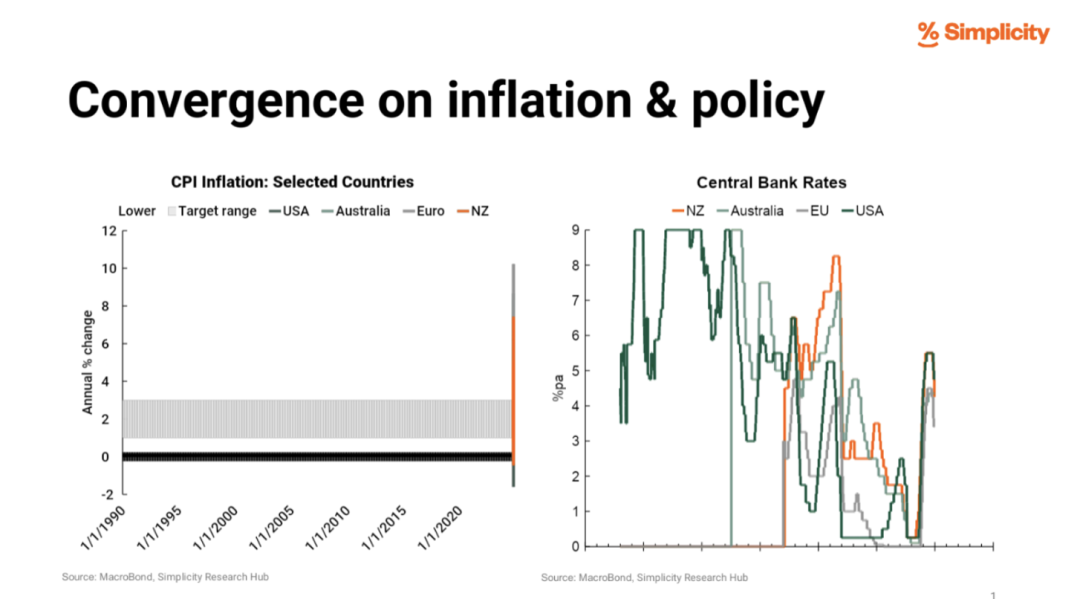
Looking at the interest rate outlook, further cuts lie ahead, with the OCR expected to fall from its current 4.25% to 3%。To support the economy through a recession already more severe and prolonged than the global financial crisis, the Reserve Bank needs to keep cutting rates, particularly as slowing net migration, and therefore slower population growth, and fiscal tightening weigh on the economy. An insufficiently steady pace of cuts could cause unnecessary unemployment and business failures.
This cut was in line with broad market expectations. However, the Reserve Bank of New Zealand’s forecasts of a rapid return to economic growth are overly optimistic. Faced with a bleaker reality than anticipated, it is expected to cut rates further early next year.
This will help, particularly those about to refix their mortgages, for whom lower rates will ease financial pressure. As rates gradually fall, the recession will progressively end, and previously deferred investment and borrowing will revive, adding momentum to the economic recovery.
So what does this mean for New Zealanders? The Reserve Bank of New Zealand is finally taking action to support the economy. But households and businesses still face several months of pressure before the recession is reversed and recovery arrives. Nevertheless, as a series of rate cuts progresses, we have reason to believe that by the middle of 2025, hopes of an economic recovery will finally become reality.
How much do rate cuts affect commercial bank rates?
Although commercial banks often raise or lower rates alongside the Reserve Bank, their rates are not directly tied to the OCR. Banks adjust mortgage rates according to their funding needs and wholesale market rates, while using the OCR as a benchmark. Their mortgage rates depend on how their funding sources are matched to their lending. Sometimes banks anticipate falling or rising rates and set their rates before the Reserve Bank of New Zealand announces the OCR; at other times, they adjust afterwards.
Infometrics chief forecaster Gareth Kiernan said financial markets had fully anticipated a 50-basis-point cut, so the direct impact on fixed mortgage rates could be limited. He expected fixed rates to fall by only around 10 basis points, while floating rates, which usually follow OCR changes closely, were expected to fall by 50 basis points.
We have already seen New Zealand’s major banks cut their rates in succession. See the chart below for their current rates:
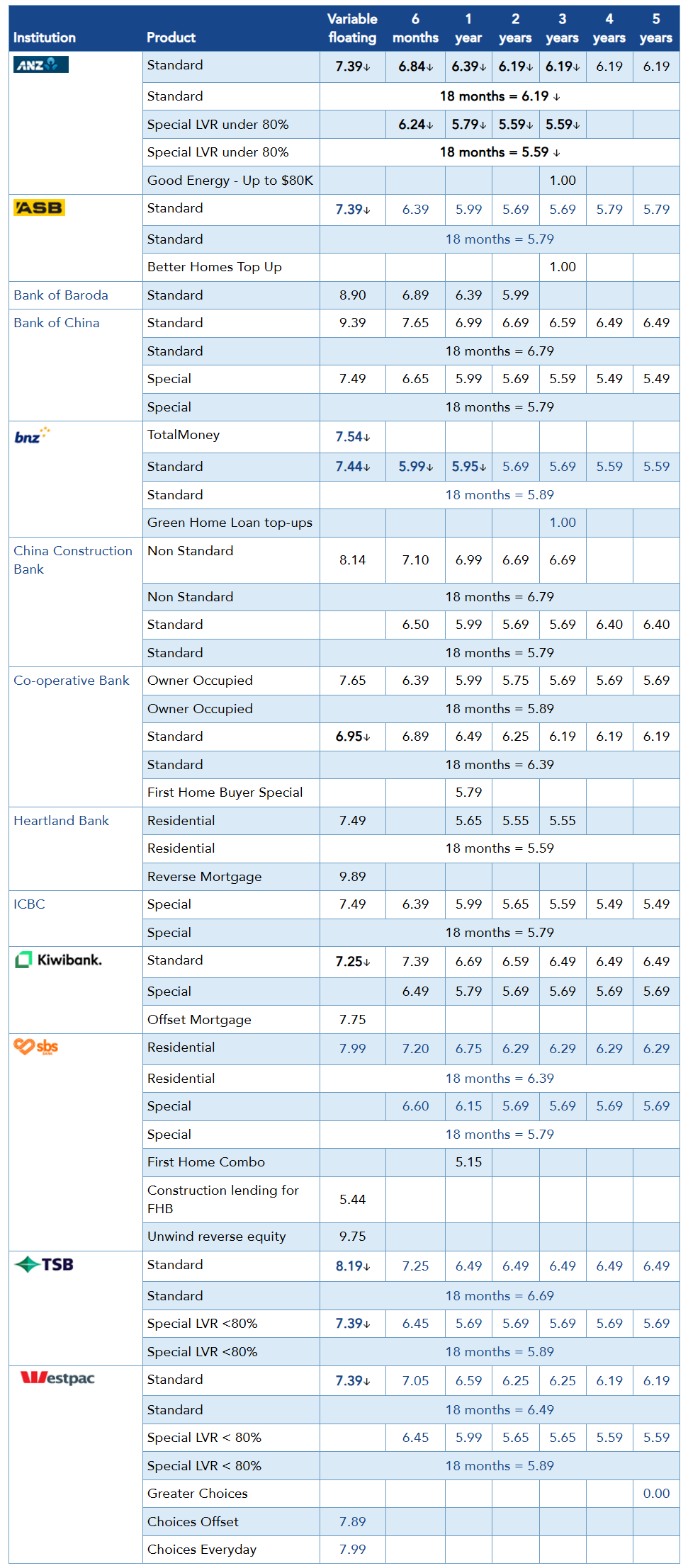
Rates as at 15h on 27 November. Source: interest.co.nz/borrowing
What the rate cut signals for the property market
Economists believe the property market is already improving, partly because interest rates have fallen, but mainly because people expect further cuts—illustrating the importance of market confidence and optimism.
Barfoot & Thompson managing director Peter Thompson said: “The arrival of spring, falling lending rates and easing inflation have generated positive expectations, and the Auckland market has responded accordingly.”

Barfoot & Thompson managing director Peter Thompson
The cut comes just ahead of the summer peak in housing market activity, and many prospective buyers may take the opportunity to act. Market confidence has strengthened further, and optimism is growing. Meanwhile, housing inventory remains high, and more owners are expected to take the opportunity to list their properties. For buyers, this means greater bargaining power and more choice, with strong activity expected in the property market.
Barfoot & Thompson’s October sales figures show that the median price in October was NZ$955,000, up 2.2% from September, reversing 3 consecutive months of decline. The average sale price was NZ$1,129,000, up 4.5% from September and 2.2% above the average for the preceding 3 months.
Barfoot & Thompson’s data also shows that growing property market confidence attracted a record number of sellers listing properties, while many newly built homes also entered the market. New listings in October totalled 2361, the highest monthly level in nearly 3 years.
For first-home buyers, the rate cut is certainly welcome news. Banks are currently more open to low-deposit buyers, while continued income growth and relatively stable house prices have created favourable conditions for first-home buyers. Tella mortgage company CEO Andrew Chambers said enquiries from first-home buyers had increased significantly. He encouraged them to seize the opportunity: “Conditions are very favourable at present. Entering the market early can give buyers an advantage in a competitive market.”
As the Reserve Bank cuts rates and the summer home-buying peak approaches, more buyers are gaining confidence in the market. We may see FOMO—fear of missing out—emerge over the coming months, driving house prices higher. For prospective buyers waiting on the sidelines, now may be the best time to buy a property! If you need help, speak with experienced industry professionals at Barfoot & Thompson to ensure you make informed decisions throughout the home-buying process。
Barfoot & Thompson is the real estate agency that knows Auckland best
Barfoot & Thompson accounts for 1/3 of Auckland home sales,
far ahead of all other real estate agencies.
Our services
-
Residential sales
-
Commercial property
-
Property management
-
Residential rentals
-
Body corporate
-
Project support