
The 24 hours after the sharp OCR cut: a comprehensive round-up of interest rate changes and market trends
Consumer organisations caution that although rate cuts reduce borrowing costs, households still need to assess their finances realistically and plan their spending carefully.

A timely rate cut for the festive season
Retail NZ chief executive Carolyn Young said the rate cut provided a welcome boost ahead of the Black Friday and Christmas shopping peaks. She stressed: “Strong Christmas sales are crucial for retailers to meet their annual targets, and lower interest rates can significantly strengthen consumer confidence.” The challenges facing retail are clear: Stats NZ data shows that core retail sales in the third quarter of 2024 fell 1.7% year on year, while total sales, including vehicles and fuel, declined 2.8%. Meanwhile, Retail NZ’s quarterly survey found that around 70% of retailers failed to meet their sales targets between July and September. Hopes are clearly high that the rate cut will help turn the sector’s fortunes around and encourage consumers to spend more during the upcoming sales season.

Finance Minister Nicola Willis
Finance Minister Nicola Willis welcomed the rate cut, saying it would directly ease financial pressure on households and businesses. “For example, on a NZ$500,000 loan over 25 years, a reduction in the interest rate from 7% to 5.75% would save a household around NZ$180 a fortnight. This policy, combined with tax relief and FamilyBoost subsidies, leaves many households better off financially than last year.” However, consumer organisations caution that although rate cuts reduce borrowing costs, households still need to assess their finances realistically and plan their spending carefully.
Global risks could undermine market confidence
Tony Alexander added that although local consumer confidence had improved, changes in the international trading environment could put pressure on the economic recovery. He noted that the United States planned to introduce higher tariffs in early 2025, while potential retaliation by other countries could increase global trade costs and push inflation higher. These global inflationary pressures could limit New Zealand’s scope for further rate cuts and potentially affect confidence in the local market.
Banks respond swiftly
Mortgage and deposit rates both fall
New Zealand’s major banks moved quickly after the Reserve Bank announced its rate cut, adjusting mortgage and deposit rates in succession:
-
ASB: Reduced floating lending rates by 0.50% for personal, business and rural loans. ASB’s cumulative cuts this year have reached 125 basis points, saving more than 110,000 customers over NZ$170,000,000. It also lowered its mortgage servicing test rate from 8.10% to 7.60%, improving borrowers’ ability to qualify for loans.
-
BNZ: Announced that it would pass on the full 50-basis-point cut to floating mortgage rates and adjust rates on products including Rapid Repay and Mortgage One. BNZ had also previously lowered its 6-month fixed mortgage rate to 5.99%, demonstrating a forward-looking response to market changes.
-
Kiwibank:Kiwibank was among the first banks to respond, cutting its floating lending rate by 50 basis points and adjusting its mortgage test rate to 7.5%. General manager of home lending Nicole Pervan said: “Lower interest rates can help customers save on mortgage and business borrowing costs, while also providing an opportunity for confidence to return to the housing market.”
-
Co-operative Bank:Responded fastest among the major banks and made the largest adjustment, cutting its floating mortgage rate by 70 basis points to 6.95%. The reduction far exceeded market expectations, giving it an early advantage in an intensely competitive market.
Other major banks, including ANZ and Westpac, also announced mortgage rate cuts in succession. Consumers and businesses stand to benefit significantly as the effects of lower rates gradually flow through to the market.
The table below lists the latest mortgage rates offered by banks as at 28 November:
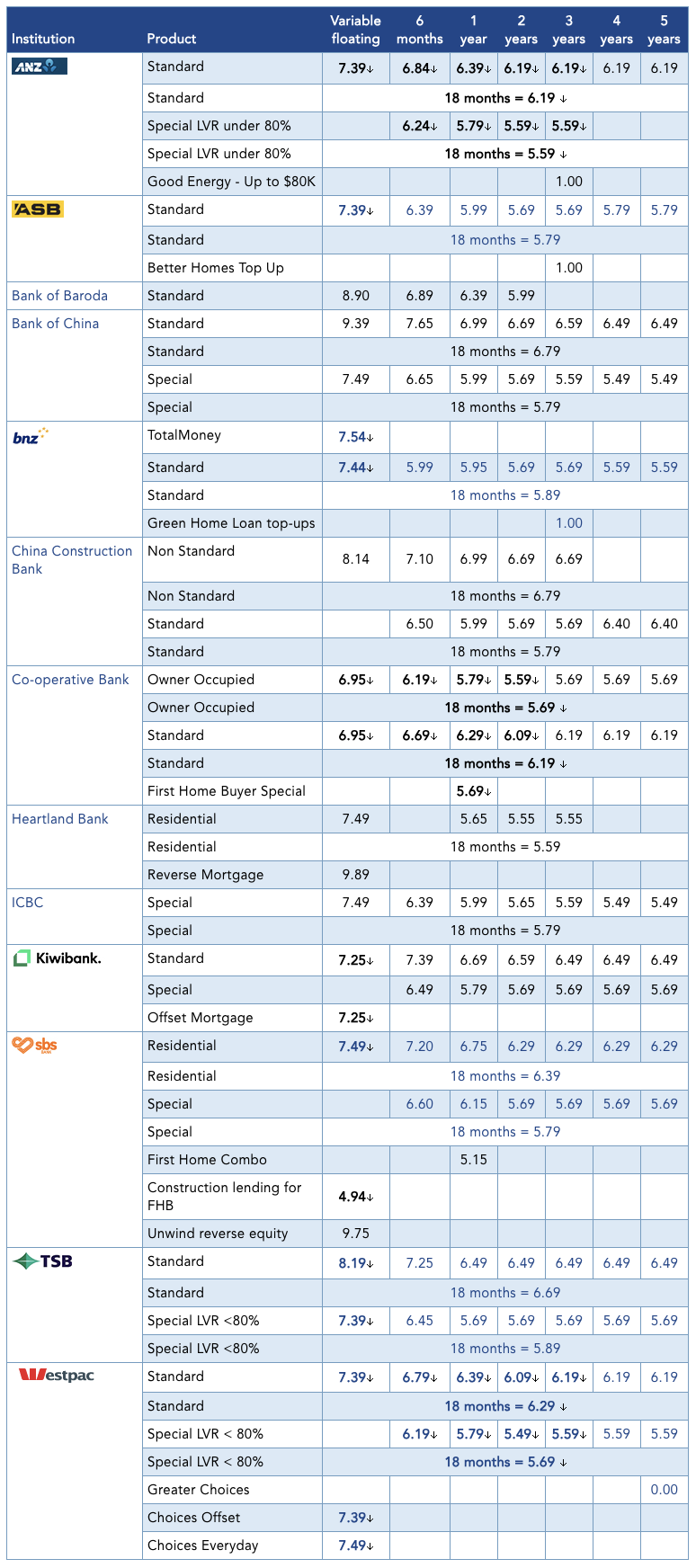
Source: interest.co.nz/borrowing
Limited room for fixed rates to fall
Tony Alexander said that although the cut would slightly lower short-term floating rates and fixed rates for terms of 1 to 2 years, international inflationary pressures and banks’ funding costs left very limited room for long-term fixed rates of 3 years or more to fall. He advised borrowers to choose loan terms carefully according to their own finances, rather than relying solely on short-term market rate movements.
Signs of a property market recovery emerge,
as lower mortgage rates fuel investment interest
Rate cuts have reduced the cost of buying a home and further stimulated property market activity. Reserve Bank data shows that nationwide mortgage commitments in October rose 3.3% month on month to NZ$7,534,000,000, the highest level since December 2021. Investors’ share of borrowing rose to 22.7%, its highest since February 2021, while the share attributable to first-home buyers (FHBs) fell to 20.7%.
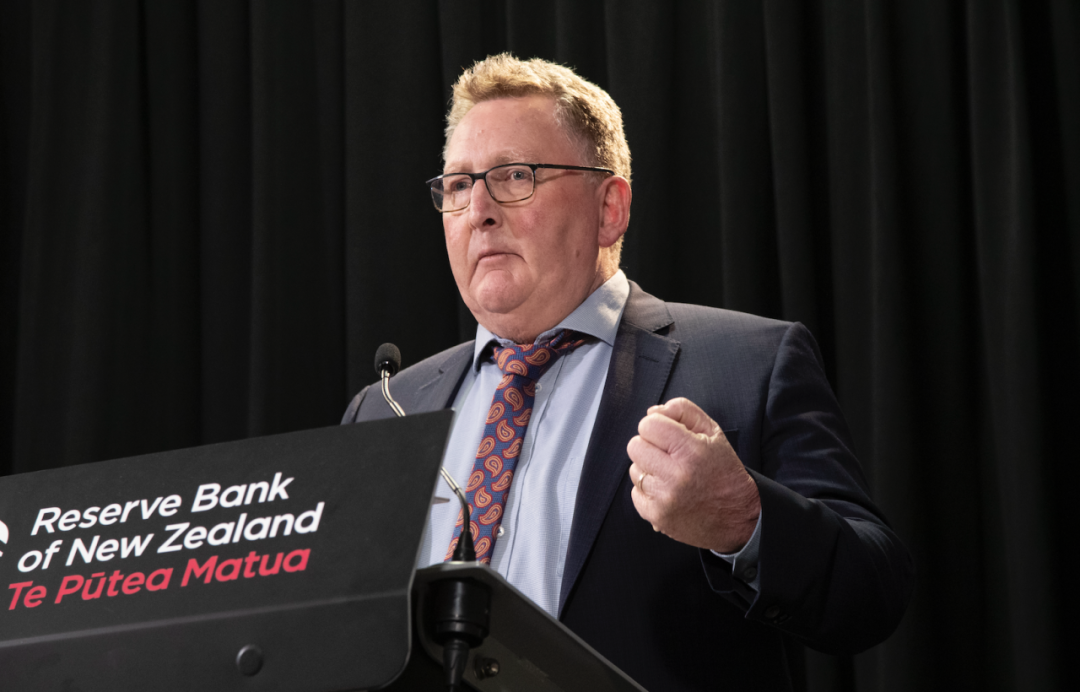
Reserve Bank of New Zealand Governor Adrian Orr
The Reserve Bank forecasts that New Zealand house prices will rise by more than 7% in 2025, creating a strong attraction for property investors. The significant fall in short-term mortgage rates has also created greater opportunities for first-home buyers. Despite the substantial OCR reduction, Reserve Bank Governor Adrian Orr warned that rising global bond yields could limit declines in long-term interest rates. Borrowers therefore still need to weigh short- and long-term mortgage options carefully against their personal finances.
Looking ahead
Further rate cuts still expected
According to Reserve Bank Governor Adrian Orr’s remarks, the Monetary Policy Committee expects to cut the OCR again to 3.75% in February 2025. If economic data continues to support rate cuts, the OCR could even move closer to 3% over the next two years. However, Orr also stressed that the Reserve Bank aims to bring the OCR gradually towards the “neutral interest rate range” of 2.5%–3.5%, avoiding excessive economic stimulus.
However, Tony Alexander also warned that the international trading environment and inflationary pressures could limit the extent of further rate cuts in New Zealand. He noted that the Reserve Bank had lowered its forecasts for future economic growth from the 2.7%–3.2% projected in August to 2.0%–2.4%, while leaving its inflation forecasts almost unchanged. This suggests the bank remains cautious about the path of the economic recovery.
Looking ahead, the Reserve Bank expects New Zealand’s economy to recover gradually in 2025, with the property market and retail spending potentially becoming key drivers. However, inflation control, global economic volatility and geopolitical risks remain sources of uncertainty. In the current economic environment, consumers and borrowers should make more considered decisions based on market developments and their individual needs.