
How can the infrastructure deficit be tackled? New Zealand Government unlocks the potential of private sector partnerships: this week's key developments for property investors
New Zealand's property market continued its modest decline in November, falling 0.4% overall.

Infrastructure funding reform plan
The New Zealand Government recently announced a major infrastructure funding reform plan based on the principle that users should bear more of the cost, aiming to ease pressure on government debt while improving fairness and efficiency in infrastructure development. Developed by the Treasury and approved by Cabinet, the framework advocates better allocation of funding through charges, public-private partnerships (PPPs) and other mechanisms.
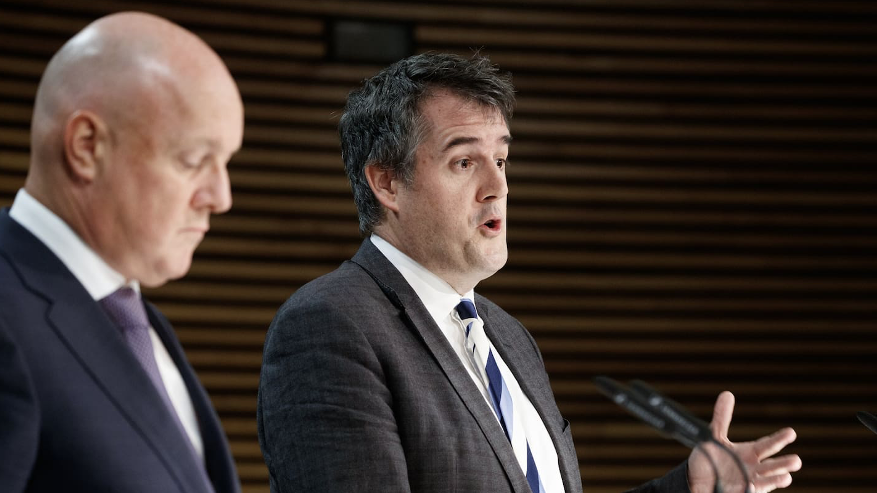
Bishop says the Government should embrace private sector proposals to address New Zealand's infrastructure deficit
User pays: shifting costs from taxpayers to users
Infrastructure Minister Chris Bishop said the current infrastructure financing model involves an “inefficient allocation of economic costs”, which often leaves asset renewal and maintenance neglected. To address this, the Government wants infrastructure providers to have users bear more of the costs directly through toll roads, congestion charges, water meters and targeted rates.
Bishop stressed: “The Government will still provide funding, but only after other options have been exhausted.” He added that different projects have different needs, and the Government would provide the minimum support needed to ensure a project is viable. This approach reduces reliance on government debt, but could also raise public concerns about potential increases in transport, energy and other charges.
New opportunities for the private sector: a channel for unsolicited proposals
To make better use of private sector resources, the Government has introduced a mechanism allowing private companies to submit unsolicited infrastructure proposals. These proposals must align with the Government's long-term objectives and demonstrate clear value for money. Once approved, private companies can earn revenue by charging users.
However, the mechanism comes with strict conditions: proponents must demonstrate that only they can deliver the project, otherwise the Government may test its feasibility through a competitive tender. To encourage innovation, the Government has promised to respect companies' intellectual property during assessment, stressing that the mechanism supplements existing procurement processes rather than replacing them.
Is privatisation the best option?
Bishop said: “New Zealand needs to actively embrace private sector proposals to bridge the infrastructure funding gap, rather than shutting them out through bureaucratic barriers.” This signals the Government's desire to strengthen public-private cooperation through reform. However, whether the reforms can balance efficiency and fairness remains to be seen. Looking back at the Auckland light rail project proposed by the New Zealand Super Fund in 2018, the project was ultimately shelved despite its total value of NZ$6,000,000,000, because there was no clear approval process. Whether the new framework can prevent similar problems will take time to establish.
Property market outlook remains uncertain
CoreLogic's latest house price index shows that New Zealand's property market continued its modest decline in November, falling 0.4% overall. Although the decline was smaller than the average of 0.8% recorded from April to August, the market has yet to show clear signs of recovery.
Wellington and Hamilton were relatively weak, while Tauranga and Christchurch were broadly unchanged, and Dunedin edged up 0.4%. Against this backdrop, although the Reserve Bank of New Zealand forecasts house price growth of 7% in 2025, this may represent only a moderate recovery, with a rapid rebound difficult to achieve.
Falling mortgage rates are a key factor driving the market towards recovery. With the official cash rate (OCR) expected to fall again in February next year, new borrowers will benefit, while borrowers on short fixed terms will also soon feel relief from repayment pressures. Even so, the market continues to face headwinds from high stock levels and a weak labour market.
Short mortgage terms still dominate the market
The latest Reserve Bank of New Zealand data shows that only 10% of new loans issued in October were taken out as longer-term (with terms exceeding 12 months) fixed-rate loans, while as many as 43% were fixed for terms of up to 12 months. A further 28% were on floating rates. This preference for short terms suggests borrowers hold differing views on the market outlook: some hope to use floating rates while waiting for lower fixed rates, while others choose short fixed terms to manage potential future interest rate fluctuations。
Building consents nearing a trough
A total of 2850 new homes were consented in October, down 7% on the same period last year. Although consent numbers fell year on year, the figures suggest they may be nearing a trough, given the sharper declines in previous months. This points to construction activity potentially stabilising over the coming year, although lower net migration makes a building boom unlikely.
Net migration remains subdued

Migration data for October, due out this Friday, is expected to show continued weakness in net inflows. Falling arrivals and persistently high departures could slow population growth, undoubtedly restraining growth in housing demand.
Economic data remains weak
Other macroeconomic data released this week, including electronic card spending and the manufacturing purchasing managers' index for November, is also likely to be weak. Continued softness in consumption and manufacturing would further increase the likelihood of the central bank cutting interest rates by 0.5% in February next year.