
Banks compete for customers as mortgage price wars intensify! From 7.09% to 4.89%, have mortgage rates really returned to a level where dreams are within reach?
This week, Westpac became the last major bank to cut its fixed mortgage rates. From today, its special one-year rate falls to 4.89% and its six-month rate to 5.29%. All four major banks — Westpac, ANZ, ASB and Kiwibank — have now responded to the 28 May cut in the Official Cash Rate (OCR) to 3.25%, marking a new phase of competition in a low-interest-rate cycle.
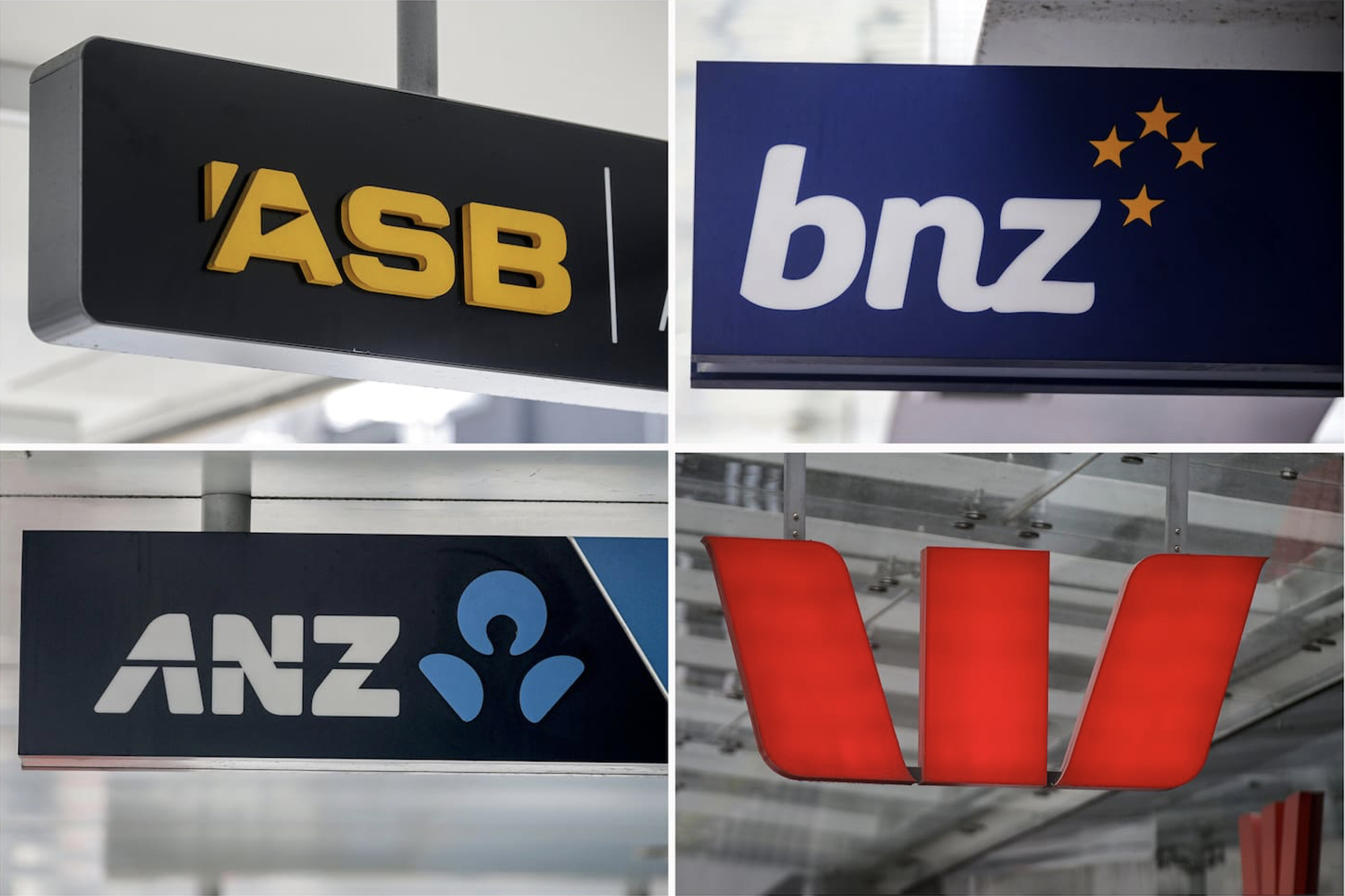
This week, Westpac became the last major bank to cut its fixed mortgage rates. From today, its special one-year rate falls to 4.89% and its six-month rate to 5.29%. All four major banks — Westpac, ANZ, ASB and Kiwibank — have now responded to the 28 May cut in the Official Cash Rate (OCR) to 3.25%, marking a new phase of competition in a low-interest-rate cycle.
But amid the excitement, a deeper question emerges: can this latest round of rate cuts truly rebuild confidence, boost spending and drive a recovery in property and the wider economy?
1 Falling interest rates are making a difference, but the effects still take time
Reserve Bank of New Zealand data shows the average one-year fixed mortgage rate was 7.09% in January 2024, falling to 5.18% by March 2025. Mainstream banks’ advertised rates have now reached a low of 4.89%, the lowest level since April 2022.
Latest mortgage rates across commercial banks
www.interest.co.nz/borrowing
Westpac general manager Sarah Hearn said: “We are working to offer customers a range of fixed mortgage options to suit different repayment preferences.” Alongside Westpac, Kiwibank, ANZ and others have cut their one-year rates to 4.89% and introduced special offers across different terms.
But as economic commentator David Hargreaves noted: “The ‘healing effects’ of these rate cuts have yet to be fully reflected in consumer spending.” Reserve Bank of New Zealand data shows that, as of March 2025, nationwide mortgage interest expenditure stood at NZ$5,571,000,000, only slightly below the peak of NZ$5,804,000,000 in December 2024. This suggests that most households’ financial pressures have yet to ease significantly: rates are falling, but the strain is still being felt.
Hargreaves pointed out that more than 53% of mortgages will be repriced before September, meaning tangible financial relief will gradually emerge over the next three to six months.
2 Not everyone can benefit from rates starting with 4
Although market rates are falling, lending hurdles remain. Senior iLender adviser Jeff Royle noted that mainstream banks still impose numerous restrictions on the self-employed, people with lower credit scores and overseas Kiwis. For example, even if a Kiwi working in Australia earns NZ$100,000 a year, some banks count only 55% of that income when assessing a loan, while Kiwibank can use 100%, making a substantial difference.
Royle said bluntly: “I often call myself an ‘emergency doctor’ of finance. You cannot live on market interest rates alone; your financial health matters too.” He said that while non-bank lending is flexible, it also imposes strict requirements on borrowers’ repayment capacity and credit habits. Some borrowers even need to restructure their debt before returning to mainstream banks.
He had a particular warning for small and medium-sized business owners who borrowed expensive private finance during the pandemic, sometimes at rates as high as 30%: “Clear your bad debts and improve how you manage your accounts before discussing special rates.” After all, nobody wants to lend 400,000 to a customer who cannot even repay a $5000 credit card balance.
3 Signs of recovery emerge, posing a question for the Reserve Bank of New Zealand: How much further should interest rates fall?
Although consumer confidence has yet to fully recover, the wider economy is beginning to show signs of stabilising:
-
First-quarter GDP grew 0.7%, ending two consecutive quarters of contraction;
-
Annual inflation was 2.5%, within the Reserve Bank’s target range of 1%–3%;
-
Unemployment held at 5.1%, better than the RBNZ’s original forecast of 5.2%;
-
Dairy and meat exports are recovering, injecting vitality into regional economies.
David Hargreaves cautioned: “Although some in the market want the OCR to fall quickly to 2.5%, the Reserve Bank must be careful.” He noted that the rapid pace of the previous round of rate rises had tightened the economy excessively, and the same mistake must now be avoided when cutting rates.
The data shows that, as of March, New Zealand’s total mortgage debt stood at NZ$374,000,000,000, with nearly NZ$200,000,000,000 due to have its interest rates reset before September this year. “This will deliver a wave of tangible easing,” Hargreaves wrote, “but it will take a few more months to become apparent.”
4 Looking ahead: conditions are easing, confidence is returning,
and opportunities may already be quietly emerging
The market’s interest-rate curve has fully changed direction, banks’ price competition is intensifying, and expectations of further OCR cuts remain. For homebuyers, the next 6 months offer a window worth watching.
Loan Market adviser Cameron Marcroft summed up the key point: “Current rates are already very good, and nobody can guarantee they will go lower.” Combined with Jeff Royle’s advice to “prepare a 20% deposit and improve how you manage your accounts”, for most homebuyers the question is less whether to buy than whether you are ready.
In the second half of 2025, New Zealand’s property market is slowly but steadily emerging from its winter. Rate cuts are only a signal; the real turning point comes from rebuilding people’s confidence in the future.
And that confidence is returning.