
Has New Zealand’s housing market entered a vicious circle? The Reserve Bank waits for data, while buyers wait for the Reserve Bank! Who will win as the market hesitates?
After six consecutive rate cuts, the Reserve Bank of New Zealand will announce its latest Official Cash Rate (OCR) decision at 2 pm today. Although the market widely expects the OCR to remain at 3.25%, industry opinion is sharply divided over this pause, reflecting the Reserve Bank’s dilemma as it weighs easing inflation against economic difficulties.
After six consecutive rate cuts, the Reserve Bank of New Zealand will announce its latest Official Cash Rate (OCR) decision at 2 pm today. Although the market widely expects the OCR to remain at 3.25%, industry opinion is sharply divided over this pause, reflecting the Reserve Bank’s dilemma as it weighs easing inflation against economic difficulties.
At this week’s New Zealand Official Cash Rate (OCR) meeting, the Reserve Bank chose to hold the rate at 3.25%. On the surface, this appears a prudent policy decision. In practice, however, the market’s response increasingly reveals concern that monetary policy is losing its effectiveness. Interest rates have fallen and cost pressures are easing, yet the market has been slow to respond.
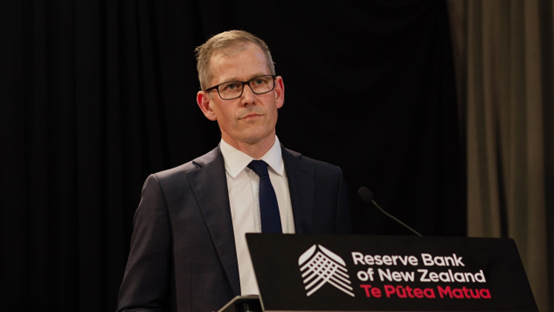
Reserve Bank of New Zealand Governor Christian Hawkesby
The situation is not complicated: the Reserve Bank is waiting for data, and homebuyers are waiting for the Reserve Bank. Monetary policy’s influence on expectations is weakening, while the market’s inclination to wait is growing. A delayed recovery is now the greatest risk facing New Zealand property.
One: rates have fallen, but buyers ready to enter the market are still waiting
Since August 2023, the OCR has fallen from 5.5% to 3.25%. In theory, this should lower mortgage rates and stimulate housing demand. Yet the market remains deeply hesitant.
According to the Reserve Bank of New Zealand’s latest data for May, floating rates accounted for 33.7% of new mortgages, the highest share since 2021 and well above 17.7% a year earlier. Among owner-occupiers, 31.6% chose floating rates, only slightly below the share choosing a one-year fixed rate (33.4%).
David Hargreaves said: “Many borrowers are well aware the OCR will fall further, so they are using floating rates to tide them over while they wait to see whether lower fixed rates become available.”
In other words, people are still borrowing, but nobody wants to lock in a rate now. This also shows that while the rate-cut signal has been received, actual decisions to enter the market have yet to follow.
Two: the housing market is slow to respond, for reasons beyond the economy
The thinking behind property transactions is changing fundamentally.
Tony Alexander said market sentiment was shifting from the post-pandemic “FOMO”, or fear of missing out, to “FOOP”, or fear of overpaying. People worry prices will fall after they buy. They are even more concerned that interest rates will fall further and house prices will soften, so they choose to wait.
This shift in sentiment is directly slowing the housing recovery. Although listings are high and supply is plentiful, transaction volumes have not recovered alongside them, leaving the market well supplied but largely static.
Barfoot & Thompson data show that the number of homes available for sale in Auckland has exceeded 6,000, one of the highest levels in recent years. Sales activity has not picked up accordingly, however, with buyers generally holding on to their money and waiting.
Three: the mortgage mix is changing, but confidence remains unsettled
Weighted average interest rates on new housing loans in New Zealand, by loan term
New mortgage lending in May reached NZ$9,040,000,000, the highest monthly total since July 2021. But a closer look at the breakdown reveals:
-
The average rate on one-year fixed loans has fallen to 4.97%, dropping below 5% for the first time since October 2022, making them a popular choice;
-
The share of two-year loans plunged from 29.3% in April to 18.8% in May;
-
Floating-rate borrowing rose sharply, suggesting borrowers are reluctant to commit too early.
David Hargreaves said: “The market is keeping its options open. Nobody wants to commit to three years in one go. Everyone knows the OCR will fall, but nobody knows exactly how quickly or how far the Reserve Bank will cut.”
Market expectations for the OCR at the end of 2025 range between 2.5% and 3.0%. This means banks still have limited scope to cut medium- and long-term fixed rates substantially without further OCR cuts.
Four: construction cost pressures ease, but developers are reluctant to proceed
Cotality data show annual construction cost growth has eased to 2.7%, well below the 2022 peak of 10.4%. Yet builders remain reluctant to expand construction hastily. Kelvin Davidson said that even with easing cost pressures, weak presales and relatively high financing costs were encouraging developers to wait.
As a result, a number of approved sites and Build-to-Rent projects remain undeveloped, further weakening confidence in the stability of future supply.
Five: policy waits and the market hesitates, putting the recovery out of step
The Reserve Bank of New Zealand’s current policy strategy is data-driven: it will wait until August for inflation, employment and GDP figures before deciding whether to cut rates further. But this wait-and-see approach is already missing part of the window for structural change in the housing market.
Meanwhile, market participants are also waiting for the Reserve Bank: investors are not buying, builders are not building, and homebuyers are not fixing their rates. This loss of alignment between the market and policy is a classic sign of a delayed recovery.
Six: if everyone is waiting, who will move first?
The OCR’s role extends beyond containing inflation to rebuilding market confidence. But when interest rates no longer generate enthusiasm and uncertainty instead makes the market more cautious, the marginal effectiveness of conventional monetary tools declines rapidly.
It is not that nobody is borrowing or building homes, but that “nobody wants to make long-term decisions”. If expectations are still falling, who wants to act now? The market has credit, inventory and policy room, but it lacks consensus. What does consensus mean? A shared basic view of the future, with the market and policy moving in step.
Only when signals are clear, the path is well defined and actions are aligned can recovery become a real trend rather than a possibility on paper.
What do you think?
Will interest rates keep falling? Will house prices soften further? Is fixing a mortgage now a rational decision, or does it risk leaving you paying too much? Share your assessment and choices in the comments.