
Official: OCR cut to 3.25%, but divisions emerge within the Reserve Bank of New Zealand! What does this signal? Finance Minister: half of borrowers will benefit!
The Reserve Bank of New Zealand today cut the Official Cash Rate (OCR) by 25 basis points to 3.25%, a widely anticipated move that nevertheless reveals deeper uncertainty and disagreement. Notably, the Monetary Policy Committee was not unanimous on the cut: the vote was 5 to 1, with one member favouring no change.
The Reserve Bank of New Zealand today cut the Official Cash Rate (OCR) by 25 basis points to 3.25%, a widely anticipated move that nevertheless reveals deeper uncertainty and disagreement. Notably, the Monetary Policy Committee was not unanimous on the cut: the vote was 5 to 1, with one member favouring no change.
The Reserve Bank acknowledged in its statement that some members feared acting hastily could obscure the true impact of economic policy uncertainty on business and household decisions, and therefore recommended waiting. Ultimately, however, most members considered it more important to signal moderate monetary easing amid mounting external pressures and fragile domestic demand.
Major banks respond swiftly
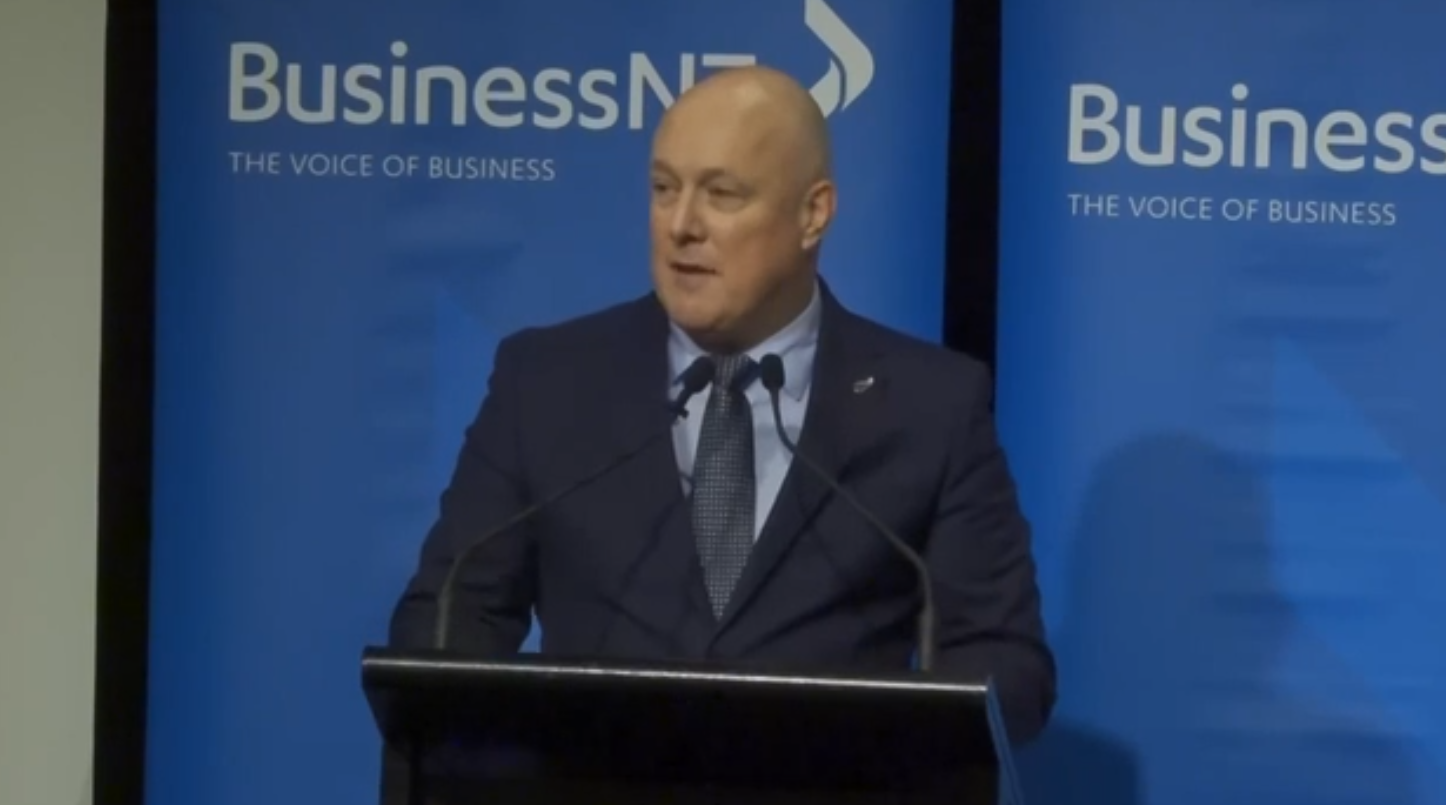
Following the Reserve Bank's announcement, Prime Minister Christopher Luxon and Finance Minister Nicola Willis attended a media briefing in Parliament's Banquet Hall. The Prime Minister said a household with a NZ$500,000 mortgage would see its fortnightly repayments fall by NZ$300. The Finance Minister added that nearly half of mortgage holders would have their loans repriced in June, representing more than 500,000 loans.
As the Reserve Bank of New Zealand announced an OCR cut to 3.25%, BNZ had already moved ahead, announcing cuts across its fixed and floating rates a day earlier. Its one-year fixed mortgage rate fell to 4.95%, its six-month rate to 5.35%, and its standard floating rate from 6.69% to 6.44%. BNZ General Manager of Home Lending James Leydon said the cut had been expected: “By lowering rates, we hope to give customers more choice and ease pressure on household budgets.”
ANZ, Westpac and Kiwibank subsequently followed suit. ANZ lowered its floating mortgage rate to 6.49%, while also cutting business lending rates and rates on several savings products. Westpac introduced a special rate of 4.95% for terms of 1 to 3 years, and cut its floating rate by 15 basis points. Kiwibank lowered its variable mortgage rate to 6.35% and its revolving credit rate to 6.40%.
Westpac General Manager of Product and Marketing Sarah Hearn said: “This OCR cut should help strengthen consumer confidence and also reflects the current easing of cost pressures.”
BNZ data shows that its home loan applications increased by 20% year on year in the first six months of 2025, signalling a revival in housing market activity.
The latest bank interest rates are shown below:
Global trade turmoil limits New Zealand's policy options
Reserve Bank of New Zealand Acting Governor Christian Hawkesby
This rate cut also marked the debut of newly appointed Acting Governor Christian Hawkesby. Against a complex international backdrop, particularly market volatility triggered by the latest round of US foreign trade policies, Hawkesby's task is far more complicated than conventional monetary policy operations.
Harbour Asset Management interest rate and currency strategist Hamish Pepper said the lack of unanimity on the cut surprised markets. “This division makes the Reserve Bank's overall tone less dovish.”
Meanwhile, the Reserve Bank's updated economic forecasts have also become more conservative and cautious:
-
Inflation forecasts: the forecast for the June quarter of 2025 was raised to 2.6% from 2.4%, while the December quarter forecast was lowered slightly to 2.4% from 2.5%, reflecting continued confidence that future price pressures can be controlled.
-
GDP forecasts: growth forecasts for the first three quarters of 2025 were all lowered, to 0.4%, 0.3% and 0.2%, respectively, from 0.6%, 0.6% and 0.5%. Only the December quarter forecast was raised, to 0.9% from 0.6%, indicating the Reserve Bank remains cautious about near-term growth momentum.
Wesley Tanuvasa
ASB economist
“Instability in the global trading order has posed enormous challenges for the Reserve Bank's forecasting models.” ASB economist Wesley Tanuvasa said the Reserve Bank of New Zealand may ultimately have to lower the OCR to 2.75% or even 2.5%, well below the 3.0% envisaged in its February Monetary Policy Statement.
ANZ Chief Economist Sharon Zollner was even more direct, saying market confidence remains subdued, particularly among consumers and in the property sector. “We recently added two more rate cuts to our forecasts for this year, partly in response to weak consumer confidence and partly out of concern about global trade.” She expects the OCR could fall to 2.5% by year-end, although the Reserve Bank may maintain a “neutral stance” in the short term.
A “rebound” in property investment? Just a brief respite
On the surface, the property market has shown some improvement. According to Interest.co.nz data, nationwide gross rental yields for three-bedroom homes rose from 5.6% to 5.9% in the first quarter of 2025, while yields for one-bedroom apartments increased from 8.7% to 9.2%. Average nationwide cash flow rose from $74 a week to $129 a week, helped in part by lower mortgage rates, which fell from 5.61% to 5.05%, and declining house prices.
In Auckland, however, actual cash flow remains concerning. Apart from Manurewa-Papakura, three-bedroom investment properties in every area have negative cash flow. More seriously, these figures do not yet include costs such as property management, maintenance and insurance.
Economist Greg Ninness put it bluntly: “Without capital gains, these investment returns are unsustainable. We are seeing more and more investors squeezed by both tight cash flow and falling capital values.”
Employment declines: young people bear the brunt of “hidden unemployment”
The latest labour market figures are equally discouraging. Stats NZ's April data showed total jobs nationwide fell by 2246 (-0.1%), while the earlier figures for February and March were also revised down to -0.1% and +0.1%, respectively. This suggests the economic recovery's “pulse” remains weak.
ASB Senior Economist Mark Smith
ASB Senior Economist Mark Smith said this decline was symptomatic of “an economy still struggling to emerge from the shadow of recession”. He warned that young people were the hardest hit, with employment among those aged 15 to 19 falling by as much as 10% year on year.
More concerning are the structural trends: construction employment fell 6.5% year on year (-13,522 jobs), manufacturing declined 2.3% (-5,475 jobs), and retail fell 1.5% (-3,184 jobs). Smith noted that while the Reserve Bank of New Zealand expects unemployment to peak at around 5.2%, the current labour market weakness suggests “this forecast may be too optimistic”.
The Budget: moderate and cautious, but lacking certainty
ANZ Chief Economist Sharon Zollner
In the newly released 2025 Budget, the Government emphasised reducing debt, controlling spending and giving markets “confidence”. But Sharon Zollner described the Budget as “only just prudent”. She noted that the Government would still miss its target for returning to surplus by a year and was relying on nominal economic growth to reduce the debt ratio.
Prime Minister Christopher Luxon responded that the Government had worked to “find a balance between spending and restraint”, but also acknowledged: “We inherited a very difficult hand to play.”
Conclusion: rate cuts provide a “push”, but do not guarantee a sense of security
From a monetary policy perspective, the Reserve Bank of New Zealand's latest cut is a direct response to the fragility of the economic recovery, as well as a concession to external shocks and weak domestic demand. The problem is that rate cuts alone cannot restore confidence.
When rental income still cannot cover property investment costs, the labour market is being “revised down”, and businesses remain hesitant on the sidelines, we need more than lower interest rates. We also need a clear policy path, consistent signals and renewed confidence among market participants.
As Wesley Tanuvasa put it: “Every assessment right now is fraught with uncertainty. Even the destination is unclear.”
Whether you are an investor, an owner-occupier, an employer or an everyday consumer, we welcome your views in the comments. Join the discussion about “recovery and confidence”.