
Auckland’s NZ$5,500,000,000 City Rail Link opens: which homes will benefit first?
After decades of waiting, construction delays, rising costs and prolonged disruption from building work, Auckland’s NZ$5,500,000,000 City Rail Link (CRL) has finally begun operating.
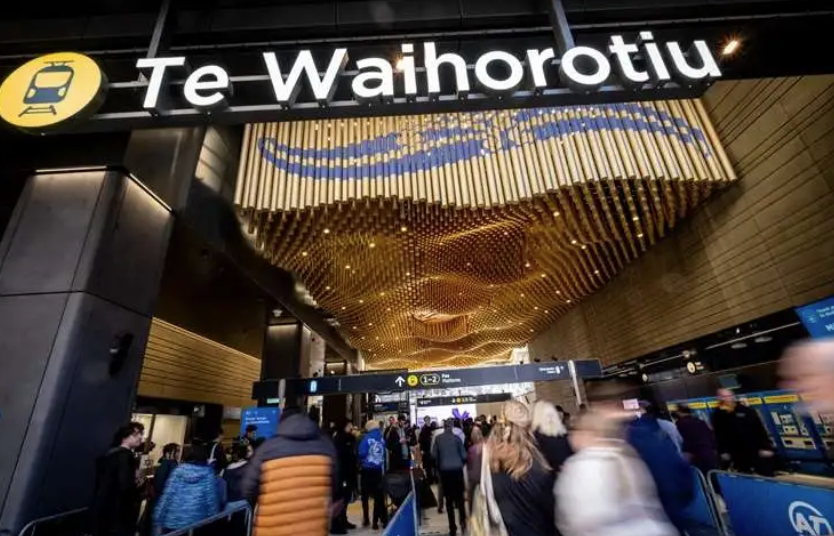
After decades of waiting, construction delays, rising costs and prolonged disruption from building work, Auckland’s NZ$5,500,000,000 City Rail Link (CRL) has finally begun operating. Before 5 am on opening day, more than 400 people had gathered at Ōtāhuhu station, waiting to catch the first train through the new tunnels. As the train approached the tunnel, chants of “Tunnel, tunnel, tunnel” rang out through the carriages; passengers erupted in cheers as it entered.
Some described the day as the younger generation’s “Harbour Bridge opening moment”. The changes brought by CRL extend beyond the addition of the underground Karanga-a-Hape and Te Waihorotiu stations. It has also converted Waitematā from a terminus into a through station, connecting Auckland’s previously fragmented rail lines. From the excitement of opening day to today’s first weekday morning peak, CRL is beginning to face its real test: can it improve everyday commuting? And will it redraw Auckland’s property-buying map?
The first change is where people can live, rather than house prices
With CRL open, commuting times on some routes will fall significantly. Journeys from Henderson to Te Waihorotiu in the city centre are expected to be about 24 minutes shorter, while trips to Sylvia Park could be around 20 minutes shorter. Travel times into the city centre from Kingsland and Morningside will also fall substantially. For occasional passengers, this is merely a saving of a dozen or twenty-odd minutes; for people commuting to work several times a week, however, it could add up to hours saved each week. CRL is narrowing not just Auckland’s geographical distances, but also the distances perceived by home buyers.
In the past, home buyers often focused on how far a property was from the CBD. In future, they may care more about “how long it takes to walk to the station, and how long the train takes to work”. When West Auckland, South Auckland and, eventually, even Drury and Paerātā can offer both relatively affordable housing and acceptable commuting times, some buyers may be willing to live further out. CRL’s initial effect on the property market may therefore be an expansion of buyers’ search areas, rather than an immediate rise in house prices.
Why are house prices around CBD stations among the lowest?
OneRoof and Valocity analysed residential sales within a kilometre of 45 stations on Auckland’s rail network, covering more than 100,000 properties, including apartments, townhouses, units, standalone homes and lifestyle properties.
The results show that Auckland does not follow a simple pattern of higher house prices closer to the CBD. Median residential sale prices around the central Waitematā, Te Waihorotiu and Karanga-a-Hape stations are, in fact, among the lower figures across the rail map. Ōrākei has the highest median along the network, at around NZ$2,270,000, followed by Remuera at about NZ$2,010,000. At the outer reaches of the rail network, Swanson and Pukekohe have median sale prices of around NZ$905,000 and NZ$750,000 respectively. These differences largely reflect the mix of housing. The CBD has many small apartments and leasehold apartments, bringing down its overall median, while Ōrākei and Remuera have more high-value standalone homes.
The seemingly surprising median of around NZ$560,000 near Parnell station also reflects the survey’s kilometre-wide catchment, which extends towards the CBD and university area. It includes many apartments and leasehold properties without fully covering Parnell’s traditional luxury residential streets. This shows why a map of median prices around stations cannot simply be read as a ranking of locations. Lower prices do not necessarily mean an area is undervalued, and higher prices are not entirely attributable to rail.
Which areas could benefit first?
Karanga-a-Hape is the central city location most worth watching. The new station brings the shops, restaurants, bars, workplaces and apartments along K Road into a more accessible rail network. Commercial recovery in the area has been uneven since the pandemic. If the station can deliver a steady flow of people, the benefits will extend beyond apartments to retail, hospitality and the night-time economy. Inner-west areas such as Kingsland and Morningside may be the most likely to command a transport premium. They are close to the city centre and have well-established amenities, with CRL further shortening commuting times. However, local house prices already reflect the advantages of their locations and communities, making moderate growth more likely than a sudden jump.
West Auckland could be an even bigger potential winner. New Lynn, Henderson, Ranui and Swanson allow buyers with limited budgets to secure larger homes or more land at lower prices. The main trade-off has previously been a long and unpredictable road commute, and CRL is changing that equation. With markedly faster journeys from Henderson to the city centre, living in the west while working in the CBD or even Manukau becomes more feasible. Some households may also move from relying on two cars to using one car alongside public transport.
South Auckland’s gains may come in the form of an “affordable housing dividend”. Some older homes in Papakura and Takanini are priced at around NZ$550,000 to NZ$600,000, while some brand-new three-bedroom homes in Karaka Village sit just above NZ$700,000. For first-home buyers, improved rail connections make “living further out and buying more cheaply” easier to accept. Once the future Drury and Paerātā stations open, this effect could extend further south. Auckland Council expects Drury could eventually gain more than 25,000 homes and reach a population of around 62,000. If rail, commercial development and housing are delivered together, the area will gain more than a station: it will gain an opportunity for urban expansion.
Being close to a station does not guarantee rising house prices
CRL is a significant advantage, but it may not outweigh school zones, land area, housing quality and the neighbourhood environment. In established residential areas such as Ōrākei, Meadowbank and Remuera, agents observe that buyers generally will not substantially increase their offers simply because a home is close to a train station. Rail can enhance its appeal, but the Grammar Zone, the Meadowbank School zone, land and development potential often have more influence on the final sale price.
Convenient rail access can also bring parking pressure and disputes over housing density. Some streets around Meadowbank station are already filled with commuters’ cars, while additional townhouses and apartments around stations may concern existing standalone homeowners. More importantly, CRL’s value to the property market depends on how it operates in practice. Punctuality, service frequency, convenient transfers and safety around stations will all influence whether residents actually drive less.
On opening day, a small fire in a lighting cable at Waitematā station caused some train delays and cancellations, with services largely restored around midday. This does not determine CRL’s success or failure, but it is a reminder that completing construction is only the first step. Consistently reliable operations are the key to building passenger confidence. Hybrid working has also weakened some of the traditional commuting premium. People who go into the office only two or three days a week may be unwilling to pay significantly more to live near a station. CRL is therefore more likely to first increase the number of buyers interested in homes along the network than to lift house prices around every station at the same time.
Auckland’s sense of “near” and “far” is being redefined
CRL will not free Auckland from congestion overnight, nor will it lift the value of every home along the network. But it is changing something more fundamental: where people are willing to live. Karanga-a-Hape may benefit from a recovery in central city commerce and apartments; Kingsland and Morningside may gain a more pronounced transport advantage; New Lynn, Henderson and areas further west may attract more buyers; and Papakura, Takanini, Drury and Paerātā may become long-term beneficiaries of the combination of affordable housing and rail connections.
However, the real winners will not emerge simply because they are “close to a station”. Reliable train services, well-developed connecting transport facilities, housing supply, commercial amenities and community development will determine where the rail dividend ultimately falls. The first train has already passed through the new tunnels. For CRL, the grand opening celebrations are over, but a new round of urban reshaping around transport, housing and population movements has only just begun. Would you choose to buy a property near a train station? Share your views in the comments.