
Fuel prices head towards NZ$3 as global energy markets come under pressure! Could geopolitical conflict slow New Zealand’s housing recovery?
Global energy markets have reacted swiftly to a sudden escalation in geopolitical tensions. International oil prices have risen significantly over the past few days, and the effects are rapidly reaching New Zealand’s petrol stations. Multiple market indicators suggest that, if current trends continue, New Zealand’s 91-octane petrol prices could approach or even exceed NZ$3 per litre in the coming days, while diesel could approach NZ$2.50 per litre.
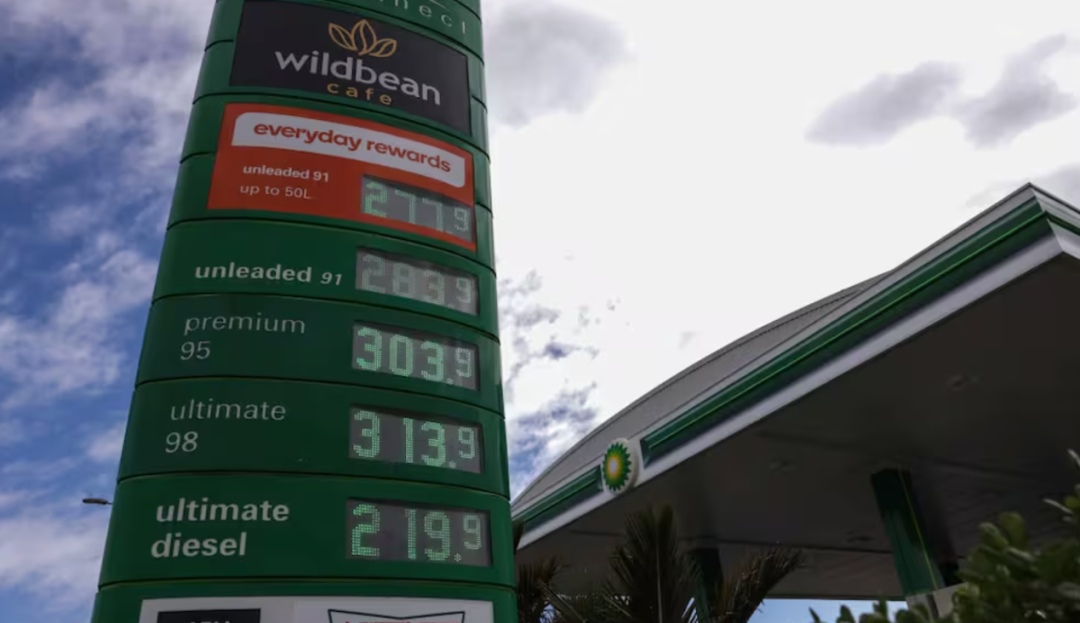
Global energy markets have reacted swiftly to a sudden escalation in geopolitical tensions. International oil prices have risen significantly over the past few days, and the effects are rapidly reaching New Zealand’s petrol stations. Multiple market indicators suggest that, if current trends continue, New Zealand’s 91-octane petrol prices could approach or even exceed NZ$3 per litre in the coming days, while diesel could approach NZ$2.50 per litre.
For a country heavily dependent on imported fuel, this means more than higher costs at the pump. It could trigger a series of deeper economic effects, from transport costs and inflationary pressures to household spending, potentially reaching the property market.
Conflict pushes up oil prices as global energy markets come under pressure
Since the outbreak of the regional conflict, international crude oil prices have risen by about US$20 per barrel to around US$93 per barrel.
According to the New Zealand Automobile Association’s (AA) rule of thumb, every US$1 per barrel increase in international oil prices adds approximately 1 New Zealand cent per litre to domestic fuel prices.
This time, however, the increase is being driven by more than crude oil prices alone. As the conflict heightens shipping risks, transport costs, insurance premiums and refining margins are all rising rapidly, pushing refined fuel prices up even more sharply.
Data from Singapore’s refined petroleum market, an important benchmark for New Zealand fuel pricing, shows that:
-
Diesel prices have risen by about A$90 per barrel to around A$220 per barrel
-
Petrol prices have risen by about A$45 per barrel to nearly A$160 per barrel
Based on these changes, New Zealand diesel prices could rise by approximately 70 New Zealand cents per litre from pre-conflict levels, while 91-octane petrol could rise by about 40 New Zealand cents per litre.
Fuel companies typically price fuel according to future restocking costs, which means these increases are likely to reach the retail market quickly over the coming days.
The first economic impact: fuel prices as a “hidden tax”
The most immediate effect of rising fuel prices is on households’ spending power, rather than property.
Retail NZ chief executive Carolyn Young says that, if geopolitical instability persists, rising transport and supply chain costs will force retailers to increase prices. For New Zealand consumers who have already endured several years of high inflation, this will undoubtedly squeeze disposable incomes further.
Economists generally regard rising fuel prices as a form of “hidden tax” on the wider economy. When households spend more on fuel and transport, they have less money available for other purchases.
Lower spending often means falling business revenues and slower investment, gradually affecting overall economic growth.
Will the housing market be affected?
Although surging fuel prices have attracted widespread concern, several economists believe there is currently no need to panic about New Zealand’s property market.
Kiwibank chief economist Jarrod Kerr says financial markets often overreact in the early stages of a geopolitical crisis, but usually settle down afterwards. He advises investors to remain calm, particularly when it comes to long-term assets such as property.
“When wars broke out in the past, we were also very worried, but markets soon settled into a new normal,” he said.
Kerr believes the most direct effect of geopolitical conflict on house prices comes from the inflationary pressure caused by rising oil prices, rather than the war itself.
Higher fuel prices squeeze household disposable incomes and weaken spending power, adding pressure to an already subdued household spending environment.
Will interest rates change as a result?
At present, economists generally believe the Reserve Bank of New Zealand is unlikely to change its interest rate policy in response to a short-term rise in oil prices.
Kerr notes that central banks usually “look through” short-term inflation fluctuations caused by external shocks. In other words, if inflation is driven solely by rising oil prices rather than an overheating economy, central banks generally will not rush to raise interest rates.
Westpac chief economist Kelly Eckhold also says the biggest change so far is increased uncertainty, rather than a fundamental shift in the economy’s underlying conditions.
He notes that, if the conflict ends quickly, energy prices and market risk premiums could fall rapidly, allowing New Zealand’s economic recovery to continue along its existing path.
The real risk: a prolonged conflict
However, if the conflict continues for an extended period, its effects could gradually spread.
BNZ chief economist Mike Jones says it is still a time to “watch, worry and wait”, as the situation is changing very rapidly. If the conflict drags on for months or longer, its effects could gradually feed through economic growth, business confidence and interest rate expectations.
Another key factor is the Strait of Hormuz, one of the world’s most important oil shipping routes. Severe disruption to shipping there could cause greater volatility in global energy markets.
Cotality chief economist Kelvin Davidson believes geopolitical conflicts often follow a familiar economic pattern: pushing inflation higher in the short term and weakening economic growth over the medium term.
If this happens, New Zealand’s economy could face a complicated situation, with energy prices driving up inflation while economic growth slows.
Could the housing recovery slow?
For the property market, the real impact often comes through confidence.
If fuel prices keep rising and economic uncertainty increases, some buyers or investors may choose to delay their decisions. Property market activity is often closely linked to consumer confidence, and a fall in confidence could affect sales volumes.
However, most economists still believe there is currently no reason to expect a fundamental change in the direction of house prices. New Zealand continues to have long-term housing demand, agricultural exports are performing relatively strongly, and the economy’s underlying fundamentals remain supportive.
Commentary and reflection
History suggests geopolitical conflicts often leave the property market’s underlying direction unchanged, but can gradually influence the pace of a country’s economy through an “invisible chain” of energy prices, inflationary pressure and economic confidence.
For New Zealand, the impact of geopolitical conflict is felt first in fuel prices. If petrol prices do approach NZ$3 per litre, household transport costs, logistics costs and goods prices could all rise. This would further squeeze many households’ disposable incomes and could make the emerging recovery in consumer and investor confidence more tentative.
The property market is usually very sensitive to such changes. When living costs rise and economic uncertainty increases, some buyers may choose to wait, while investors may also postpone decisions. As a result, even if house prices do not fluctuate significantly straight away, market activity and the pace of transactions could still be affected.
Some economists do, however, believe that energy shocks of this kind are often only short-term disruptions. Provided the conflict does not escalate further and global energy markets gradually stabilise, New Zealand’s economy and property market may still continue along their current path of moderate recovery.
The question is how long this conflict will last, and no one can yet provide an answer.