
Australia has raised rates to 4.1%. Will New Zealand follow? Several banks have already lifted mortgage rates!
With the Reserve Bank of Australia raising its official interest rate to 4.1% and warning that inflation risks remain, New Zealand’s interest rates are taking a different but noteworthy turn.
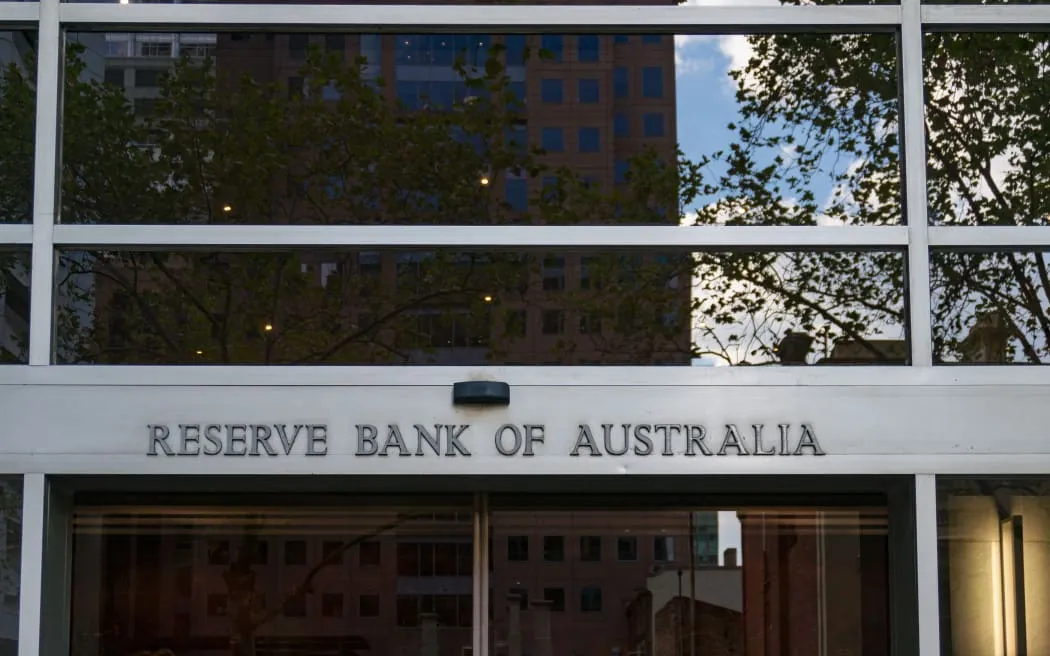
With the Reserve Bank of Australia raising its official interest rate to 4.1% and warning that inflation risks remain, New Zealand’s interest rates are taking a different but noteworthy turn.
Although the Reserve Bank of New Zealand has not changed the Official Cash Rate (OCR), and markets generally expect no increase in the near term, major commercial banks have recently begun raising fixed mortgage rates, signalling a changing interest rate environment.
Major commercial banks begin raising mortgage rates
This week, Westpac led the way by raising several fixed mortgage rates.
Its one-year rate rose by around 10 basis points, while two-, three- and five-year rates increased by up to 30 basis points. The bank also raised term deposit rates for terms from one to five years, with some increases likewise reaching 30 basis points.
BNZ subsequently adjusted its fixed mortgage rates too, but took a slightly different approach.
BNZ left its one-year rate unchanged, keeping it level with Kiwibank for that term. It slightly raised its 18-month rate and increased its two-year rate by around 20 basis points. Adjustments for terms of three years and longer were similar to, or slightly higher than, Westpac’s. However, BNZ did not raise term deposit rates at the same time.
Industry observers believe the banks’ differing adjustments across terms reflect continued strong market competition, particularly for two-year loans, which are relatively popular with borrowers.
Rising funding costs drive rate adjustments
Unlike previous increases led by central bank policy, this round of mortgage rate rises is being driven mainly by higher funding costs.
Swap rates, which reflect banks’ funding costs, have continued to rise recently. One-year swap rates have returned to their September 2025 levels, while two-year swap rates are more than 40 basis points above their levels at that time.
Market analysts note that swap rates are an important reference for bank pricing, and that rising swap rates mean higher overall funding costs. Against this backdrop, raising mortgage rates is a natural adjustment.
Global factors bring external pressure
The rise in funding costs is closely linked to recent international developments.
Escalating conflict in the Middle East has caused a significant rise in global energy prices. International oil prices have climbed from around US$70 a barrel to more than US$100, pushing up global inflation expectations.
In New Zealand, the Government has begun assessing potential fuel supply risks, including whether demand management measures might be needed in extreme circumstances. Officials say there are currently no signs of supply shortages, but policy preparations are under way.
Meanwhile, risk appetite in global financial markets has changed. Some international investors have reduced their participation in emerging and smaller markets, affecting liquidity in New Zealand’s financial markets to some extent and pushing up funding costs.
Markets and policy temporarily diverge
The current interest rate environment presents a relatively unusual situation.
On the one hand, financial markets generally expect the Reserve Bank of New Zealand to leave rates unchanged in the near term, with even some discussion of future cuts. On the other, banks have already raised mortgage rates.
Analysts say this reflects a temporary divergence between market and policy influences on interest rates. When funding costs rise, commercial banks may adjust loan pricing even if the official rate remains unchanged.
Australia’s rate rises offer a comparison
Unlike New Zealand, the Reserve Bank of Australia has recently raised rates in succession, lifting the official rate to 4.1%.
The Reserve Bank of Australia said inflation remained above its target range and that rising energy prices could add further inflationary pressure, making rate increases necessary to curb demand. It also said it would continue tightening policy if needed.
Markets generally view Australia’s policy path as reflecting the continued priority of controlling inflation amid external shocks.
The outlook still depends on external factors
Looking ahead, the direction of New Zealand interest rates remains highly uncertain.
In the short term, fixed mortgage rates may remain under upward pressure if funding costs stay high. Banks’ pricing strategies across different terms will also continue to be influenced by market competition.
Over the medium to long term, the path of interest rates will depend on several external factors, including international energy prices, geopolitical developments and changes in global capital flows.
The central bank’s future policy direction will also depend on the balance between inflation and economic growth.
Observations and reflections
On the surface, New Zealand’s official interest rate remains in a ‘wait-and-see’ phase, but market changes are already moving ahead.
This round of mortgage rate increases stems from a combination of funding costs and changing global conditions, rather than a policy shift. It also suggests that the path of interest rates is gradually moving from being primarily central bank-led towards greater influence from market factors.
In this environment, changes in borrowing costs may no longer depend entirely on central bank rate decisions, instead appearing in the market beforehand. For homebuyers and borrowers, this shift may deserve closer attention, because rate adjustments are happening earlier and becoming harder to predict clearly.
With global uncertainty persisting, it remains to be seen whether New Zealand will adjust policy in response to external conditions.
Do you think this rise in mortgage rates is a short-term fluctuation or the start of a new trend?