
New Zealand house prices are recovering, but a hidden shock from the Middle East is unfolding behind the scenes
When the latest house price figures came out, many people’s first reaction was: is the market heating up again?
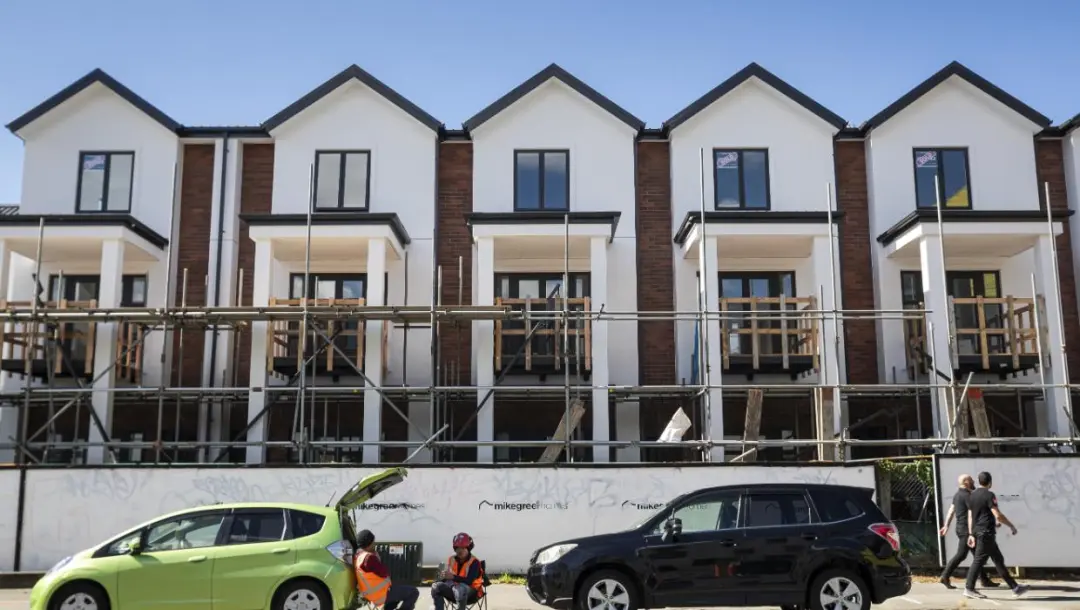
When the latest house price figures came out, many people’s first reaction was: is the market heating up again?
In February, the national median price returned to NZ$795,000, up 5.3% on the previous month. Auckland also climbed back to NZ$1,010,000, a monthly increase of 6.7%.
Looking at those figures alone, it is easy to feel that everything is returning to a familiar course. But take a slightly longer and broader view, and the backdrop this time looks rather different.
Prices look stronger, but the market is not that hot
House prices are indeed recovering. There is little dispute about that.
The South Island remains the strongest driver of house price movements in this cycle, with Otago up more than 13% and Canterbury also rising. Auckland is showing signs of improvement, but the overall pace remains slow.
In some regions, however, sales volumes have not increased noticeably. The national average time to sell has stretched to 56 days, while Wellington is still declining.
This suggests the market is recovering, but gradually, with people still watching and waiting.
Investors are back, but more restrained than before
The return of investors has been one of the more noticeable recent changes.
A study shows that around 317,000 property investors generate NZ$24,800,000,000 in annual output for New Zealand’s economy, accounting for nearly 6% of GDP and supporting more than 120,000 jobs.
Property’s impact has always extended beyond buying and selling. Spending on renovations, repairs and housebuilding flows through to industries such as construction, materials and retail.
Market data offers further clues: mortgaged investors now account for a quarter of sales, returning to their highest share since 2021.
This time, however, they are not expanding their investments as rapidly as before. They are clearly more cautious.
The economy is recovering, but remains far from strong
The wider economy presents a similar picture.
The latest figures released by Stats NZ today show that New Zealand’s GDP grew 0.2% in the fourth quarter of 2025. It was growth, but modest, and below many economists’ expectations.
Three of the past four quarters recorded positive growth, a sign of improvement. A closer look at the composition, however, reveals an uneven picture. Tourism-related spending recovered noticeably, supporting retail and services, while construction dragged on growth, falling 1.4% over the quarter, with the volume of construction work down 3.1%.
More importantly, GDP per capita was essentially unchanged. In other words, the economy is growing, but there has been no noticeable improvement on a per-person basis.
In some economists’ eyes, these figures may already be somewhat dated, because there is another, more important issue.
These GDP figures reflect the final three months of 2025. What will really shape the outlook is what has happened recently. Some economists have even said outright that the figures no longer matter much. The reason is simple: external conditions have changed significantly.
Events in the Middle East suddenly add more variables
The recent escalation in the Middle East has disrupted many expectations that had seemed relatively stable.
Israel’s strike on an Iranian gas field was seen as a sign of escalating conflict. Oil prices rose rapidly afterwards, with Brent crude briefly reaching US$110 a barrel.
Markets are concerned not only about current prices, but whether they will keep rising.
Some economists have been blunt: if the conflict continues, oil could reach US$150 or even US$200 a barrel, potentially pushing New Zealand petrol prices towards NZ$4 per litre.
Changes are already emerging in everyday life and affecting ordinary households
Over the past month, 91-octane petrol has risen by an average of around 50 cents, with prices already above NZ$3 in many places. Diesel has risen even more. A sharp increase in refining costs over a short period is also pushing up prices at the pump.
These changes may seem far removed from property, but they are not: higher oil prices lift living costs; higher living costs increase inflationary pressure; and once inflation picks up, interest rates become much harder to bring down.
Property is highly sensitive to interest rates. The next link is confidence. When costs are rising and external conditions are uncertain, many people choose to wait. This also helps explain why the market’s pace has slowed noticeably.
The pace of this recovery is being held back
In the past, a house price rebound of this size would usually have prompted a quicker market response. This time, things are different.
Prices are moving, but sales volumes have not risen in step. Investors are returning, but moving more slowly. The economy is still recovering, but with limited momentum. Together with external uncertainty, these factors are clearly holding back the pace of this recovery.
Observations and reflections
It is now clear that house prices are recovering. What deserves closer attention, however, is the environment surrounding this rise. The economy is recovering but remains weak; oil prices are rising amid considerable uncertainty; and the path of interest rates has consequently become less clear.
Many of these influences are now beyond New Zealand’s control alone. Rather than rushing to decide whether prices will keep rising, it is worth taking the question a step further: can this recovery last?
What do you think?
At this point, some see an opportunity, while others would rather wait a little longer.
What would you choose?