
Latest property reports: flat on the surface, changing underneath. Is New Zealand’s housing market entering a ‘supply-driven cycle’?
New Zealand’s property market did not see the recovery in the first quarter of 2026 that had been anticipated at the start of the year.
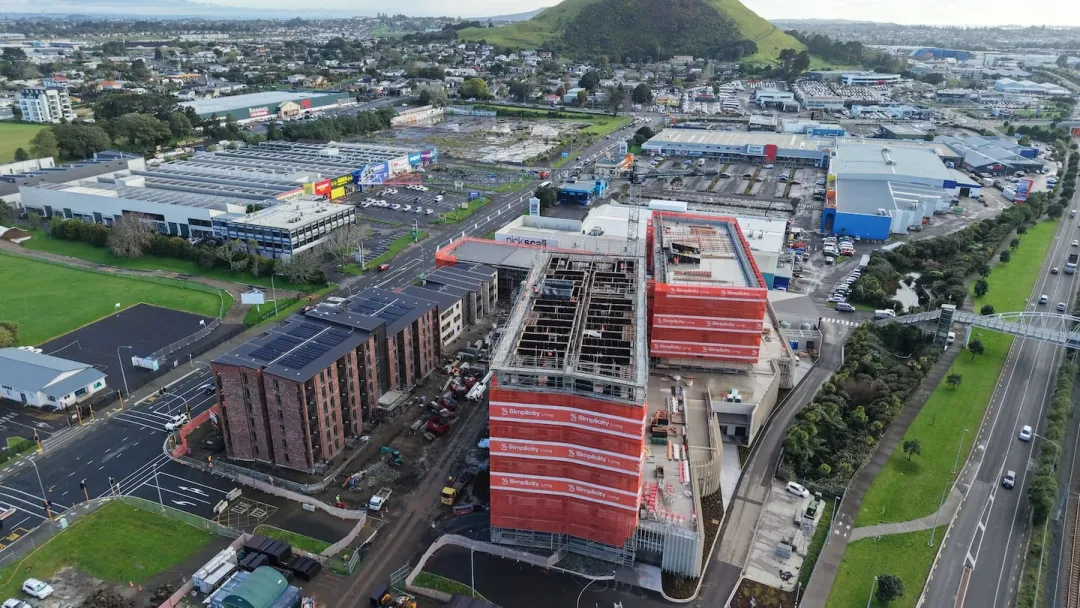
New Zealand’s property market did not see the recovery in the first quarter of 2026 that had been anticipated at the start of the year.
The figures show almost no change in national house prices. QV data puts the national average house price at approximately NZ$909,000, down just 0.1% quarter on quarter, with only a small annual decline. Separate OneRoof-Valocity figures likewise show national house prices were essentially flat over the past three months.
Looking only at these figures, it is easy to conclude that the market is moving sideways. But a closer examination reveals widening differences beneath this calm surface.
Stock rises as sales slow
The most obvious change in the current market is the accumulation of stock.
The number of properties listed nationwide is up approximately 8% year on year, but new listings have not increased significantly, suggesting many properties are staying on the market longer. Nearly half of all properties for sale have been listed for more than 75 days.
The situation is particularly pronounced in Auckland. Listings there are up approximately 10% to 15% year on year and account for around 37% of national stock. Almost a third of properties have been on the market for more than five months.
Longer selling times and falling auction clearance rates are both weighing on prices.
This does not mean buyers have disappeared; they are making decisions more cautiously.
Marked differences between regions
Against a backdrop of overall stagnation, regional trends are diverging significantly.
Several South Island areas have performed relatively strongly. Southland rose approximately 2.8% over the quarter, Dunedin gained more than 3%, and Gisborne also recorded an increase of around 3.7%. The premium market in Queenstown-Lakes remains active, with some areas recording sizeable dollar increases in house prices.
By contrast, parts of the North Island are still adjusting. Auckland house prices are down approximately 3.3% year on year and remain below levels seen five years ago. Manawatū-Whanganui has also recorded a small decline.
At city level, Dunedin, Invercargill, Rotorua and Hamilton all recorded increases of varying sizes, while Taupō fell approximately 2.7% to 3.8%.
At a more local level, around half of the 932 suburbs with active sales nationwide recorded increases, while the other half were flat or down.
More notably, house prices in over 557 suburbs are now below their levels two years ago, with Auckland and Wellington accounting for a sizeable share.
Capital is still flowing as supply picks up
Although the overall market lacks upward momentum, some areas continue to attract capital.
Remuera in Auckland, Onetangi on Waiheke Island, and Arrowtown and Lake Hayes in Queenstown-Lakes have all recorded notable growth. Arrowtown has risen by more than NZ$300,000 so far this year.
These areas typically offer scarce properties and have stable buyer bases, making them less susceptible to wider market fluctuations.
This reflects a feature of the current market: capital has not left, but is becoming more concentrated in particular segments.
In contrast to price trends, residential construction activity is picking up.
The latest figures show the annual number of residential building consents nationwide is up 12% year on year, following seven consecutive months of growth, bringing the total to approximately 37,500 homes.
Auckland remains the main source of growth, with annual consents for approximately 16,000 homes, up 16% year on year.
In terms of housing types, townhouses, apartments and other medium- and high-density homes account for more than half of new supply. Monthly figures showed double-digit growth in standalone homes, apartments and retirement village units.
Market participants say falling interest rates have improved financing conditions for development to some extent and could also gradually help buyer demand recover.
Meanwhile, Build-to-Rent projects are becoming more common in Auckland and elsewhere, providing another source of supply, with developments such as Te Reiputa progressing.
The disconnect between supply and prices
The current market has a clear structural feature: housing supply is increasing, but house prices are not rising alongside it.
On one hand, development activity is recovering and new supply is gradually coming through. On the other, stock accumulated over the past two years has not yet been fully absorbed, and buyers remain cautious, making a significant increase in the pace of sales difficult.
Under these conditions, the market’s overall performance is tending towards stability, but underlying pressures continue to build.
Observations and reflections
Given the current signals, the market’s caution is unsurprising.
ANZ has revised its 2026 house price forecast from an increase of approximately 5% to a decline of around 2%. Uncertainty over the interest rate outlook and external risks arising from the situation in the Middle East continue to affect buyer confidence, prompting more people to wait and see.
But changes in the market’s structure deserve more attention than short-term price movements.
Demand remains, but is no longer driving prices up on its own. Supply is recovering, existing stock has yet to be absorbed, and the market is entering a more selective phase. Differences in performance between regions and property types are becoming more pronounced.
In the short term, house prices may continue to fluctuate. Over the medium to long term, the balance between supply and demand will be the key variable.
Is your local market recovering, or has growth stalled?