
Nearly 2000 wealthy overseas buyers could enter the housing market. What would that mean for you?
The New Zealand Government recently announced that overseas investors holding Active Investor Plus visas will be allowed to buy or build residential properties worth more than NZ$5,000,000. This is a tightly restricted exception, rather than a full return of overseas buyers to the market. The move is widely seen as a partial easing of the longstanding overseas buyer ban.
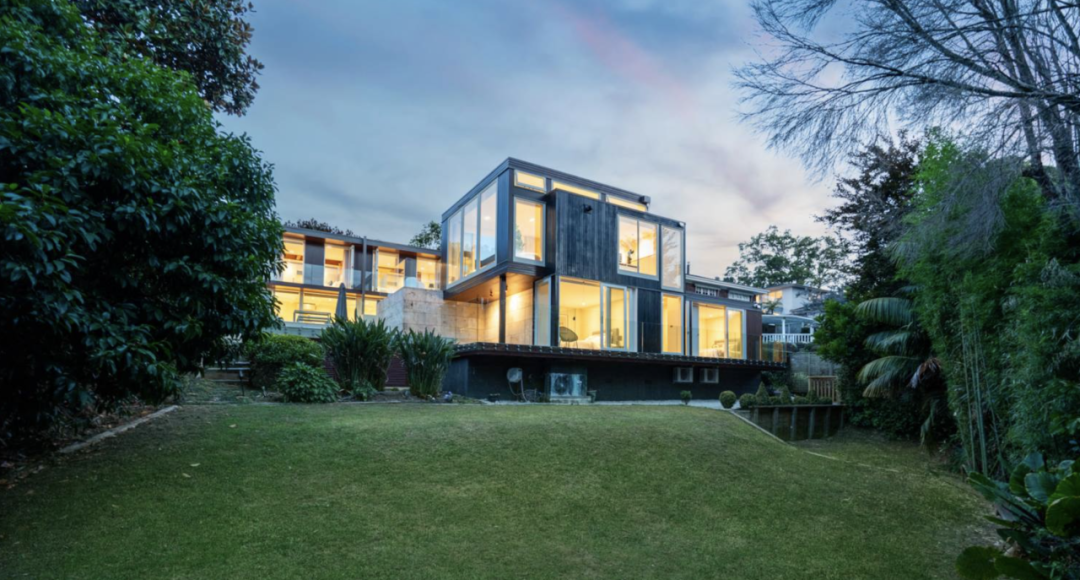
The New Zealand Government recently announced that overseas investors holding Active Investor Plus visas will be allowed to buy or build residential properties worth more than NZ$5,000,000. This is a tightly restricted exception, rather than a full return of overseas buyers to the market. The move is widely seen as a partial easing of the longstanding overseas buyer ban.
The key questions, then, are who this policy will affect and how far it will change the current landscape of New Zealand’s property market.
The reform has now officially taken effect. We invited Barfoot & Thompson Managing Director Peter Thompson and experienced real estate agents to discuss its broader implications and practical effects.
Understanding the ‘golden visa’ homebuying policy
The New Zealand Government has formally implemented reforms to the Overseas Investment Act. From 6 March, eligible Active Investor Plus (AIP) visa holders can buy or build residential properties in New Zealand worth NZ$5,000,000 or more.
The Active Investor Plus (AIP) investor visa is known as the golden visa. As at 11 March this year, New Zealand had received 609 applications covering 1,948 applicants, representing potential investment totalling approximately NZ$3,570,000,000.
The largest source of applicants is the United States, followed by China and Hong Kong, China, with others coming from Germany, Japan and the United Kingdom, among other places. China accounted for 104 applications covering 345 applicants, second only to the United States, with 222 applications covering 646 applicants.
The Government previously said allowing investor migrants to buy homes would help them ‘build deeper connections with New Zealand’, attracting more capital and resources into the New Zealand economy.
The policy aims to attract global capital while protecting local buyers’ interests. It includes clear restrictions:
-
Only Active Investor Plus visa holders are eligible
-
Only one residential property may be bought or built
-
The property’s total value must be at least NZ$5,000,000
-
For a new build, the combined land price and construction costs must exceed NZ$5,000,000
-
Approval from the Overseas Investment Office is still required, and the purchase must not involve national interest risks or other sensitive land restrictions
The Government set the NZ$5,000,000 threshold to ensure the policy affects only a very small part of the premium residential market. Properties in this price bracket account for less than 1% of New Zealand’s total housing stock and are concentrated mainly in Auckland and Queenstown. The policy therefore explicitly targets the luxury housing market rather than the wider mainstream residential market.
The policy also aligns with New Zealand’s investor migration strategy. The Active Investor Plus visa requires applicants to make substantial investments in the New Zealand economy, such as investing a minimum of NZ$5,000,000 to NZ$10,000,000 in businesses, funds or other eligible investments.
In this context, allowing investor migrants to buy a high-value home is seen as a complementary measure to make New Zealand more attractive as an investment destination, maintaining protection for the mainstream housing market while strengthening high-net-worth investors’ long-term ties with New Zealand.
Expert insights
From a property industry strategy and broader market perspective, Barfoot & Thompson Managing Director Peter Thompson describes the policy as a balancing act between attracting capital and protecting local buyers.
He notes that the previous overseas buyer ban did restrict foreign investors’ access to New Zealand’s property market to some extent. Although its original purpose was to protect local homebuyers, particularly first-home buyers, it also deterred some people who had planned to invest in New Zealand. The new policy seeks to strike a balance: retaining the original principle of protecting local homebuyers while allowing investors willing to commit substantial capital to New Zealand to buy homes in the premium market.
Thompson believes the effect on the overall property market will be relatively limited: ‘This policy only applies to properties above NZ$5,000,000, and in practice, many investors coming to New Zealand tend to buy properties in the price bracket above NZ$10,000,000.’ Its main impact is therefore likely to be concentrated in the premium property market, with no significant effect on the lower- and middle-priced market where first-home buyers are active.
However, he also says the policy could lift activity in the luxury housing market. Early signs suggest international interest is rising, although this has yet to translate into completed sales.
Over the longer term, Thompson believes there is room to refine the policy further. For example, the current fixed threshold of NZ$5,000,000 mainly affects high-priced markets such as Auckland and Queenstown, with less impact elsewhere. ‘If regional house price levels could be considered in future, for example by using the top 5% of a region’s price range as the benchmark, overseas investment might be spread more evenly across New Zealand.’
Data shows there are currently 556 homes on the New Zealand market priced above NZ$5,000,000. Of these, 379 are in Auckland, 85 in Central Otago and 29 in the Bay of Plenty. Geographically, Auckland’s established premium suburbs, including Herne Bay, Remuera and Takapuna, remain at the heart of the luxury housing market.
Thompson also notes that the policy allows investors to meet the NZ$5,000,000 threshold through a combination of land and construction. For example, buying land for approximately NZ$3,500,000 and committing to build a home worth NZ$1,500,000 would also meet the policy requirements.
Overall, Thompson believes the policy could bring renewed activity to the premium property market while helping attract international capital, business expertise and commercial opportunities to New Zealand.
‘This is not a major turning point that will reshape the market, but a measured adjustment at the premium end. It is expected to lift activity and confidence in that segment, with a limited effect on the overall property market. The most immediate short-term effect is unlikely to be on prices, but rather a recovery in global interest: New Zealand will return to international buyers’ radar. Overseas buyers will look at New Zealand again, and over time this could bring more investment and opportunities.’
Perspectives from the frontline
We also interviewed two experienced Barfoot & Thompson agents, Cici Wang from the Remuera branch and Paul Neshausen from the St Heliers branch, about what they are seeing in their day-to-day work.
Cici Wang
Residential/Rural Sales, Remuera Branch
Paul Neshausen
Residential Sales
St Heliers Branch
YIJU: Have you noticed an increase in enquiries since the policy was announced? How have clients responded to it overall?
Cici Wang:Since the announcement, enquiries from high-net-worth overseas buyers have increased noticeably, particularly through WeChat and personal referrals.
Interestingly, overseas buyers, including those from China, are usually well prepared and have a clear understanding of visa pathways and investment structures. They have generally already researched visa pathways, funding arrangements and the OIO approval process, and their approach to decision-making is relatively rational and mature. By contrast, some local sellers have read too much into the policy and raised their price expectations, but it will take time to establish whether the market can support those expectations.
Previously, even approved Investor One visa holders had to meet a residence requirement of 183 days each year. That restriction has now been removed, effectively shifting New Zealand towards a more flexible market for asset allocation.
But it must be emphasised that serious buyers’ decisions are driven more by lifestyle and long-term planning than by the policy alone. The policy lowers the barrier to entry; it does not change the underlying basis of their decisions.
Paul Neshausen:Yes, we have seen greater market engagement, but there has not yet been a significant surge in transaction volumes. Overseas enquiries have certainly increased, but I would describe this as ‘greater engagement’ rather than an immediate rise in sales. We are seeing more international buyers taking a fresh look at New Zealand, particularly families and investors considering lifestyle, education and long-term plans. However, these buyers typically rely on professional advisers and make decisions relatively cautiously, putting immigration, legal and investment structures in place before making a commitment.
The industry is currently overestimating the short-term effects to some extent. The policy’s impact will emerge gradually rather than immediately. Visas involve several stages, including approval, fund transfers and investment commitments, all of which take time. For now, this is showing up more as increased activity at the enquiry stage than as completed sales.
YIJU: Where are properties priced above NZ$5,000,000 mainly concentrated in New Zealand’s current market? What types of premium property do Chinese buyers generally prefer?
Cici Wang:New Zealand’s premium property market is highly concentrated and clearly segmented. Properties above NZ$5,000,000 are mainly found in Auckland, Queenstown and Waiheke Island. Auckland remains the core market because of its combined economic, educational and lifestyle advantages.
High-net-worth Chinese buyers are usually buying more than a property: they are choosing the surroundings for their daily lives. In Auckland, Remuera remains popular as an established luxury suburb with sought-after school zones, a mature community and a stable residential environment. Areas offering sea views and an appealing lifestyle, such as Mission Bay, St Heliers, Milford and Takapuna, also attract overseas buyers. Overall, Chinese buyers are moving beyond pure investment towards assets that combine a place to live, a base for visits and a means of building connections.
YIJU: With overseas buyers potentially returning to this market, what opportunities or changes do you expect at the premium end?
Paul Neshausen:The biggest opportunity is the return of market depth. Over the past few years, New Zealand’s premium market has effectively lost a layer of international buyer participation. As eligible investor buyers return, the buyer base will broaden and competition will increase over the long term, which is a positive sign for both sellers and developers.
More broadly, this policy is about more than property. As global flows of capital and talent accelerate, New Zealand is operating in a highly competitive international arena. Given current geopolitical uncertainty and economic volatility, New Zealand’s appeal as a stable country with clear rules and a high quality of life is becoming increasingly evident.
Recent changes to the Active Investor Plus visa have made it more practical, including simplifying its categories and broadening investment options. Overall, however, it remains a demanding and tightly structured pathway. That is reasonable to some extent, but I believe there is still room to refine the policy settings to ensure New Zealand remains both credible and competitive internationally.
YIJU: How do you think the policy will affect transaction timeframes, price negotiations and sentiment among buyers and sellers in the premium market?
Paul Neshausen:In the short term, I expect transaction timeframes for these buyers may lengthen slightly, as their decision-making is usually more careful and structured.
On prices, I do not expect an immediate increase. These buyers have a global perspective and will continue comparing New Zealand with other markets. However, as demand gradually returns, negotiations should become more productive and seller confidence should strengthen.
I think the greatest effect will actually be on market sentiment. The premium market has generally been cautious over the past few years. The return of international buyer interest, even gradually, will reinforce the message that market depth is steadily recovering.
Against a backdrop of growing global uncertainty, New Zealand’s appeal as a safe, stable place to invest and live will continue to strengthen. Although this change will not be immediately apparent, it will have a positive long-term effect on the property market and the wider economy.