
Inflation heading for 4.2%, yet interest rates stay put: what is the Reserve Bank of New Zealand waiting for?
With inflation set to rise noticeably, the Reserve Bank of New Zealand has chosen to hold steady.
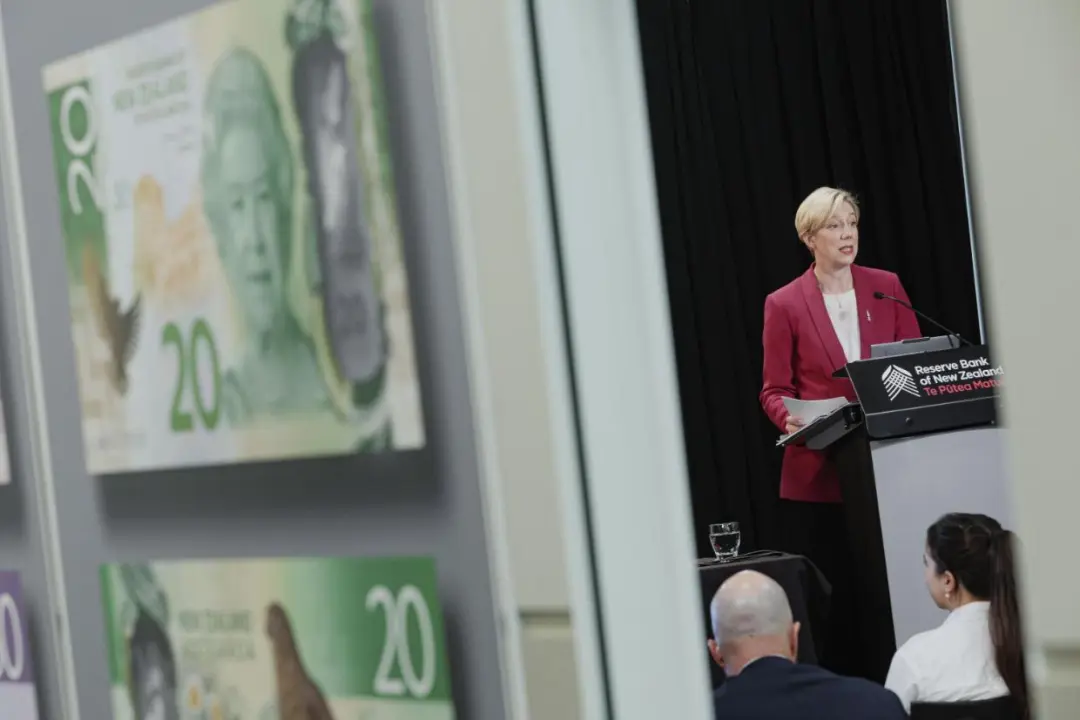
With inflation set to rise noticeably, the Reserve Bank of New Zealand has chosen to hold steady.
Yesterday, Wednesday, the Reserve Bank announced it would leave the Official Cash Rate (OCR) unchanged at 2.25%. The outcome was unsurprising, with markets having almost fully priced in the decision. What drew attention, however, was the inflation outlook released alongside it: inflation is forecast to rise to 4.2% in the second quarter of this year.
In other words, interest rates have not been raised even though inflation could once again breach the upper limit of the target range.
Clearly, this reflects a more complex balancing act than straightforward ‘easing’.
Inflation driven by external forces
This round of inflation is not being driven by overheated demand.
The Reserve Bank has repeatedly said that developments in the Middle East have ‘materially changed’ New Zealand’s economic outlook. Energy price fluctuations are gradually feeding through into transport, food and everyday spending.
The problem is that interest rates cannot directly resolve this kind of oil-driven cost increase.
Rate rises can curb spending, but they cannot bring oil prices down.
That is why, despite a substantial upward revision to its inflation forecast, the Reserve Bank has chosen to monitor developments first, rather than act immediately.
Holding steady does not mean there is no pressure
On the surface, this decision appears relatively ‘neutral’. But a closer look at the wording reveals a less relaxed tone.
The Reserve Bank explicitly said that if medium-term inflation pressures increase, ‘timely and decisive’ interest rate rises will be needed.
In other words, holding steady now does not mean it will continue to do so.
The possibility of raising rates earlier was even discussed at this meeting. Ultimately, however, the committee concluded that current economic conditions did not yet justify that decision.
Another set of data is equally important: the economy is weakening.
Slowing growth, weak demand and spare capacity all suggest that raising rates now could directly slow the economy further.
In these circumstances, the Reserve Bank appears to be seeking a temporary balance between competing risks.
The greater concern: expectations are starting to shift
What makes policy truly difficult is not the current inflation figure, but people’s views of the future.
The latest data shows consumers’ inflation expectations for the year ahead have risen to 5.7%. Meanwhile, a growing number of businesses are planning price increases.
These changes are often harder to manage than a rise in oil prices alone.
Once people believe prices will keep rising, they start responding in advance:
Businesses raise prices, employees demand pay rises, and costs continue to increase. Inflation ceases to be merely a ‘passive outcome’ and begins to reinforce itself.
This is precisely what worries the Reserve Bank most.
It also explains why the statement repeatedly emphasises ‘inflation expectations’, rather than focusing solely on oil prices or short-term data.
Put simply, the real issue is no longer just how much prices have risen, but that people are starting to believe they will keep rising.
Movement in housing, but no real recovery
Unchanged interest rates offer the property market at least some sense of stability.
There have been some changes in the market over recent months. During the past two months, house prices have shown signs of a modest recovery, while listing numbers and sales activity have also been gradually increasing.
Overall, however, the pace remains slow. Buyers are still cautious, and investors are largely waiting on the sidelines. Many people are still grappling with high living costs and an uncertain interest rate environment.
The broad industry view is that the market may have bottomed out, but a genuine rebound is still some way off. In other words, the current phase looks more like a gradual rebuilding of confidence than the start of another upswing.
Ordinary people are feeling a different pressure
There is a considerable gap between the data and everyday experience.
A recent survey shows that nearly four in ten people plan to cut spending rather than spend more. This marks a clear reversal from the situation a few months ago.
Meanwhile, mortgage rates have started to show signs of rising, and a large number of fixed-rate mortgage terms will expire over the coming year.
For many households, the real pressure is not whether interest rates will rise, but that expenses are increasing while incomes have barely changed.
For this reason, some economists believe interest rates themselves are not the central issue at this stage. The greater uncertainty comes from the broader economic environment.
Observations and reflections
Looking only at the unchanged interest rate, it would be easy to interpret this decision as good news. But taken together, the information shows a more complicated picture.
Inflation is rising, the economy is weakening, external risks are growing, and market expectations are starting to shift. Against this backdrop, the Reserve Bank’s decision to wait looks more like a strategy of avoiding a misstep for now than actively setting a direction.
The question is: how long can this balance last?
If oil prices keep rising or inflation expectations climb further, rate rises may be only a matter of time. But if the economy weakens significantly, policy could take an entirely different path.
The real question facing the market next may be less whether interest rates will change, and more which direction they will take when change comes.
At this stage, which view do you lean towards: will inflation persist, or will the economy cool first?