
One faces court, another could face a further decade of delays: why do New Zealand’s medium and large housing developments keep stalling?
New Zealand has been talking about a housing shortage for years. But looking beyond the broad statistics to individual projects reveals a more practical problem: there is no shortage of people wanting to build homes, yet getting them built is becoming increasingly difficult.
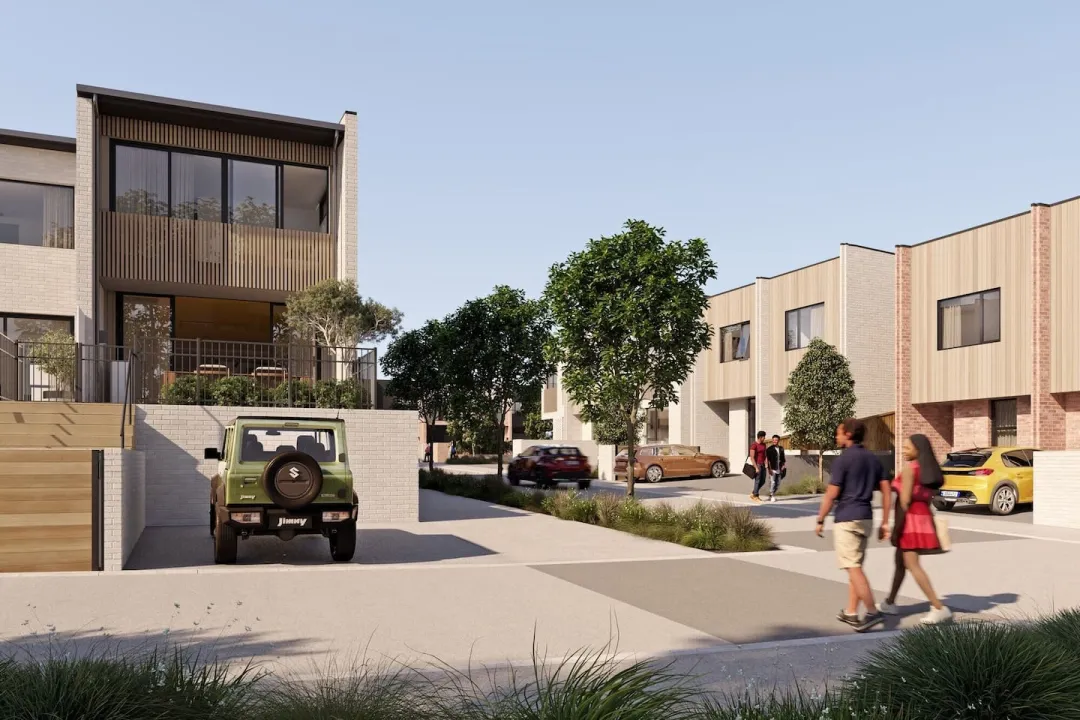
New Zealand has been talking about a housing shortage for years. But looking beyond the broad statistics to individual projects reveals a more practical problem: there is no shortage of people wanting to build homes, yet getting them built is becoming increasingly difficult.
Recently, two stories appeared in the news almost simultaneously.
The Carrington development in Auckland’s Mt Albert has reached substantive construction, but opposition from the community and organisations has taken it to the Environment Court. Meanwhile, Te Tumu in Tauranga remains at the planning stage, with changes to the regulatory system and infrastructure issues expected to potentially delay it for several more years.
One project is under way but has been forced to slow down; the other faces further delays before it has properly begun.
Mt Albert: the project advances as controversy grows
The Carrington development occupies the former Unitec site in Auckland. The land has long been regarded as an important part of the city’s growth through intensification, and its plans have continued to evolve. The planned number of homes has increased from an initial 2500 to 4500, with the aim of accommodating approximately 12,000 people.
From a policy perspective, the push for greater density is unsurprising. The difficulty emerged when the plans took a more detailed physical form and concerns began to mount rapidly.
For many residents, the most immediate concern is the buildings themselves. The original height limit of 18 metres has been raised to 27 metres, or even 35 metres, making the scale of high-rise apartments particularly prominent within the existing neighbourhood. The provision of open space has also been repeatedly questioned. The entire area has only about 3 hectares of usable public space, which, measured against international standards, would struggle to support the future population density.
Transport issues are equally difficult to avoid. The parking shortfall is estimated at around 1500 spaces, making spillover parking an almost foreseeable consequence as residents move in. Auckland Transport has even calculated that roadside parking on surrounding streets could stretch for 8 to 12 kilometres. For the existing community, that would mean more than congestion: it would change their way of life.
Pressure on schools is also becoming apparent. Growing student numbers, road safety at school drop-off and pick-up times, and increased traffic overall are all practical issues likely to emerge in the short term.
Looking more broadly, discussion of tree protection, waterway health and the overall ecological impact has also continued.
Approximately 1500 homes within the development have already been approved and can proceed. However, the parts covered by the new plan change, PC94, must await mediation or potentially a court ruling.
Te Tumu: the issue is stalled progress rather than opposition
While Mt Albert’s tensions have emerged as the development progresses, Tauranga’s Te Tumu appears to have remained stuck before the starting line.
This large tract of land in Pāpāmoa East has long been included in the city’s growth plans. Covering more than 700 hectares, it is planned to accommodate approximately 8000 homes and an eventual population exceeding 15,000.
On paper, it is a conventional long-term growth project. In practice, it has been delayed repeatedly.
Previous delays largely stemmed from infrastructure funding and complex approval processes. Now, fresh uncertainty comes from the regulatory system itself.
With a new planning framework set to replace the existing Resource Management Act, local authorities need to reconsider how they proceed. Tauranga City Council ultimately chose to stop pursuing rezoning under the old system and instead wait until the new framework is in place before progressing it as a whole.
Developers estimate that following the new system’s processes in full could delay the point at which the land is ready for development until around 2030. In other words, that would be a further 7 to 10 years beyond the original expectations.
Meanwhile, changes to the system have not made the infrastructure problems disappear. The Kaituna Link connecting to State Highway 2 remains under discussion, drainage and stormwater systems require substantial investment, and access arrangements involving Māori land trusts need further negotiation.
Some developers say the issue is not whether the planning is sound, but whether the substantial work already completed can carry through smoothly during the transition between systems. The government takes a somewhat different view.
Speaking to Local Democracy Reporting, New Zealand Housing Minister Chris Bishop said the pause on some planning work was intended to prevent local authorities from continuing to invest considerable time and money under the old system, only to have to start again when the new legislation takes effect.
He also noted that Tauranga City Council had not applied for an exemption under the existing Resource Management Act (RMA) framework, and that developers still had other routes available to advance the project.
In Bishop’s view, the key reason Te Tumu has yet to get under way is the practical constraint of infrastructure rather than the regulatory transition itself. “The bigger challenge is the project’s substantial infrastructure requirements,” he said. Several works, including stormwater drainage systems, involve wetland protection and environmental impacts, with considerable associated costs.
Two projects reveal the same underlying problem
Viewed together, these projects reveal a fairly clear pattern.
On one side, high-density development already being implemented faces repeated community and environmental resistance as it takes shape. On the other, a new urban development still at the planning stage is repeatedly slowed by regulatory changes and infrastructure constraints. Their paths differ, but the outcomes are somewhat similar: both have stalled at different stages.
More notably, these obstacles do not come from a single source.
Community concerns about the living environment are becoming more specific and more organised. Changes to the planning system are intended to improve efficiency, yet are increasing uncertainty during the transition. Practical infrastructure constraints remain an unavoidable prerequisite.
Together, these factors are gradually turning housing development from a relatively straightforward question of supply and demand into a complex undertaking requiring coordination among multiple parties.
Observations and reflections
From a developer’s perspective, these changes have a direct impact and bring greater pressure.
Many Chinese developers have had similar experiences over the past couple of years: project opportunities still exist, but uncertainty is clearly growing.
Land may have been acquired and planning progressed to a certain point, only for approval timelines to hold things up. Just as a project is ready to advance, a policy change may require its path to be reassessed. Even once construction begins, community opposition, cost fluctuations and supporting infrastructure requirements can disrupt the original schedule at any time.
Together, these circumstances lengthen project timelines, magnify risk and increase financial pressure.
For many small and medium-sized developers, the change is particularly apparent. Once project timelines stretch out, previously viable development models often need to be recalculated, and decisions become more cautious.
What makes this harder is that the uncertainty does not come entirely from the market. Alongside prices and demand, developers must assess policy direction, community acceptance and whether infrastructure can keep pace.
From Mt Albert to Te Tumu, these projects reveal similar problems at different stages: development has not stopped, but making progress is becoming harder. In this environment, managing pace and risk well may matter more than simply seizing opportunities.
Chinese developers working directly on projects may feel these changes particularly keenly. What has been the biggest obstacle in your development work: approvals, policy, funding or community pressure?