
Why are more developers paying attention to ‘invisible systems’?
Last week, an Auckland apartment property manager told me about a very practical problem: “Someone was followed into the building. It took three days of reviewing CCTV to piece together what happened, but access control, lifts and cameras were separate, so there was no complete record of their movements.”
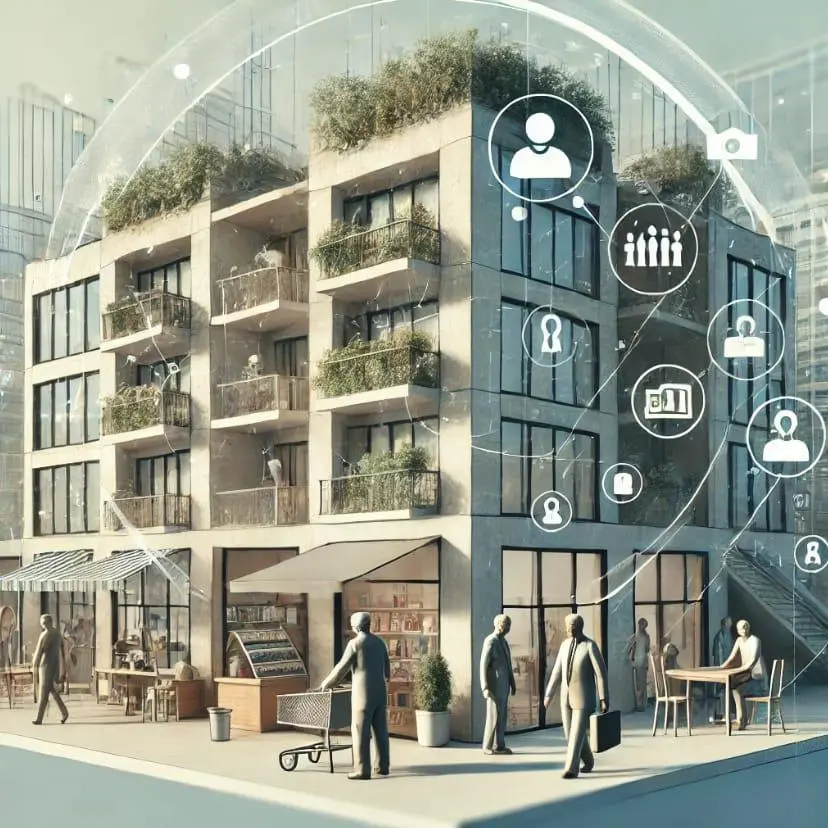
Last week, an Auckland apartment property manager told me about a very practical problem: “Someone was followed into the building. It took three days of reviewing CCTV to piece together what happened, but access control, lifts and cameras were separate, so there was no complete record of their movements.”
This is not a technology problem, but a systems problem.
In many developments, video surveillance, access control, parking and alarms operate independently. When something goes wrong, people have to piece together the clues manually.
Today, developers face a more direct question than whether equipment is in place:
Can these systems actually solve problems?
From installing equipment to building systems
Previously, security was simply an item on a development’s specification list:
-
Install a few cameras
-
Set up an access control system
-
Add number plate recognition to the car park
Then hand it over.
But more developers are now discovering that:
What really affects a development’s quality is not the amount of equipment, but whether its systems are connected.
For example:
-
Someone follows another person in → Can the system automatically detect it + trigger an alert?
-
A visitor enters the building → Can access control + lift permissions work together?
-
A parking space is occupied without permission → Can the system automatically record it + establish responsibility?
-
Communal areas → Can energy use automatically adjust to foot traffic?
Individual devices cannot deliver these capabilities alone. They require a unified platform.
Three issues developers really need to address
In the New Zealand market, we are seeing developers’ priorities change rapidly:
1. Reduce operating costs, rather than focusing solely on construction costs
In a typical apartment development:
-
Parking disputes occur several times a week
-
Handling them manually takes property managers time and effort
-
Security and inspection costs continue to rise
If the system can automatically provide:
-
Number plate recognition records
-
Alerts for unusual behaviour
-
Remote management
Then property management costs can fall significantly.
2. Improve owners’ experience by reducing ineffective management
What really frustrates owners is not a lack of equipment, but:
-
Being unable to investigate an incident
-
Getting no response when a problem arises
-
Systems that operate in isolation
When systems can provide:
-
A complete view of an incident at the touch of a button
-
Automatic notifications of unusual activity
-
Smooth access permissions and entry and exit
Owners’ experience will be entirely different.
3. Improve a development’s ability to command a premium
In the current market, homebuyers are increasingly focused on:
-
Security
-
The level of smart technology
-
Long-term operating costs
An ‘invisible system’ is becoming a key factor influencing purchasing decisions.
Dahua’s work in New Zealand
Dahua Technology’s core approach in the New Zealand market is simple:
It is about delivering practical system solutions, rather than selling equipment.
At Fitness locations nationwide
-
Smart speed gates + integrated video surveillance
-
Real-time detection of people following others through
-
Automatic blocking + alerts
The system handles the entire response without relying on human judgement.
At several residential developments in Auckland
A unified platform provides:
-
Integrated access control + video surveillance + parking + alarms
-
Automatic incident notifications to property managers
-
Number plate recognition to resolve parking disputes
-
Energy savings in communal areas based on demand
Property management shifts from reacting to problems to managing proactively.
The investment rationale is changing too
For developers, this is becoming an investment with measurable returns, rather than simply a cost.
Typically:
-
Upfront investment: approximately 2–5% of construction costs
-
During operation: potential savings of 15–20% in labour and energy consumption
More importantly:
???? Fewer disputes
???? Greater satisfaction
???? A stronger reputation for the development
These deliver long-term value.
The ultimate shift is simple
Developers’ focus is shifting from:
“Is there a system?” → “Does the system work?”
In an increasingly uncertain market:
-
Labour costs are rising
-
Management is becoming more difficult
-
Owners’ expectations are increasing
A building is no longer simply a space, but a system that needs to be managed.
And those ‘invisible systems’ are becoming some of developers’ most important infrastructure.