
A complete fiasco! With energy in trouble, what is New Zealand facing? Minister points to systemic risks
On Wednesday (6 May), New Zealand minister Shane Jones gave a speech at an EMA Northern event. Shortly after opening, he used a striking phrase: “fuel fiasco”. Not a challenge, a transition or a short-term fluctuation, but a complete and utter mess.
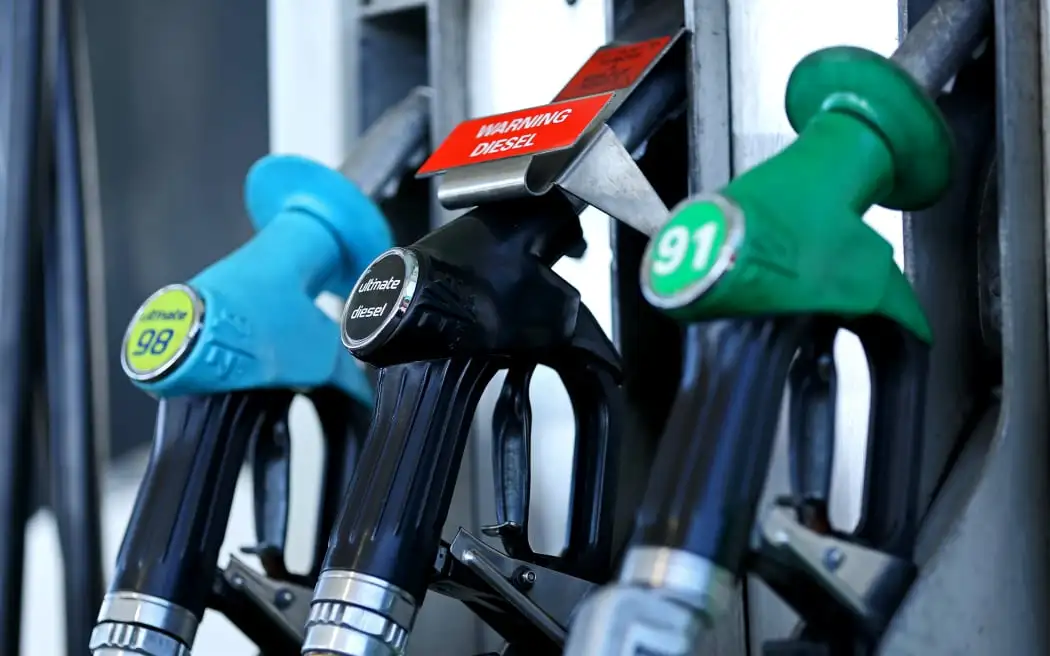
On Wednesday (6 May), New Zealand minister Shane Jones at an EMA Northern event delivered a speech. Shortly after opening, he used a striking phrase: “fuel fiasco”. Not a challenge, a transition or a short-term fluctuation, but a complete and utter mess.
In an environment where policy is usually wrapped in cautious language, such wording stands out. It reflects frustration, but also hints at deeper concerns about structural problems in New Zealand’s energy system: how it currently operates, and just how fragile it has become.
Jones’s central argument is simple: New Zealand has built an energy system premised on stability, but the real world has long since ceased to be stable.
“We don’t produce fuel in New Zealand,” he said. “We rely on imports … on others. And we no longer have the storage capacity we once had.”
That statement comes close to capturing the essence of the problem. For years, New Zealand has effectively operated a “just-in-time” fuel system. Refined fuel is sourced mainly from overseas, mostly from Southeast Asia, then shipped to New Zealand, typically taking around 18 days. This model worked well when global supply chains were stable and geopolitical risks were manageable.
Those conditions no longer hold. Today’s global energy market is profoundly affected by conflict, strategic rivalry and supply constraints. Even information itself has become less reliable. As Jones noted with some resignation in his speech, the government is increasingly relying on real-time signals from global markets to inform its decisions.
“We are looking for strategic certainty … but unfortunately, there isn’t enough of it at present.”
The closure of the Marsden Point refinery has further amplified this vulnerability. The original decision was driven largely by efficiency and cost considerations, but its long-term consequence was that New Zealand lost both refining capability and critical storage capacity.
That matters enormously. The real risk is not simply price volatility, but the possibility of having “no fuel available”.
“I’m not talking about prices going up,” Jones said. “I’m talking about the absence of physical resources.”
The reality facing diesel
Amid broader energy concerns, one fuel has a particularly important role: diesel.
Diesel is more than an ordinary energy input; it is the backbone of New Zealand’s economy. Freight transport, construction, farming and much of the infrastructure that keeps the country running all depend on it.
“Diesel feeds every lifeline … every ‘artery’ that keeps the economy running.”
For this reason, the government has taken an unusual step: building a strategic buffer of 90,000,000 litres of diesel to guard against potential supply disruptions.
It is a practical measure, but it also marks a shift in thinking. New Zealand is beginning to see itself not simply as a market, but as a system that must ensure its own survival under pressure.
In the short term, the government’s focus is on “being prepared”. Relevant agencies are tracking global developments, supply chain flows and importers’ capacity daily. Meanwhile, officials are quietly but seriously developing mechanisms that would be used only in extreme circumstances: demand restraint.
In other words, rationing. This is a scenario no one wants to face, but a reality that cannot be ignored. It also raises difficult questions: how should priorities be set? How can fairness be ensured? What would the economic impact be?
“How do you decide which part of the economy is more important than another?” Shane asked.
The experience of the Covid pandemic looms in the background. It serves as a reminder that interventions of this kind are often blunt, with uneven effects. This time, the government hopes to work more closely with industry to develop a mechanism that is both practical and reasonable. Even so, the minister made clear that trade-offs are inevitable.
While the short-term focus is on managing risk, the medium-term goal is to rebuild resilience.
This includes restoring storage capacity, strengthening stockholding requirements and exploring new infrastructure options. The possibility attracting the most attention is importing liquefied natural gas (LNG).
The LNG proposal is controversial in New Zealand, particularly given the country’s commitment to reducing fossil fuel use. But Shane Jones framed the issue in more practical terms: “If there’s no natural gas, what is your alternative?”
Electricity cannot yet meet all industrial needs. Coal is neither economical at scale nor readily compatible with environmental requirements. Renewables are growing, but still cannot provide the reliable supply needed to support the entire system.
This is the central tension: the gap between aspirations and practical capacity.
Meanwhile, the problems in New Zealand’s energy system are not confined to supply. This week, the government also announced a review of the rooftop solar installation process. Regulation Minister David Seymour described the current process as “a bureaucratic nightmare”, noting that small solar systems often face as many as eight layers of approval, five site inspections and duplicated processes across multiple agencies. Approval can even take months. By comparison, similar systems can be approved within 24 hours in parts of Australia.
To some extent, this also reflects the practical contradictions facing New Zealand’s energy transition. The country wants to advance renewable energy and electrification, yet complex rules and infrastructure bottlenecks continue to slow the transition across the system.
The legacy of the oil and gas ban
Almost any discussion of New Zealand’s energy landscape inevitably returns to the oil and gas exploration ban introduced in 2018 (New Zealand oil and gas exploration ban 2018).
Shane Jones did not avoid the subject. Instead, he addressed the policy directly and in personal terms.
“It is the worst thing I have been involved in as a politician,” he said.
In his view, the decision did much more than halt exploration. It signalled to investors that New Zealand was no longer a reliable market for long-term capital investment. “We scared everyone off,” he said.
The result has been a continuing decline in domestic natural gas supply, growing dependence on imports and an energy system more vulnerable than before.
The problem with the generation-and-retail structure (gentailers)
If supply is one problem, market structure is another key issue.
New Zealand’s electricity market has long been dominated by a handful of integrated generation and retail companies, known as “gentailers”. These companies both generate electricity and sell it directly to end users. The model has been controversial for years, and Jones’s criticism was particularly direct: “Putting shareholders’ interests above those of society as a whole is morally indefensible.”
His reasoning is clear: when supply is tight, prices remain high; when prices are high, those controlling supply benefit; and when those same businesses also control retailing, competition is naturally constrained.
The result is a system that struggles to provide affordable energy even as demand continues to grow.
“They have no incentive to introduce more competition,” he said.
Jones’s proposed solution is equally direct: structural reform. He made clear that, if circumstances allowed, he would push for a fundamental restructuring of the system: “We will break up these gentailers … pull them apart completely.”
The aim is to separate generation from retailing, introduce more competition and use the government’s balance sheet to support new market entrants. Long-term contracts would provide certainty for new supply, reducing investment risk and encouraging capacity expansion.
It is an ambitious and controversial approach. But it reflects a deeper shift: market mechanisms alone may no longer be sufficient to meet New Zealand’s current energy needs.
The central issue remains supply
Ultimately, Jones repeatedly emphasised one key word: supply.
“Cheaper energy comes from more supply,” he said.
Without sufficient supply, regulation, subsidies and market reform will struggle to change the situation fundamentally. Expanding supply cannot be achieved in the short term; it requires sustained investment over more than a decade.
“We need a 10 to 15 year cycle of supply expansion … otherwise our economy will be hollowed out.”
This is not scaremongering. Across the country, businesses have already downsized, relocated overseas or closed altogether because of rising energy costs.
Practical choices amid competing goals
The difficulty in the current situation is not a lack of solutions, but conflict between objectives.
New Zealand wants to reduce carbon emissions, lower energy costs, improve system resilience and minimise environmental impacts. But these goals cannot always be achieved simultaneously.
“If we aren’t willing to face these trade-offs,” Jones said, “then don’t expect energy to get cheaper.”
This may be the most important conclusion.
“Energy fiasco” may sound exaggerated, but in the current context it is not a criticism of any single decision. It is an accurate portrayal of a system that has reached its limits.
New Zealand stands at a turning point. We can continue relying on global markets, accepting volatility and hoping supply holds up. Or we can take a more active path, investing more in infrastructure, advancing market reform and confronting the resulting trade-offs.
As Jones said at the end: “We have to grow our way out of this predicament.”
That growth will depend on energy. And energy increasingly depends on decisions that are difficult, potentially unpopular and perhaps unavoidable.