
Two major New Zealand property research organisations weigh in: house prices look stable, but some owners are already losing money
Judging solely by the latest property figures, little seems to have changed in New Zealand’s housing market last month.
Judging solely by the latest property figures, little seems to have changed in New Zealand’s housing market last month.
QV data shows that, as at April 2026, the national average house price was $912,406, up just 0.3% over the preceding three months and still slightly lower year on year, by 0.2%. From January to April, prices were virtually standing still: flat in January, down slightly in February, stalled again in March, and barely managing a small recovery in April.
QV’s conclusion is equally direct: the market is in a “holding pattern”. Buyers are in no hurry, sellers are in no hurry, and everyone is waiting to see what happens.
Viewed from another angle, however, something about this calm seems slightly amiss.
Risk is already shifting
OneRoof tracked nearly 1000 suburbs nationwide and found that more than 100 had experienced persistent declines across different timeframes. In 9 of those suburbs, house prices had fallen back to pre-pandemic levels.
In other words, although the overall figures still look reasonably stable, some owners are already losing money.
These changes do not show up in national averages, but their impact on individuals is very real.
Auckland and Wellington face the clearest pressure
The geographical distribution shows that the risks are not random.
Auckland and Wellington are the two areas currently under the most obvious pressure.
In Auckland, prices in areas such as Point England and Te Atatū Peninsula are now about NZ$70,000 below their pre-pandemic levels in 2020. In central Wellington, areas including Te Aro, Aro Valley and Mount Cook have also recorded cumulative declines of around NZ$60,000 over recent years.
These areas share a common feature: housing supply has grown relatively quickly in recent years, particularly townhouses and medium-density housing. When the market is strong, that supply is not a problem. With demand currently weak, however, it can readily put pressure on prices.
Put simply, there are more homes, but buyer numbers have not kept pace.
Some areas are falling, while others are still rising
This does not mean the entire market is heading downwards.
At the same time, some areas are performing in exactly the opposite way.
The South Island’s West Coast, Southland, Canterbury and Otago all recorded clear growth over the past quarter. Places such as Te Anau rose 5% over three months, with some small towns rising even faster.
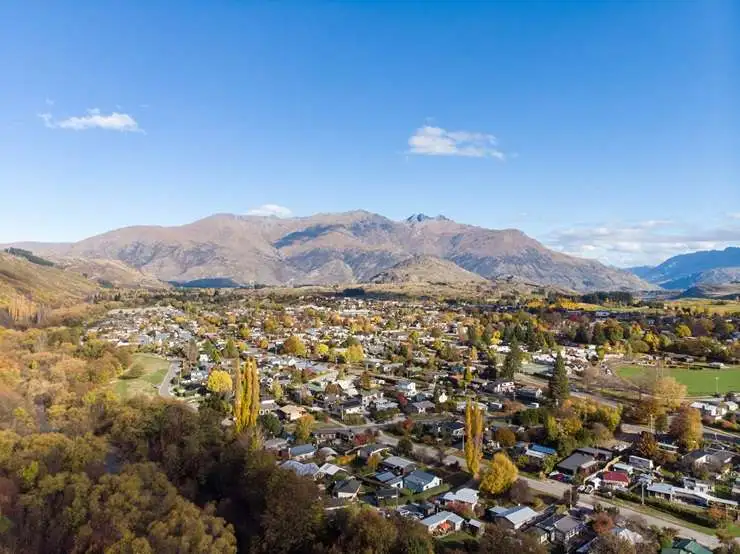
Some premium areas also remain resilient, including Omaha north of Auckland, and Arrowtown and Lake Hayes around Queenstown. These places have limited housing supply and relatively steady buyer demand, making it difficult to push prices down even when the market cools.
In other words, prices are rising, but only in certain places.
Why is this happening?
One factor is changing interest rate expectations. Banks have recently been raising mortgage rates, and the market generally believes the OCR has further room to rise. Higher financing costs naturally restrain demand.
Another is growing uncertainty in the external environment. The situation in the Middle East is pushing up oil prices and intensifying inflationary pressure, making the interest rate outlook harder to judge.
As these factors combine, buyer behaviour changes. The question shifts from “Should I buy now?” to “Where is safer?”
Capital is becoming more cautious and more concentrated.
The market is entering a new phase
Over the past few years, New Zealand’s housing market tended to rise or fall as a whole. That is no longer the case.
Prices no longer move together, and risks are no longer evenly distributed. Some areas can continue to rise, while others have returned to pre-pandemic levels or even lower. This change may deserve more attention than a simple rise or fall.
Observations and reflections
For buyers, opportunities remain, but the task has become considerably harder. Choose the right area, and you may still benefit from growth. Choose the wrong location, and you could face actual losses even if the overall market does not fall.
For developers, the question is what balance of supply and demand makes development safer.
For the market as a whole, a bigger question is emerging: when house prices no longer rise across the board, has New Zealand property entered a truly divergent era?