
New Zealand to introduce a citizenship test: is it really necessary?
In recent years, many countries that receive immigrants have reopened discussions about national identity and civic values. As international migration increases, social structures change and some people grow increasingly uneasy about rising immigration, more countries are emphasising that becoming a citizen should involve more than meeting residency requirements: it should also require an understanding of the country’s institutions, democratic values and social responsibilities.
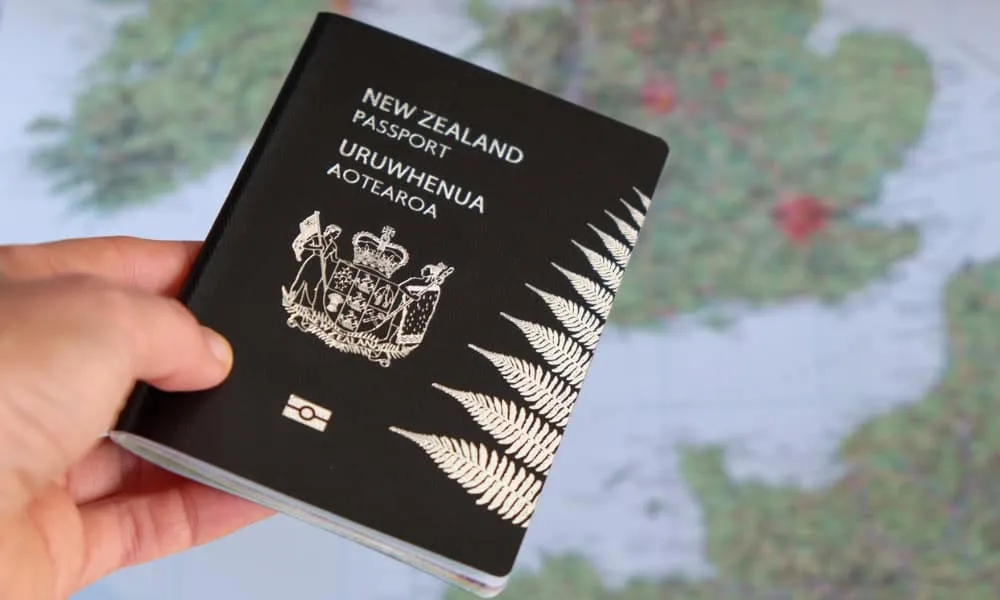
In recent years, many countries that receive immigrants have reopened discussions about national identity and civic values. As international migration increases, social structures change and some people grow increasingly uneasy about rising immigration, more countries are emphasising that becoming a citizen should involve more than meeting residency requirements: it should also require an understanding of the country’s institutions, democratic values and social responsibilities.
In 2026, the New Zealand Government formally announced plans to introduce a new citizenship test from 2027. Future applicants for New Zealand citizenship will need to pass a test on the country’s political system, democratic values and general social knowledge, in addition to meeting the existing residency requirements, before becoming citizens.
The announcement immediately sparked widespread public debate:
The two sides take opposing views. Supporters believe the test will strengthen social cohesion and ease some people’s concerns about immigration changing the country. Opponents argue that it will merely increase administrative costs, slow applications and place unfair pressure on people with weaker English or those who struggle with tests.
What is the New Zealand citizenship test?
According to information released by the Department of Internal Affairs, the New Zealand Government plans to formally introduce citizenship testing from 2027. Future applicants for New Zealand citizenship will need to pass the test before completing the citizenship process.
The test will focus mainly on New Zealand’s government structure, voting system, citizens’ rights and responsibilities, freedom of expression, gender equality, democratic institutions and social values.
In a media interview, Prime Minister Christopher Luxon said systems of this kind had existed in the United Kingdom and Australia for many years. New Zealand was therefore not a special case, but was gradually aligning itself with other English-speaking countries. In fact, many Western countries already have similar systems.
For example:
- Australia
Australia has long had a citizenship test. Applicants must answer questions about Australian history, law, democratic institutions and “Australian values”. The test also emphasises English proficiency and social integration.
- United Kingdom
The United Kingdom’s well-known Life in the UK Test covers British history, culture and general social knowledge as well as political institutions. Many immigrants even buy question banks and study materials specifically to prepare for it.
- United States
Alongside an interview assessing English proficiency, the US naturalisation process includes a civics test covering the Constitution, the presidency, history and political structures.
- Canada
Canada also has a citizenship test covering Canadian history, Indigenous peoples, the legal system, civic responsibilities and national symbols.
From an international perspective, New Zealand is therefore a relatively late adopter.
New Zealand has traditionally been seen as a relatively open and relaxed destination for immigrants. Many people could apply for citizenship without difficulty once they had spent the required time as permanent residents and met the basic conditions. The Government’s move to add a test also signals a change in how the country defines citizenship.
How will the test work?
According to government tender documents obtained by the media and ministerial explanations, the future New Zealand citizenship test is expected to take roughly the following form:
1. 20 multiple-choice questions: the test is expected to contain 20 multiple-choice questions selected randomly from a larger question bank.
2. A 45-minute time limit: applicants will need to complete the test within 45 minutes.
3. A 75% pass mark: applicants must answer 75% of the questions correctly to pass.
4. Plain English: Internal Affairs Minister Brooke van Velden said the questions would use “plain English” to avoid overly difficult language.
5. In-person testing required: the test will be supervised in person and cannot be taken remotely without supervision.
Applicants may not bring notes or receive assistance, and must verify their identity.
The Government also requires the future test provider to have anti-cheating systems, identity scanning, photographic verification and secure data transmission capabilities.
In other words, this will be a formal, highly standardised testing system.
6. Up to six attempts: applicants will have a maximum of six opportunities to take the test.
Government documents state that the six attempts will be divided into two stages, with at least 30 working days between them.
If an applicant still fails on the sixth attempt, the application may be withdrawn or referred to the Minister of Internal Affairs for individual review.
7. Exemptions for some applicants: applicants under 16 and over 65 may be exempt.
Further reading: https://www.nzherald.co.nz/nz/govt-documents-show-citizenship-applicants-will-get-six-tries-at-new-test/EN5C62XI4BGGVFJVFPWN265URY/
These applicants may not need to take the test. In addition, people who submit applications before the system formally takes effect should, in principle, not be required to sit it retrospectively.
Why does the Government suddenly want to introduce this system?
This is currently the most fiercely debated aspect. Strictly speaking, New Zealand has not previously experienced a widespread social problem of citizens failing to understand the country’s institutions. The Minister of Internal Affairs has even stressed that the test is not being introduced because the Government has found large numbers of new citizens who do not respect New Zealand values. That statement itself suggests the Government is aware of public doubts: is this policy really necessary in practice?
What do supporters say?
Supporters believe the system’s greatest significance lies less in the test itself than in public sentiment. In recent years, New Zealand, like many Western countries, has seen growing concern about excessive immigration, rapid social and cultural change, or an increasingly blurred national identity. Some locals worry that their own country could become unfamiliar.
These feelings become more pronounced when economic pressures grow, house prices rise and infrastructure is strained. Supporters therefore argue:
Even if the test is not difficult, it still sends society a message: becoming a New Zealand citizen carries responsibilities and basic requirements. From this perspective, the citizenship test is more of a symbolic institution. As currently planned by the New Zealand Government, the test is not particularly difficult: there are relatively few questions, multiple opportunities to resit it, and the questions will use plain English.
Supporters therefore believe that people who have genuinely lived in New Zealand long term and understand its society should not find it too difficult to pass.
Even for those who do not want to take the test, permanent residents (PRs) in New Zealand already enjoy extensive rights, including indefinite residence, the right to work, and healthcare and education benefits. Some therefore argue that anyone who does not want citizenship can simply retain PR status and continue living a normal life.
Why are opponents concerned?
Although the test does not appear particularly difficult, opposition remains considerable because it adds administrative complexity. Any new system means more checks, more procedures and longer waits.
Many New Zealand immigration and visa applications already face slow processing. Adding a testing system would bring tasks such as booking tests, arranging supervision, checking results and managing resits that could place further pressure on New Zealand’s government systems.
Unfair to people who struggle with tests
Some people may have lived and worked in New Zealand for many years but struggle to pass because of nerves, difficulties expressing themselves, test anxiety or their educational background.
Opponents argue that multiple-choice questions cannot necessarily determine whether someone will be a good citizen.
English requirements could undermine multiculturalism
This is one of the most contentious aspects. The Government currently says the test will be conducted in English. Critics argue, however, that New Zealand is a multicultural country and that, strictly speaking, its official languages include English, Māori and New Zealand Sign Language.
Some also point out that English has long functioned more as a de facto official language in New Zealand than as an unequivocal official language explicitly prescribed by a single constitution. An English-only test could therefore send a message, to some extent, that a true New Zealander must conform to mainstream English-speaking culture.
This has also raised concerns that New Zealand could gradually move away from a multicultural society towards a greater emphasis on cultural assimilation.
Political factors may also lie behind the policy
From a practical political perspective, many observers consider the timing of this policy particularly sensitive. New Zealand has just signed a free trade agreement (FTA) with India, and there are widespread expectations of increased business activity and movement of people, along with possible growth in skilled migration and international student numbers.
Against this backdrop, introducing a citizenship test at the same time can easily be seen as a political balancing act. On one hand, the Government continues to open up the economy and pursue international cooperation; on the other, it signals to local voters that “the Government still values national identity and social values”. The policy may therefore be as much a political gesture as an administrative reform.
Particularly as anxiety about immigration has emerged in many countries, the Government also wants to avoid leaving people with a sense that the country is losing control.
The benefits may be less clear than the costs
Overall, there is a rationale for a citizenship test. Understanding national institutions, democratic values and social responsibilities is an important part of becoming a citizen. Many countries already have similar systems, so New Zealand’s approach is not particularly radical. On the other hand, the policy’s practical effects may be quite limited. Most people applying for New Zealand citizenship have usually already lived locally for years, held stable jobs, paid taxes, established families and integrated into society.
Their understanding of New Zealand is often already evident in everyday life, rather than merely in test results. In practical terms, the system therefore looks more like a political and symbolic measure than a key reform addressing a specific social problem. It may temporarily ease some people’s anxiety about immigration, but it will also make applications more complex, increase administrative costs and add psychological pressure for some immigrants. Ultimately, the real question facing New Zealand may not be whether immigrants know how to pass a test, but how a country can maintain an open economy, multiculturalism, national identity and social stability together in an era of globalisation.
Prominent New Zealand immigration lawyer Sonny Lam therefore believes the potential benefits do not outweigh the potential costs. It appears to be an exercise requiring considerable effort for very little return. Perhaps it is intended to soften the impact of the free trade agreement now signed with India, making this a politically motivated change rather than one grounded in practical considerations.
With 15 years of litigation experience and a background as an Immigration New Zealand officer, he now works as an immigration lawyer at Queen City Law. After leaving Immigration New Zealand in 2015, he began specialising in immigration, offering informed, practical advice on immigration and employment law matters from the perspectives of both applicants and the immigration officers assessing their cases.