
Can your CV be changed? What many Auckland homeowners do not know could affect years of council rates, their property’s value and even its sale!
Recently, more and more Auckland homeowners have had the same initial reactions to their new CV (capital value) assessments: “Why has my home’s CV fallen so much?” “How can next door’s be higher when they haven’t even renovated?” “Will a change in CV affect my council rates?” “Can it still be changed if the objection deadline has passed?”
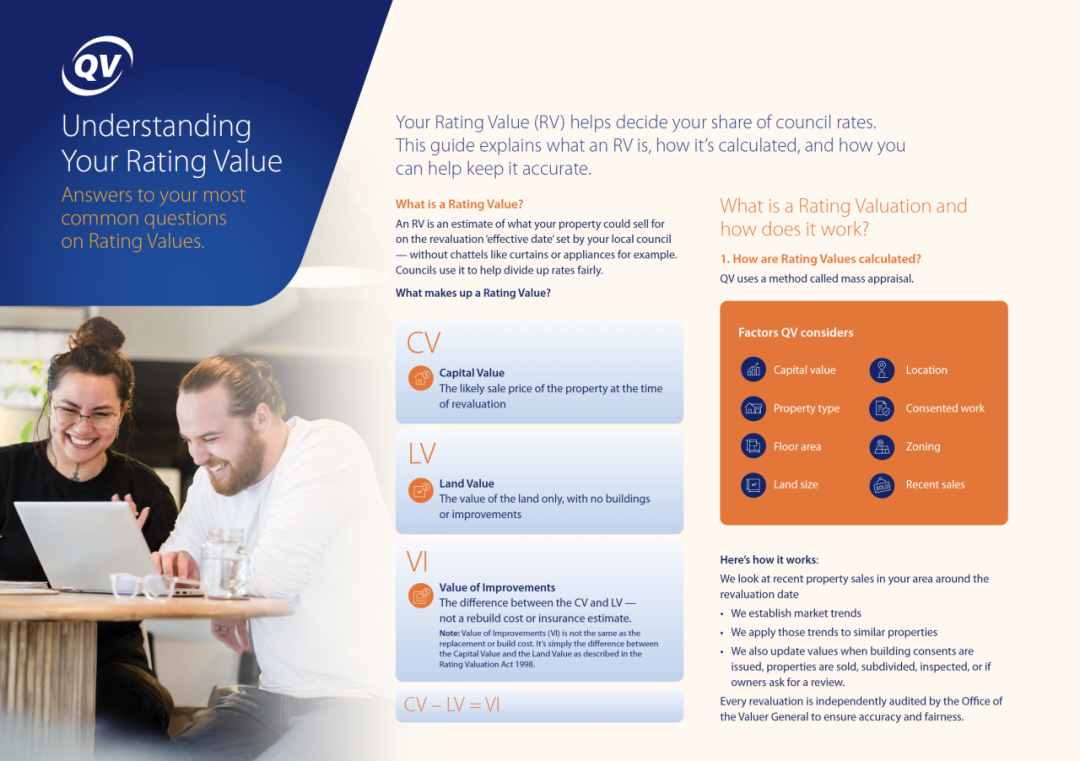
Recently, more and more Auckland homeowners have had the same initial reactions to their new CV (capital value) assessments:
“Why has my home’s CV fallen so much?” “How can next door’s be higher when they haven’t even renovated?” “Will a change in CV affect my council rates?” “Can it still be changed if the objection deadline has passed?”
What most people do not realise is that you can apply to have your CV changed, and the process is less complicated than you might imagine. With New Zealand’s property market now entering a period of repricing, more people are taking a fresh look at the importance of CVs.
According to the latest information released by Auckland Council, more than ten thousand Auckland property owners have lodged objections to their latest CVs. The council has also made clear that applications with reasonable grounds will enter the review process.
Why is everyone paying attention to CVs now?
Over the past few years, New Zealand property prices surged during the pandemic before the interest rate hiking cycle brought a market correction. Meanwhile, tighter bank lending and increasingly rational buyers have pushed the market into a reassessment of “true value”.
Auckland Council’s latest figures show that residential property CVs fell by an average of about 9% in 2024. The problem is that the change is not necessarily reasonable for every home.
Some owners have found that:
-
Their CV has not changed despite renovations and upgrades
-
The valuation still reflects the home before an extension
-
Similar properties in the same neighbourhood have vastly different CVs
-
Actual sale prices are seriously out of step with CVs
More people are therefore realising that, although a CV is not a market sale price, it affects many things.
These include council rates, the value banks use as a reference, buyers’ expectations, the impression a listing makes and the property’s long-term image as an asset.
Can a CV be changed?
Yes. There are usually two ways.
The first: lodge an objection within the official objection period, the most common approach
Each time the council releases new CVs, it opens an objection period.
During this period, you simply need to phone or email the council, or submit an objection through the official process, and provide supporting material: nearby sales, photographs of the house, renovation details, explanations of any specific issues, and differences in the land or building. The council will then arrange a review.
According to official guidance, every objection should, in principle, enter a reassessment process, including a site inspection and a valuer’s review. The timing varies: some people hear back within weeks, while others may wait months for an outcome.
The second: can it still be changed after the deadline?
If the objection period has passed and your property has undergone:
-
Major renovations
-
An extension
-
Additional bedrooms or bathrooms
-
A land subdivision
-
Significant structural changes
-
A clear change in value
You can still contact the council to request a reassessment.
You will need comprehensive supporting material, such as:
-
Photographs of the work
-
Building Consent
-
CCC documents
-
Invoices
-
Receipts
-
Evidence of alterations
The council will review the property based on the actual circumstances. This is why many people proactively apply to update their CV after renovating. An outdated CV can sometimes affect market perceptions when the property is sold later.
Does a higher or lower CV necessarily affect council rates?
This is the question many people care about most. The answer is: not necessarily.
New Zealand’s council rates system does not mean that a higher CV necessarily results in a much larger bill. What matters is how your home’s CV changes relative to other homes across the city.
The council itself explicitly states that a CV revaluation does not change the total amount it collects in council rates. It simply redistributes the share paid by each household.
Here is a simple example:
If house prices across Auckland all rise by 10%, everyone’s relative share will remain much the same. Your council rates may not increase significantly.
But if other properties’ CVs generally fall while yours rises substantially, your share could increase. The reverse also applies.
A change in CV therefore does not necessarily mean a corresponding change in council rates. What really matters is how your change compares with the market as a whole.
New Zealand’s property market is now entering an era in which values are being reordered
People once regarded a CV as just a number. Now, more are discovering that, in an uncertain market, CVs are quietly influencing buyer sentiment, banks’ perceptions, the allocation of council rates, an asset’s image and a listing’s competitiveness.
As New Zealand property gradually shifts from a sentiment-driven market back towards a value-driven one, more owners are proactively managing their asset information. What will hold value in the future is not just the house itself, but also your ability to manage how the market perceives it.
A final reminder: remember this step once the change is complete!
The most important step after changing your CV is to check the publicly available information on the official government website.
Confirm that the publicly displayed CV has been updated to reflect the revised figure.
Banks, buyers, agents and third-party platforms will often refer to public information in future. Make sure the result you worked hard to obtain is actually reflected in those records.