
Behind a NZ$320,000 bill: hidden costs are holding back Auckland housing development
Is a shortage of homes really the only issue at the heart of New Zealand's housing problem?
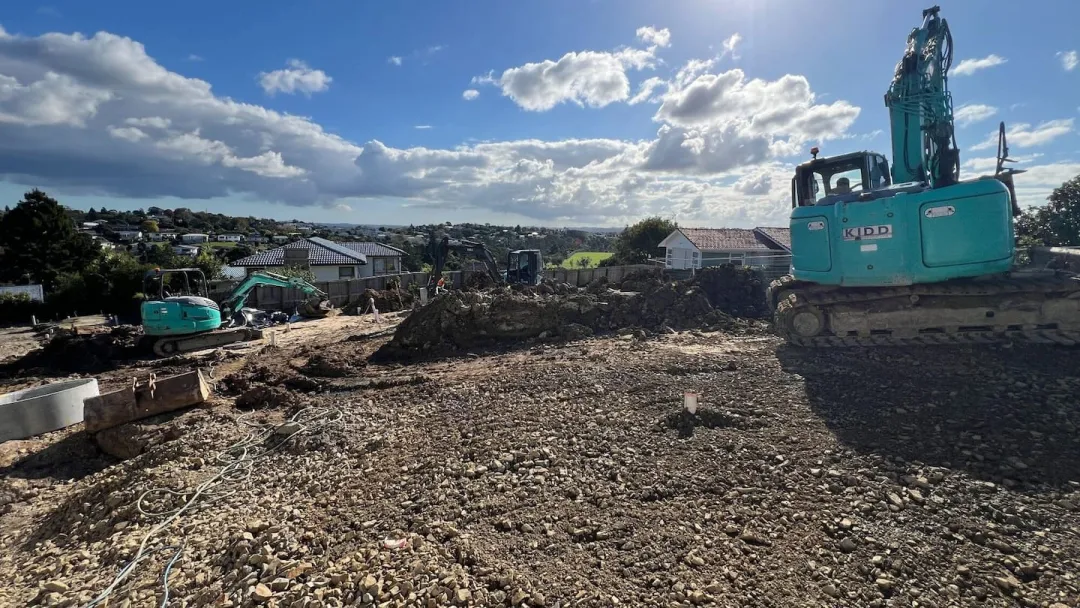
Is a shortage of homes really the only issue at the heart of New Zealand's housing problem?
Over the years, central and local government have largely pushed in the same direction: increasing housing density, speeding up development approvals and encouraging more townhouses and multi-unit housing.
On development sites, however, another concern is becoming increasingly pressing: costs often begin to mount before construction even starts. And it is not the land itself that is becoming ever more expensive.
Recently, a small development of just 12 townhouses in Birkdale on Auckland's North Shore sparked a fresh dispute between the developer and Watercare over Watercare-related costs totalling NZ$320,000.
Behind the dispute lies a reality facing Auckland's entire housing development system: development is increasingly being slowed by rising infrastructure costs that ordinary buyers never see.
Why must a 12-home project start with a NZ$320,000 bill?
The project at 30 Seon Place on the North Shore is being developed by Citrus Living, with a total investment of around NZ$8,000,000 and plans for 12 townhouses.
This is hardly a large development, but as it progressed, development manager Mike Lane found that Watercare-related costs alone had reached around NZ$320,000.
Around NZ$220,000 of this is Watercare's Infrastructure Growth Charge, while a further NZ$100,000 is required to upgrade the wastewater main serving the project.
According to Lane, a property on Stotts Ave, about 500 metres from the project, has long experienced wastewater manhole overflows during heavy rain. Sewage even spurts through the manhole cover, flows across residents' lawns and eventually enters a nearby stream.
In other words, the system was already under capacity pressure before this new project connected to it. Watercare is now requiring the developer to pay for an upgrade.
Lane's main question is this: if the public system was already close to failing, why should a new development have to bear the cost of historical infrastructure shortfalls?
More immediately, he says two other nearby developments have already stalled because of similar issues.
Watercare's reasoning is not entirely without merit
Watercare's response to the developer's concerns is unsurprising.
Watercare chief strategy and planning officer Priyan Perera says that whenever a new development adds pressure to the wastewater system, the developer must pay the corresponding upgrade costs, and that this approach is applied consistently across Auckland.
From Watercare's perspective, Auckland's population growth has long outpaced infrastructure upgrades. Watercare is now undertaking a major programme of system upgrades worth NZ$13,800,000,000, including large wastewater projects such as the Central Interceptor, regional capacity expansion and overflow management.
The problem is that these upgrades require both time and substantial funding.
As the city continues to grow, Watercare is increasingly inclined to have new developments bear part of the cost of expanding the network.
There is some logic to this. The real tension, however, is that when the whole system is already nearing its limits, it is difficult to draw a clear line between new pressure and historical shortfalls.
Hidden costs are often what really slows development
Many people used to assume that land was the most expensive part of development.
Now, however, more developers are finding that the hardest costs to control are the hidden ones that cannot be accurately predicted at the outset.
Particularly during the consenting and engineering stages, issues involving Watercare, stormwater, Vector, electricity capacity and road access often bring a succession of new requirements.
Many costs emerge only after the land has been bought and the project designed, sometimes even towards the end of the approval process.
Often, developers' biggest headache is not even the expense, but the uncertainty.
One remark by Mike Lane captures the situation many developers now face:
“At the start of a project, you don't know how much you will ultimately be required to pay.”
This means a single infrastructure requirement can overturn a project's financial projections, squeeze margins, increase financing risks and prolong the development timeline.
For small and medium-sized developers, this uncertainty can be particularly devastating.
Compared with large development groups, smaller developers have limited capacity to absorb risk. As additional costs mount, a project can quickly become unviable.
Is Auckland's infrastructure capacity already falling behind?
The incident also exposes another increasingly apparent issue that deserves attention:
The real bottleneck facing Auckland may no longer be land supply alone, but infrastructure capacity.
Over the past few years, both the MDRS and Auckland's ongoing policies promoting higher-density development have essentially encouraged more people to live on the same amount of land.
Yet the underground networks in many older suburbs were not designed for today's density standards. This creates an increasingly common conflict: higher density is being required above ground, while the wastewater system below is already nearing its limits.
From Westgate's past need to truck wastewater away, to Warkworth's long reliance on temporary tankering, and now wastewater overflows during heavy rain in Birkdale, these problems all point to the same issue:
Auckland's urban growth has begun to outpace its infrastructure.
Observations and reflections: who should pay for urban growth?
There is no clear right or wrong side in this dispute.
Watercare needs to upgrade its systems, developers want viable projects, and residents certainly do not want sewage flowing into their backyards.
The real problem is that, for decades, Auckland has followed a pattern of developing first and adding infrastructure later.
Now, as the population continues to grow and housing density increases, these accumulated problems are finally surfacing together. Developers are often the first to face the bill.
The question is this: if development costs keep rising, approval and infrastructure requirements continue to grow, and more small and medium-sized projects consequently stall, the eventual impact may extend beyond developers' profits to Auckland's entire housing supply.