
Queenstown getting more crowded, Christchurch more popular? New Zealand’s population flows are changing!
In Queenstown, many people have begun ‘taking turns sleeping in the same bed’.
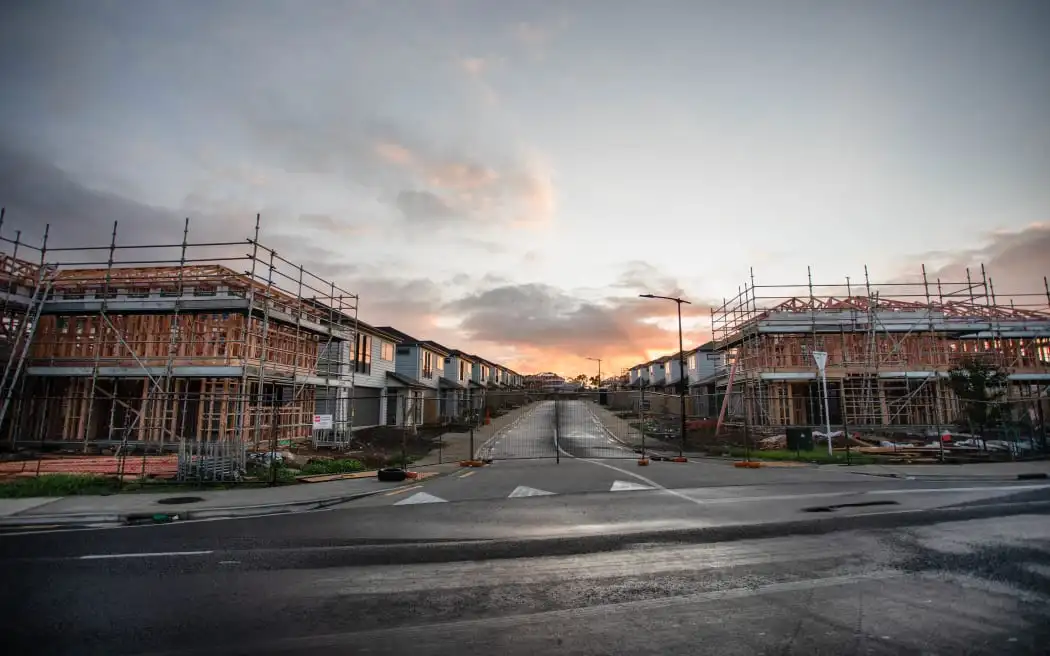
In Queenstown, many people have begun ‘taking turns sleeping in the same bed’.
Meanwhile, in Christchurch, growing numbers of families from Auckland, Tauranga and across the country are reconsidering how they live.
Some are leaving behind the pressure of high North Island house prices and long commutes. Others are discovering for the first time that a home with a garden, a shorter commute and a relatively relaxed pace of life are still within reach in a major New Zealand city.
Over the past few years, discussion of New Zealand’s property market has often centred on house price movements, interest rate changes and when the market will recover.
But two recent reports about Queenstown and Christchurch have highlighted the everyday realities behind house prices.
As ordinary workers find it increasingly difficult to stay in Queenstown, and Christchurch attracts large numbers of people moving south from elsewhere, differences in living costs between New Zealand cities are reshaping decisions about where to settle, work and raise a family.
Changes in the property market are gradually becoming a discussion about people.
Even high earners cannot afford to live in Queenstown?
Queenstown has never lacked appeal. Snow-capped mountains, lake views, ski fields, wineries, fine dining and large numbers of international visitors have long made it one of New Zealand’s most attractive places to live.
But another side of this dream destination is becoming increasingly apparent.
According to the Queenstown Lakes Affordable Housing Trust, around 1600 households are currently waiting for affordable housing assistance, representing roughly 7% of the local population.
Most striking is who these people are. Those waiting for housing assistance include nurses, teachers, social workers, construction workers and hotel staff. Many households earn around NZ$80,000 a year, which would not put them in a low-income category nationally.
But in Queenstown, that is still far from enough. The average local house price is currently around NZ$1,800,000, having briefly reached NZ$2,140,000 at the post-pandemic peak. Meanwhile, weekly rent for an ordinary three-bedroom home commonly exceeds NZ$1000, compared with a national median of only around NZ$565.
For many ordinary households, being unable to buy a home is already a foregone conclusion. The more urgent question is whether they can afford to keep living there at all.
As a result, living arrangements that were once hard to imagine are becoming increasingly common.
Some adults have to share rooms with strangers; others convert garages into temporary accommodation. In parts of the hotel and hospitality industries, ‘hot-bedding’ is even becoming increasingly common: one person vacates the bed to go to work, and another returns to sleep in it.
Queenstown’s success is turning against it
Queenstown economist Benje Patterson describes the local property market as having long ceased to be a ‘normally functioning market’.
That is because local incomes are no longer the only force driving house prices. Retired Australian buyers, wealthy overseas buyers, holiday-home investors and capital flowing into short-term rentals are all continuing to push up local housing prices.
Data shows that around 41% of local property owners own more than one property. Meanwhile, the latest census data shows around 27% of Queenstown homes are vacant long term, compared with a national average of just 11%.
The large number of holiday homes and short-term rental properties is making housing increasingly resemble an asset rather than a place to live.
To some extent, Queenstown is becoming a victim of its own success. The more successful it becomes, the more global capital it attracts; and the more capital flows in, the less room ordinary workers have to sustain a life there.
A more practical question follows: if nurses, teachers and service workers cannot stay, how long can a city keep functioning normally?
People are moving to Christchurch
While Queenstown finds it increasingly difficult to accommodate ordinary people, another city is welcoming large numbers of new residents.
The latest figures show Christchurch’s property market is now clearly outperforming those of most other major New Zealand cities.
According to the latest Cotality data, Christchurch house prices are less than 2% below their record high, almost back at the market’s peak. By comparison, Auckland prices remain around 23% below their high, while Wellington is around 25% below. Nationally, overall house prices are still around 16.8% below their record high.
Against a generally weak national market, Christchurch’s performance stands out.
Meanwhile, realestate.co.nz data shows that around 75% of browsing traffic for Christchurch properties currently comes from outside the city.
In practical terms, a budget that might only cover a small apartment or townhouses in Auckland can buy a detached home with land and a garage in Christchurch: the traditional Kiwi dream.
This difference in demand has even affected Christchurch’s townhouse market. RNZ reports that the consequences of the city’s recent townhouse development boom are emerging. Strong conditions in previous years drew many developers into medium-density housing, but buyer demand has now cooled noticeably, leaving many projects with stalled sales. Some are being offered for sale partially built with work suspended, while others are being sold through receivership after developers ran out of funding.
Construction industry figures point out that in March 2026 alone, 79% of Christchurch’s new residential building consents were for multi-unit developments. Yet market interest in smaller homes without garages, parking spaces or outdoor areas is limited. Traditional three-bedroom homes with a garage and some land remain more popular.
As NZCBIA South Island branch president Ricky Wang said, low-density housing remains the mainstream in Christchurch. There is an oversupply of medium- and high-density housing, which will not be the city’s main direction of development in the future.
Better-value housing is prompting more New Zealanders to look south. Property professionals have even described it as an ‘avalanche of southward migration’.
But what really convinces them to make the move is Christchurch’s lifestyle.
For many families, it is about a different way of life
Drew Wale and his family, from Torbay on Auckland’s North Shore, had been looking at a two-bedroom apartment in Albany priced at NZ$820,000. Instead, they bought a large renovated villa on its own full section in Christchurch for less than NZ$700,000.
What really changed their lives was not just the house, but time. Their commute used to take an hour; now the whole trip, including dropping the children at daycare, takes just 15 minutes.
Another resident, Jodie Love-Frost, who moved from Tauranga to Christchurch, described it as ‘the best decision we have ever made’.
For many families, Christchurch’s appeal lies in shorter commutes, a steadier pace of life and a relatively comprehensive range of education and employment opportunities. These factors are reshaping perceptions of the city.
Christchurch has undergone a lengthy rebuild over the past few years. Today, CBD renewal, riverfront improvements, infrastructure upgrades and the opening of a new stadium have all brought back a sense of vitality long absent from the city.
Observations and reflections: people are reconsidering which city to call home
Looking at Queenstown and Christchurch together shows that New Zealand’s property market has never been solely about house prices.
Queenstown remains beautiful and appealing. But rising living costs are gradually becoming unsustainable for many ordinary workers. Nurses, teachers and hotel staff—the people who keep the city running—are also facing the reality that they may be unable to stay.
Christchurch, meanwhile, is clearly growing in popularity. Many people who move there talk about life itself rather than investment: a larger home, a shorter commute, less pressure and weekends when they can truly have time to themselves.
New changes are also emerging in Auckland. Following the house price adjustments of recent years, the market is less frenetic than it once was. Buyers are taking their time and thinking more carefully about whether a home suits their long-term needs, and whether its location allows them to balance work, family and everyday costs.
This trend may become one of the most significant developments to watch in New Zealand property over the coming years.