
Who will benefit, and who will be disappointed? The winners and losers behind Auckland’s latest intensification map
This week, Auckland Council’s latest discussions on Plan Change 120 (PC120) entered a critical stage.
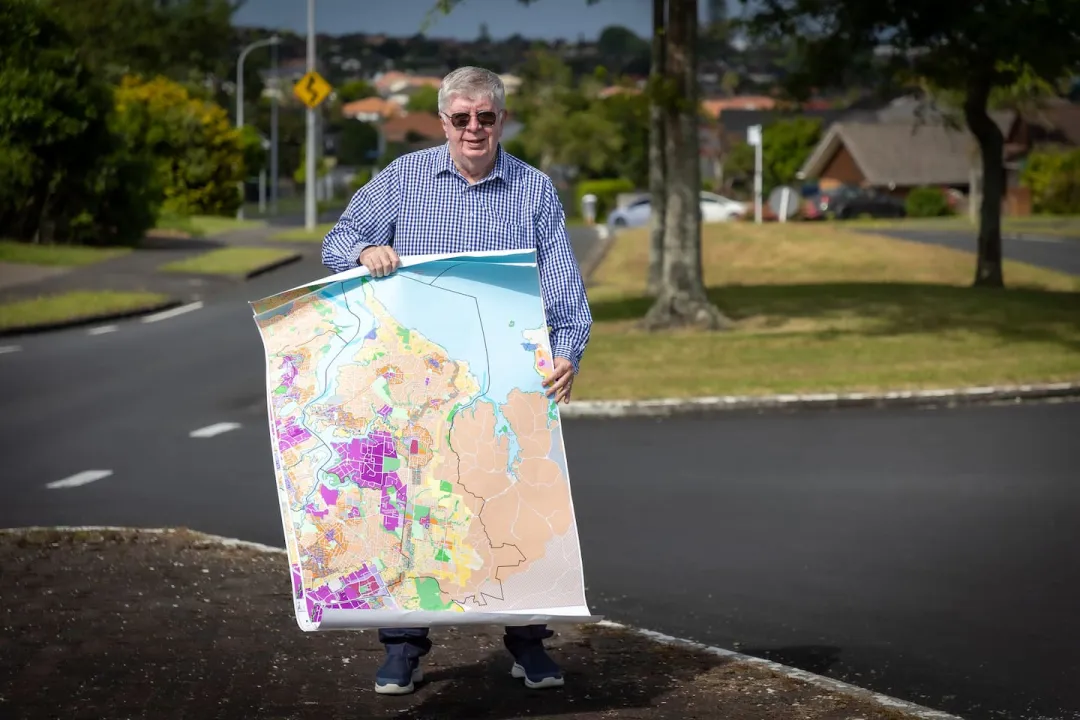
This week, Auckland Council’s latest discussions on Plan Change 120 (PC120) entered a critical stage.
For many people, this may seem like a routine meeting on urban planning. For developers, investors and landowners, however, the discussion goes far beyond planning.
Every change in land use, every adjustment to building heights and every easing or tightening of development rules ultimately feeds through to land values.
In a sense, the council is deciding who will benefit from the city’s future development and who may lose opportunities they had expected.
From bold intensification to cautious intensification
When Auckland began advancing PC120 a few years ago, market expectations were high.
House prices remained elevated, the population was growing and housing supply had long failed to keep pace with demand. Both central and local government acknowledged that Auckland needed more homes.
The initial version of PC120 provided planning capacity for close to 2,000,000 homes. This was a bold signal to the development industry. It meant more land would have development opportunities, and many sites previously limited to standalone housing could have their values reassessed.
Over the following years, however, the direction began to change. As opposition grew in some communities and electoral politics came into play, the intensification plan was repeatedly revised. The housing capacity target was cut from 2,000,000 homes to 1,600,000, then reduced further to 1,400,000.
Of the four options now before the council, only the relatively conservative Option A and the compromise Option B have a realistic chance of securing support.
The large-scale intensification originally envisaged is slipping further out of reach.
The first winners: land near public transport
If the discussion has sent one reasonably clear signal, it is that Auckland’s development direction has not changed: urban growth will continue to centre on public transport.
Whether Option A or Option B is ultimately adopted, areas along the rail network, around City Rail Link stations and near rapid bus corridors remain where planners are most willing to accommodate intensification.
The reasoning is straightforward. Over more than a decade, the Government and taxpayers have invested heavily in rail, bus systems and major transport projects.
If additional population growth continues to spread towards the urban fringe, the benefits of those investments will be progressively diluted.
Placing more homes near transport hubs would instead make better use of existing infrastructure.
For owners of this land, that is undoubtedly the most significant message to watch.
Future land values may increasingly depend on proximity to stations, bus hubs and town centres, rather than simply the size of the site.
The second winners: properties around established commercial centres
Alongside public transport hubs, town centres with established amenities are also likely to be major beneficiaries of future intensification.
These areas usually already have schools, supermarkets, healthcare services, commercial facilities and public transport networks. They can accommodate population growth more readily than new development areas requiring substantial infrastructure investment.
For developers, the greatest advantage of these areas is their established market.
Buyers are willing to move in, banks are more willing to lend and project risks are relatively manageable.
Even if overall intensification falls short of what the market expected a few years ago, these areas will therefore continue to attract development capital.
The biggest winner may be location rather than developers
For many years, Auckland’s property market followed a simple logic: the larger the site, the higher its value.
As the city enters a new stage of development, however, that logic is changing.
Location may become the decisive factor in value, rather than land area itself.
Consider a 800 square metre site. If it is in an accessible area where planning supports growth, it could be worth far more than another site of the same size with limited development potential.
Viewed this way, the planning changes are effectively redrawing the map of future land values.
Some areas may not see an immediate increase in value, but their development potential has been preserved.
Others may retain the status quo while losing opportunities for capital growth that the market had anticipated.
The first to be disappointed: owners expecting widespread intensification
Many owners have spent the past few years waiting for PC120 to be finalised and implemented.
This is particularly true of families with large sections.
They had hoped that intensification policies would allow higher-density development on their land in future.
Many have been calculating whether they could subdivide, build townhouses or even wait for developers to approach them about a partnership.
As planning targets continue to shrink, however, those expectations are changing.
Some traditional low-density residential areas may have much less room for future development than the market originally imagined.
This does not mean land values will fall.
It does mean, however, that some development potential already priced into the market may not be fully realised.
The second to be disappointed: investors betting on policy gains
Over recent years, many Auckland land investments have been based on waiting for intensification.
Some investors bought properties for the potential land value gains from future planning changes, rather than their current rental returns.
They believed that once policy restrictions were relaxed, land values would naturally rise.
But the course of PC120 has also taught the market a lesson: planning outcomes are uncertain, and politics also affects land values.
Even if economists believe greater housing supply benefits urban development, and even if the council’s own analysis shows higher density could deliver greater economic gains, political choices still determine the outcome.
For those betting on policy gains, that uncertainty is itself a risk.
The third group of losers: future home buyers
Future home buyers are the people most easily overlooked in these discussions.
Councillor Richard Hills has publicly said that reducing housing capacity from 2,000,000 homes to 1,400,000 could mean higher house prices over the long term.
This does not mean house prices will rise tomorrow; property markets are never that simple.
But in terms of long-term supply and demand, if the city allows less room for development while its population continues to grow, future market choices will naturally narrow.
For existing property owners, that may not be bad news.
For young families planning to enter the market over the next few years, however, the picture could be very different.
A choice about the city’s future
Supporters of intensification argue that Auckland’s housing affordability problems can never be fundamentally resolved without increasing supply.
Opponents worry that excessive intensification will change neighbourhood character, increase traffic pressure and erode existing quality of life.
Both sets of concerns are real.
That is precisely why PC120 has undergone so many revisions over recent years.
The issue is that the city must ultimately make a choice.
If it wants more young families to stay in Auckland, it needs to provide more homes for them.
If it wants to preserve existing neighbourhoods unchanged, housing growth can only be concentrated within a smaller area.
Achieving both is difficult.
Observations and reflections
Many see this debate as a contest between developers and residents. In reality, it is closer to a discussion about how future resources will be allocated.
Developers want to know where development opportunities remain.
Owners want to know whether their land can increase in value.
Home buyers want to know whether they will still be able to afford a home in future.
For Auckland, the larger question is: what kind of city does it ultimately want to become?
The signals so far suggest Auckland has largely abandoned the most aggressive approach to intensification.
Future development will be more concentrated and more cautious.
Whether Option A or Option B is ultimately adopted, one trend is becoming increasingly clear: Auckland’s most valuable land in future may be the land in the right location, rather than the largest sites.
This week’s council vote may well be only the beginning of that reassessment of land values.