
Vanishing tower cranes: the construction downturn is dragging on Auckland’s economy. Can NZ$7,000,000,000 in infrastructure investment turn the tide?
If one image could capture Auckland’s economic development over the past twenty years, the tower cranes scattered across the city would undoubtedly be among its most representative symbols.
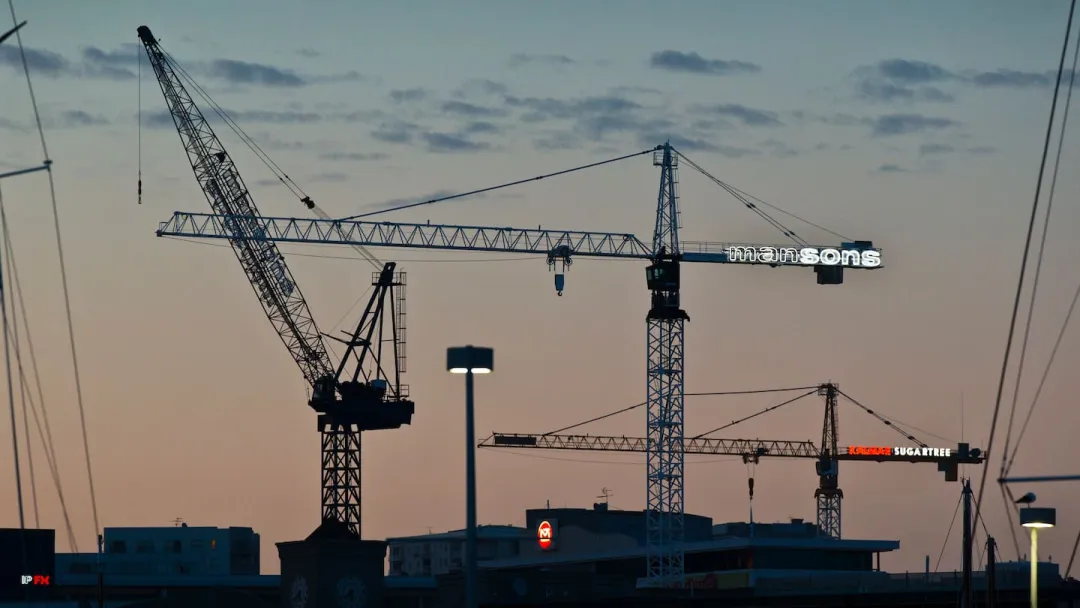
If one image could capture Auckland’s economic development over the past twenty years, the tower cranes scattered across the city would undoubtedly be among its most representative symbols.
From skyscrapers continually reshaping the city centre’s skyline to expanding neighbourhoods in the west, south and north-western corridor, construction sites were once the clearest expression of Auckland’s economic vitality. For many people, tower cranes represented more than new buildings rising from the ground: they meant jobs, investment confidence and the city’s future development.
The latest figures, however, show that these once ubiquitous cranes are gradually disappearing.
As construction activity continues to shrink, the effects have long since spread beyond the industry itself.
Auckland’s construction sector is facing one of its toughest periods since the pandemic
According to the latest Stats NZ figures, the total value of construction work under way in Auckland in the quarter ending March 2026 fell 18% from the same period a year earlier.
The total value of construction work across the region was around NZ$7,200,000,000, down 5.9% from the same period in 2025.
The picture becomes even clearer over a longer period.
The data shows that by the first quarter of this year, the overall scale of Auckland’s construction activity had fallen 26% from its peak in September 2023.
In other words, more than a quarter of Auckland’s construction activity has disappeared from the market in just over two years.
Although residential construction has slowed, its overall performance has remained relatively stable.
Infometrics chief forecaster Gareth Kiernan noted that the value of new residential construction activity in Auckland was down just 0.3% from last year, and that Auckland was even the only region nationwide to record annual growth in residential construction activity, at 2.1%.
The real problems lie in commercial construction and major projects.
Non-residential construction activity nationwide fell 13% over the past year, the largest annual decline since 2010, with Auckland and Wellington among the hardest-hit regions.
For Auckland, which has long relied on property and construction to drive growth, this signals more than an industry correction: it points to weakening momentum across the economy.
Why does a construction slowdown drag on the whole economy?
When people think of construction, building houses is often the first thing that comes to mind. In reality, the sector’s economic influence extends much further than it appears.
From planning to completion, a construction project involves an extensive supply chain.
Architects, engineers, surveyors, electricians, plumbers, building material suppliers, transport companies, financial institutions, real estate agents and numerous small and medium-sized contractors all depend on construction activity for income and employment.
When construction slows, developers are therefore far from the only ones affected.
According to figures released by Stats NZ in March this year, Auckland had lost 3936 construction jobs since the end of 2024, the largest decline of any region nationwide.
More notably, Auckland accounts for around a third of New Zealand’s population but approximately 60% of construction job losses nationwide.
This means the construction slump is hitting Auckland’s economy much faster than other regions.
Meanwhile, construction business failures remain elevated.
The latest Centrix figures show that 780 construction-related businesses nationwide entered liquidation in the year to May, leaving construction as the sector with the most business failures.
For many small and medium-sized construction businesses, the biggest challenge is no longer falling profits, but the disappearance of projects themselves.
When tower cranes disappear, more than construction sites are lost
Construction matters not only because it creates jobs, but also because it reflects economic confidence.
When a city is filled with construction hoardings, work vehicles and tower cranes, people naturally sense that growth is taking place. Businesses are willing to invest, banks are willing to lend and consumers are more willing to spend. That confidence is itself an important force keeping the economy moving.
During China’s rapid economic development over recent decades, construction activity remained high for a prolonged period. Even as its property market has adjusted in recent years, major Chinese cities have maintained substantial levels of construction. This ongoing activity has also provided important support for expectations of economic growth.
Auckland, by contrast, is now experiencing the reverse.
As construction sites become fewer, projects stall and companies cut jobs, the market sees more than difficulties in construction: it sees weakening momentum across the economy.
Middle East tensions and economic uncertainty add to industry pressure
Construction has always been among the sectors most dependent on long-term planning and market confidence.
A major project often takes several years and tens of millions of New Zealand dollars to progress from inception to delivery.
Developers’ expectations of future economic conditions therefore often directly determine whether a project proceeds.
Market conditions in 2026, however, are challenging.
Alongside weak local economic growth, energy price volatility caused by escalating tensions in the Middle East is increasing business costs and market uncertainty.
Master Builders chief executive Ankit Sharma recently said growing global uncertainty was delaying investment decisions and making long-term planning harder for businesses.
When markets are unsure about the future, businesses naturally become more inclined to wait.
As more businesses take that approach, new projects struggle to get started.
This is the practical dilemma facing the construction sector.
Can a NZ$7,000,000,000 investment programme turn things around?
Faced with a prolonged construction downturn, the Government is trying to rebuild market confidence through infrastructure investment.
In this year’s Budget, the Government announced a capital investment programme of around NZ$7,000,000,000.
The investment covers:
-
Hospital construction and upgrades;
-
Rail and transport infrastructure improvements;
-
Transport resilience projects;
-
Major school rebuilds;
-
Defence facilities;
-
Social housing developments.
Finance Minister Nicola Willis said the Government wanted sustained infrastructure investment to strengthen economic resilience and create the conditions for future growth.
For the construction sector, this is undoubtedly a significant positive.
Industry participants generally believe, however, that the crucial question is whether these projects can actually be delivered, rather than the figures in the Budget.
Ankit Sharma noted that certainty is what construction needs most.
There must be a clear, workable path from project announcements through tendering to construction.
Industry confidence is built on the day work begins on site, rather than at a press conference.
For many businesses, recruitment, procurement and investment will resume only once projects actually enter construction.
The quietest market is often when some begin positioning for the future
Although the industry remains subdued overall, some different views are beginning to emerge.
Experienced developers know that the quietest market is often the time to prepare for the next upturn.
Over recent years, the construction sector’s biggest difficulty has been costs spiralling out of control. Land prices kept rising, building materials were in short supply and labour costs continued to climb. Even approved projects often struggled to proceed within their original budgets.
As the market cools, however, that is changing.
Competition for land is no longer as intense as it was at the peak, building material supplies are gradually returning to normal, and pressure on transport and supply chains has eased markedly. At the same time, many construction companies are offering more competitive prices to secure the limited projects available.
For well-capitalised developers taking a long-term view, today’s challenging market may also offer a relatively rare window of opportunity.
When most people choose to wait, costs are often easier to control and projects easier to make financially viable.
Hawkins NZ chief executive Craig Treloar believes this is actually one of the better times to build in recent years.
With market activity reduced, supply chain capacity back to normal and stronger competition on pricing, construction costs are stabilising.
In his view, the industry may already be approaching the end of this downturn.
New figures offer positive signals after a long wait
Alongside the Government’s investment programme, residential construction is also beginning to show signs of recovery.
The latest Stats NZ data shows that 39,087 new homes were consented nationwide in the year to April 2026, up 16% from a year earlier.
More than half of that growth came from:
-
Apartments
-
Townhouses
-
Flats
-
Retirement village units
A building consent does not mean work will start immediately.
For a construction sector that has endured more than two years of subdued conditions, however, it at least suggests some developers are regaining confidence in future demand.
Confidence is often the earliest sign of an industry recovery.
Observations and reflections
House prices, interest rates and inflation have often dominated discussion in New Zealand over recent years. Yet the forces that keep an economy moving have always extended beyond rising or falling house prices.
Construction matters not only because it creates housing, but because it connects employment, investment, spending and infrastructure development. When new projects keep starting across a city, businesses are willing to invest, banks are willing to lend and people find it easier to remain confident about the future. When sites become fewer and projects stall, the effects often extend beyond construction companies to the entire economic ecosystem.
The current figures suggest Auckland’s construction sector remains in a period of adjustment. Activity has shrunk by more than a quarter from its peak, thousands of jobs have been lost and many businesses face insufficient orders and cash flow pressure. These all suggest the sector still has some way to go before a true recovery.
But markets never stay at the bottom forever.
Over the past year, residential building consents have begun to recover, some developers have reassessed projects and pressure from rising construction costs has gradually eased. Meanwhile, the Government’s announced NZ$7,000,000,000 infrastructure investment programme has brought the industry some long-awaited certainty. Whether that funding can quickly translate into tower cranes and active construction sites remains to be seen, but the market is at least beginning to see positive changes.
In construction, confidence often emerges before the data improves, and recovery often begins when pessimism is deepest.
Over the coming year, what deserves our attention may be less how far house prices rise or whether the OCR changes again, and more whether long-dormant sites resume construction, delayed projects restart, and developers and investors are willing to commit capital again.
For a city such as Auckland, whose continued development depends on growth, tower cranes returning to the skyline mean more than new buildings taking shape: they signal renewed confidence in the city’s future.