
What’s happening? Auckland townhouse developments are quietly competing on smart systems
Anyone who has been house hunting in Auckland over the past two years will probably have noticed that many new townhouse developments are looking increasingly similar.
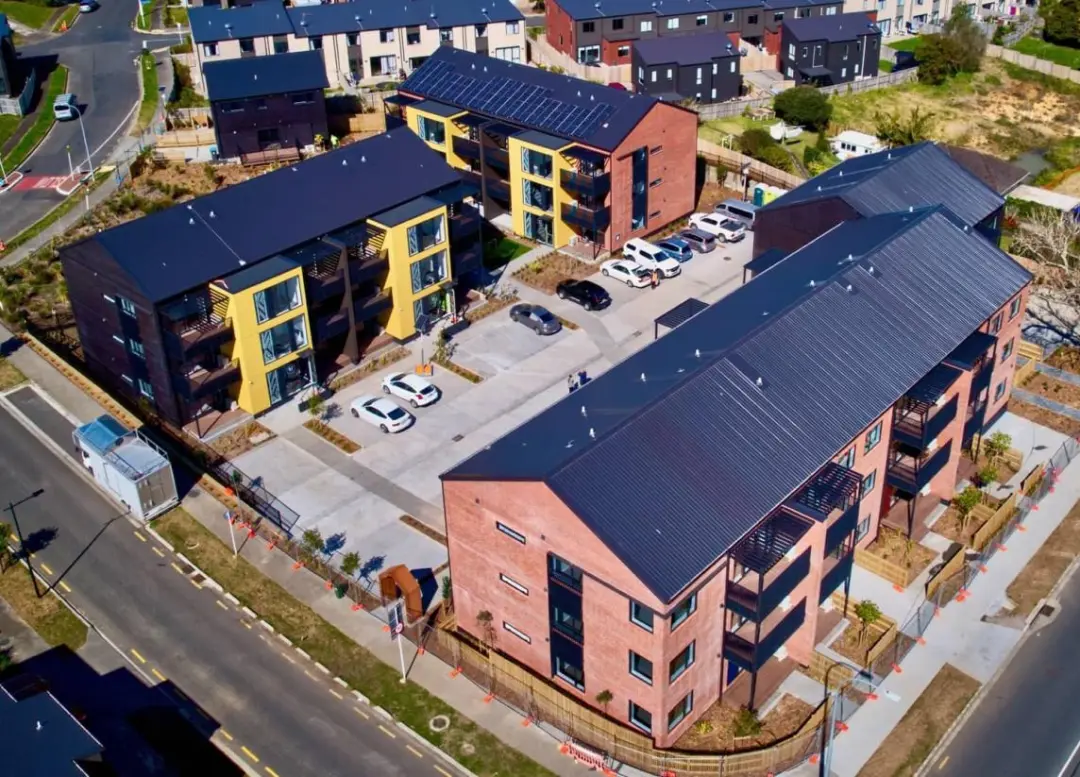
Anyone who has been house hunting in Auckland over the past two years will probably have noticed that many new townhouse developments are looking increasingly similar.
The same modern styling, the same black, white and grey palette, the same compact layouts and open-plan kitchens: developers are finding it increasingly difficult to stand out on finishes and price alone. Buyers are now comparing other, very practical considerations:
-
Is the community safe?
-
Is parking convenient?
-
Is there somewhere to leave parcels?
-
Is there smart access control?
-
Is there enough lighting when residents return home at night?
-
Will property management be disorganised?
Many Chinese families are particularly sensitive to these details. They are buying more than an indoor space: they are choosing how they will live over the coming years, or even a decade.
Higher townhouse density makes community management more complex
In the past, much of New Zealand’s housing consisted of standalone homes, with relatively low residential density and comparatively straightforward community management needs.
Now, more new Auckland developments are moving towards townhouses, higher-density housing, mixed-use communities and shared driveways. More homes mean more communal areas and shared parking and access spaces, bringing a concentration of management challenges.
These include unfamiliar vehicles entering freely, disorganised visitor parking, missing parcels, surveillance blind spots in communal areas, more disputes over night-time noise, frequent tenant turnover and difficulties managing rubbish areas.
Developers may once have regarded these as matters for property managers. Now, more people recognise that unless these issues are considered during design and construction, property managers will be left reacting to problems later.
Chinese buyers increasingly value a sense of community safety
Chinese buyers in New Zealand often have high expectations of community safety, particularly families with children, households where both partners work, owners who travel frequently for work and investment buyers. They pay close attention to details: whether communal areas are well lit at night, whether there is basic surveillance coverage, whether someone can easily follow a resident through a controlled entrance, whether parcel areas are secure, whether parking is managed and whether unfamiliar people entering can be readily identified.
Buyers may not ask these questions directly at their first viewing, but when it comes to making a decision, these details can repeatedly strengthen or weaken a property’s appeal. For many families, peace of mind at home is itself part of a property’s value.
The next generation of townhouses goes beyond having cameras
More new developments are now adopting integrated smart community solutions.
These systems involve more than installing a few cameras. They connect access control, parking, building intercoms, communal-area surveillance, visitor management and the central management platform to make daily community operations smoother.
For example, number plate recognition can automatically open a gate as a resident’s vehicle enters. Visitors can call residents remotely on their phones. Unusual gatherings in communal areas can prompt an alert to property managers, while suspicious lingering at night can trigger linked video recording. Parcel areas can have continuous video coverage, and property managers can use a unified platform to manage different devices and areas remotely.
These functions extend beyond security in the traditional sense to the community’s entire day-to-day operation and residents’ living experience.
Dahua, a global leader in smart technology, is participating in this kind of smart community development across a growing number of residential projects in New Zealand. From AI cameras, access control and building intercoms to ANPR parking management, perimeter protection and unified management platforms, Dahua is using technology to help developments lower operating costs and reduce staffing pressure on property managers.
Good systems make developments more memorable
Many developers once treated smart systems as an additional cost to be minimised wherever possible. In today’s Auckland market, that is changing.
Some high-end townhouse developments are already promoting smart community systems as a selling point, as buyers increasingly value details that affect long-term living. Community quality, the experience of safety, parking convenience, property management efficiency, a sense of modern technology and ongoing maintenance capabilities can all influence purchasing decisions.
This is also why Dahua has continued to participate in smart community development in New Zealand residential projects in recent years. As floor plans become increasingly similar, what can truly distinguish a development is the experience of living there.
New Zealand’s future communities may resemble smart ecosystems
New Zealand’s residential communities may gradually evolve from a collection of homes in a row into smart spaces whose systems work together.
Such a space knows which areas may present risks, which devices need maintenance, when property managers should be alerted and how to help residents avoid unnecessary inconvenience.
Competition here extends beyond architectural design to the integration of safety, technology, community experience, local service and long-term operational capabilities.
For developers, the next round of townhouse competition may move beyond who has the best location or the lowest price, towards who best understands the kind of community tomorrow’s families really want.