
One housing market, different fortunes: why have Auckland and Wellington lost NZ$271,000,000,000 while Southland hits a record high?
Looking only at national figures, many people might conclude that New Zealand’s property market is still going through a correction.
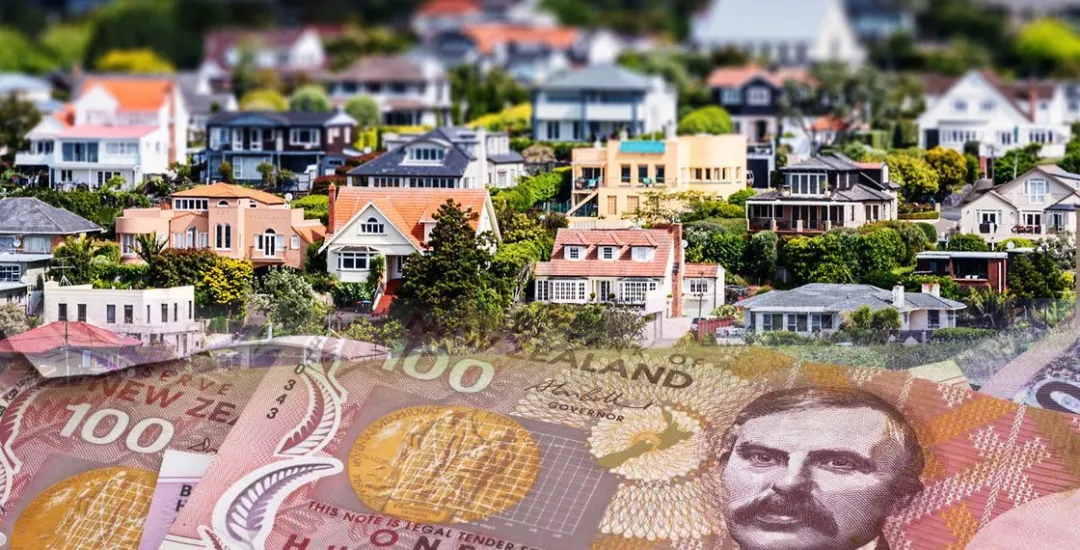
Looking only at national figures, many people might conclude that New Zealand’s property market is still going through a correction.
The latest figures show that the total value of residential property in Auckland and Wellington has fallen by about NZ$271,000,000,000 from the market peak. Meanwhile, national residential sales in May fell 12.6% year on year, and the House Price Index (HPI) dropped 0.6% over the same period. The market overall still lacks clear upward momentum.
Yet a very different picture emerges when we shift our attention from national averages to individual regions.
While Auckland and Wellington are still absorbing the effects of the house price correction of recent years, Southland has recorded its highest house prices ever, becoming one of New Zealand’s strongest property markets.
New Zealand’s property market is gradually moving from nationwide rises and falls in tandem into an era of regional divergence.
NZ$271,000,000,000 lost as the wealth effect fades
According to calculations by Westpac senior economist Satish Ranchhod using QV data, the total value of residential property has fallen by about NZ$209,900,000,000 in Auckland and NZ$61,800,000,000 in Wellington since the market peaks of 2021 to 2022, a combined decline of approximately NZ$271,000,000,000.
This does not mean actual money has disappeared from the market. It represents a reduction in paper wealth caused by falling property valuations.
But the economic impact goes beyond a change in the figures.
For more than twenty years, New Zealand’s property market rose over the long term. Continuously rising house prices strengthened household balance sheets and created an economic phenomenon known as the “wealth effect”: when people feel wealthier, they are often more willing to spend, invest and even borrow.
That is now changing.
For many buyers who entered the market at the highs of 2021 to 2022, home valuations remain below their purchase prices. Although they have not realised a loss, the decline in asset values has undoubtedly affected spending confidence and financial planning.
Meanwhile, activity among buyers looking to upgrade their homes has also fallen noticeably.
In the past, many families moved into larger homes by selling properties that had increased in value.
But once house prices stopped rising rapidly, the rationale behind this approach weakened, and the recovery in related borrowing demand has been noticeably slower than the market expected.
The national market still lacks a clear breakthrough
The latest REINZ figures show that 6523 homes sold nationwide in May, down 12.6% year on year.
On a seasonally adjusted basis, sales volumes fell 7% from April.
Meanwhile, the national House Price Index remained weak:
-
Down 0.3% over the month
-
Down 1.7% over three months
-
Down 0.6% over the year
The national median house price was NZ$775,000. Although this was 1.3% higher than a year earlier, the overall price trend still lacked clear upward momentum.
Market feedback suggests that buyers’ caution has not noticeably eased.
If the market recovery in 2025 was driven mainly by falling interest rates, the market in 2026 faces a new reality: the stimulus from rate cuts is gradually weakening.
After the Reserve Bank of New Zealand held the OCR at 2.25% in May, the market generally believes the current rate-cutting cycle is nearing its end. Meanwhile, cost-of-living pressures persist, and uncertainty surrounding the approaching election is prompting some buyers to keep waiting.
The market therefore appears to be consolidating sideways: it has neither entered another period of rapid growth nor returned to a deep correction.
Why is Southland bucking the trend to reach new highs?
While the national market remains generally weak, Southland has delivered a very different result.
REINZ figures show that Southland’s median house price reached NZ$540,000 in May, up 10.2% year on year and setting a record high.
Invercargill’s median house price also reached NZ$540,000, setting a new local record.
Meanwhile, Southland’s House Price Index (HPI) rose 5.8% year on year, the strongest growth in the country.
More notably, million-dollar home sales, once uncommon in Southland, are gradually increasing and becoming an important driver of local house price growth.
For many Auckland buyers, NZ$540,000 would not even cover the price of an apartment in some suburbs.
This substantial price gap is drawing more first-home buyers, retirees and families seeking better value for their living costs to the South Island market.
Local economic performance is also supporting house prices.
Southland has long benefited from agriculture, dairy and related export industries. With international agricultural commodity prices remaining relatively high in recent years, the local economy has been comparatively stable, while residents’ incomes and spending power have remained resilient.
While Auckland and Wellington are still adjusting to the after-effects of high interest rates, Southland is charting its own course, supported by affordability and regional economic strengths.
One market, different cycles
Over the past twenty years, New Zealand’s property market has had a distinctive characteristic: most regions have tended to rise together and correct together.
When Auckland prices rose, the rest of the country followed. When Auckland cooled, the rest of the country generally cooled too.
But that pattern is beginning to change.
Auckland faces rising numbers of homes on the market and correction pressures left by previously high house prices;
Wellington is experiencing weaker confidence as economic growth slows and public sector jobs are cut;
Canterbury is benefiting from population growth and sustained infrastructure investment;
Southland is strengthening against the national trend, supported by lower house prices and a robust regional economy.
Different regions are beginning to move at different speeds, follow different cycles and even head in entirely different directions.
This explains why, in the same year of 2026, some regions remain well below their historical peaks while others have already set new records.
Observations and reflections
For many Chinese buyers, the lesson of the past twenty years has been that buying a home will ultimately bring returns over time.
But today’s market is changing.
Within New Zealand, house prices in some regions remain a considerable distance below their historical highs, while others have already set new records.
This means future property performance may depend not simply on whether the national market rises or falls, but on each region’s own development trajectory.
Seen this way, Southland’s record high and Auckland’s NZ$271,000,000,000 loss tell the same story: New Zealand’s property market is entering a new phase of greater divergence and complexity.
The current figures suggest that Auckland is no longer the only answer.