
Closed for the day, but New Zealand retailers dare not turn out the lights…
Retail shop owners used to worry most about one question: “Will any customers come in today?” Now, their real concern is: “Will something happen when no one is in the shop?”
Retail shop owners used to worry most about one question: “Will any customers come in today?” Now, their real concern is: “Will something happen when no one is in the shop?”
People loitering outside in the early hours, rubbish bins being rummaged through, parking spaces occupied for long periods, smashed windows, staff forgetting to lock the back door after work, or someone simply pushing the door to see whether it is locked — many Auckland retailers will have encountered situations like these.
Frustratingly, even when shops have surveillance cameras, these often serve only as a tool for checking what happened after the damage has already been done.
In today’s New Zealand retail and public safety environment, what matters may be more than simply recording events. It is also about spotting warning signs and raising the alarm before something happens.
New Zealand’s retail sector faces new pressures
The operating environment for New Zealand retailers has changed rapidly in recent years.
Labour costs are rising and staff are hard to recruit. Theft, vandalism and overnight risks are increasing. Shops are opening for longer hours, and owners may be managing several branches at once. Day-to-day management pressures can be particularly pronounced for service station convenience stores, Chinese supermarkets, vape shops, liquor stores and small retail chains.
For shop owners, the greatest worry is not poor trading, but the combined pressures of shop security, overnight operating risks, staff failing to follow procedures and managing multiple branches. Any incident involving smashed premises, theft or even a forced closure brings a tangible loss.
Surveillance is becoming more than a recording tool
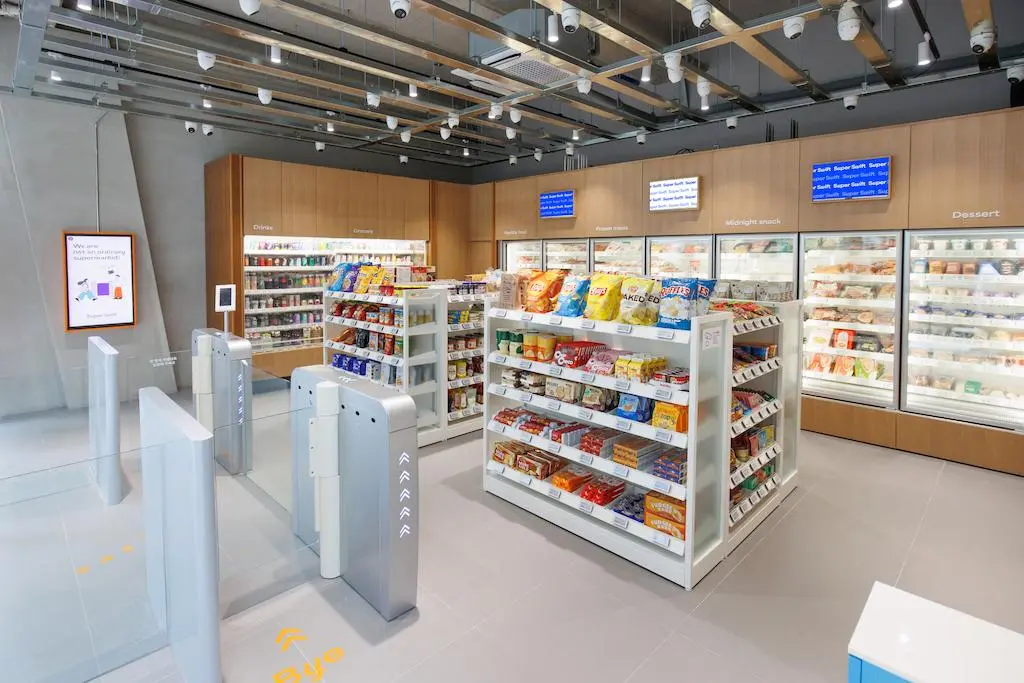
Many shops still use traditional surveillance systems, with cameras inside, at entrances and around tills recording 24 hours a day. But who can watch the screen all the time?
That is why AI-powered systems are being introduced across a growing range of retail settings.
For example, these systems can proactively detect someone loitering at an entrance, people entering restricted areas late at night, unusual opening of a staff entrance, suspicious gatherings in parking areas or unusual behaviour around tills, and issue immediate alerts.
These changes mean surveillance is evolving from a simple recording tool into a tool that supports shop operations.
The most exhausting part of running a shop comes after closing
Many retail shop owners share a similar feeling: being busy during the day is normal, but what really wears them down is worrying about the shop after work.
Was that a false alarm? Is the back door properly shut? Are staff following procedures? Is anything unusual happening in the parking area? How is the other branch doing? If something happens, will I know straight away?
With a single shop, owners can still keep an eye on these matters themselves. Once the number of branches grows, traditional management methods can easily become unmanageable.
For this reason, many retail clients are focusing on practical features: live viewing on mobile phones, centralised management of multiple shops, AI-powered alerts, a unified remote platform, data analysis and clearer operational records across branches.
For shop owners, this ability to operate with less reliance on staff is a key competitive strength for long-term retail success.
Smart retail goes beyond theft prevention
Dahua Technology, which has worked extensively in the New Zealand market for many years, is taking on roles beyond traditional surveillance installation in a growing number of projects.
Through applications including AI video analytics, smart shop management, commercial displays, foot traffic analysis, car park management, automatic number plate recognition (ANPR) and unified remote platforms, Dahua is helping retail clients improve overall operational efficiency.
Dahua understands the challenges facing local retailers today: owners need a system that supports day-to-day operations, rather than simply equipment that records video. Can it reduce staffing pressure, identify problems faster, lower operational risks and make multiple shops easier to manage?
When these functions are integrated into a coherent approach to operations, the system’s value extends beyond theft prevention, making shop management easier, more stable and more controllable.
Retail shops may rely more heavily on systems in future
New Zealand’s retail sector may gradually divide into two types of shop.
Some will continue using traditional operating methods, while others will have begun replacing much of their repetitive manual management work with smart systems. The latter may not be larger, but they generally run more consistently with lower labour costs, making expansion and long-term operation considerably easier.
Behind this shift, competition extends beyond the products themselves to AI capabilities, platform capabilities, local service, ongoing operation and maintenance, and an understanding of real retail environments.
The next generation of retail competition may focus less on who opens more shops, and more on who can manage more branches with greater ease and consistency.