
Since when did New Zealand’s parking spaces need to be revalued too?
When buying a home in the past, most people asked: does it have sea views? Which school zone is it in? How far is it from the station? Does it get good natural light?
When buying a home in the past, most people asked: does it have sea views? Which school zone is it in? How far is it from the station? Does it get good natural light?
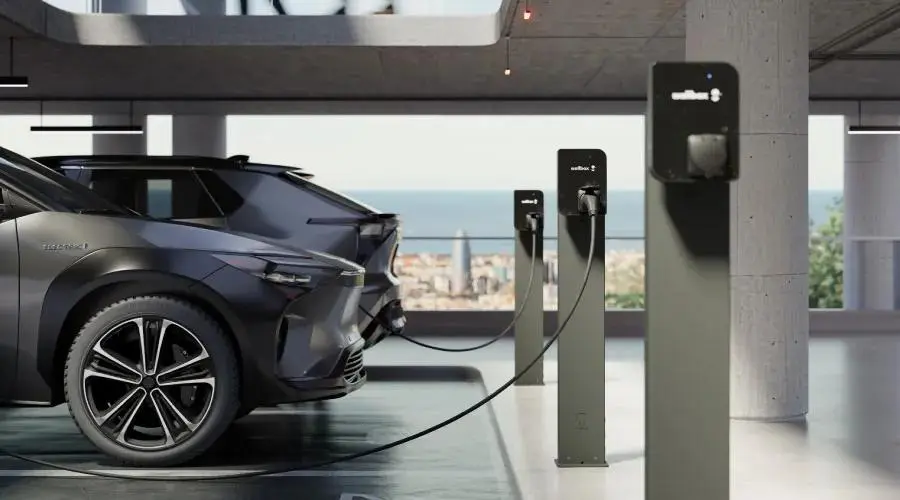
But in recent years, buyers’ questions have begun to change at some new residential developments in Auckland: “How do you charge an electric vehicle in this building?” It may sound like a minor detail, but for developers and property managers, it is far from simple.
Many projects leave EV charging out of their early planning, only to encounter problems after owners move in: insufficient electrical capacity in the basement car park, parking spaces that cannot accommodate individual chargers, incompatible systems from different brands, property managers unsure how to bill users, and potential load pressures when several vehicles charge simultaneously at night.
By then, fixing the problem involves much more than simply installing chargers.
The role of a parking space has changed
In the past, a parking space was simply somewhere to park.
Now, as electric vehicles become more common, parking spaces are being redefined. They can serve as energy connection points, smart management nodes and part of a community’s infrastructure.
In Auckland in particular, parking is already limited in townhouse, apartment and mixed-use developments. Add EV charging demand, and the questions become more specific: who can charge? How is billing handled? Is there enough power? Can visitor spaces offer charging? If more residents switch to EVs in future, can the system expand?
Buyers may not ask these questions when they first view a property, but by the time they are ready to sign, such details often become crucial to their decision.
For young families, commuters and many Chinese buyers, EV charging has become an expected feature, much like fibre broadband, air conditioning and smart door locks. This demand will only continue to grow.
The charger itself is not the biggest expense
Many developers regard EV charging as something that can be added gradually in the later stages of a project. They believe installation can wait until owners need it.
In practice, however, things are often more complicated than expected.
If sufficient capacity is not allowed for at the design stage, later work may require a fresh electricity supply application, rewiring, cutting channels, coordinating with property managers and owners, and rearranging parking spaces. Fire safety, general safety and management arrangements may also need to be reconsidered.
These hidden costs are usually much higher than the cost of planning ahead.
More practically, once a residential project has been handed over, many spaces and service routes are already fixed. Carrying out further work without disrupting residents is much harder than during construction.
Forward-thinking developers therefore consider EV charging in the early stages of building design, rather than dealing with problems as they arise after handover.
The next generation of car parks will do more than provide parking
Some projects are already integrating their car parks into systems that can be managed and operated, rather than treating them simply as underground spaces.
For example, automatic number plate recognition (ANPR) can grant residents entry to the car park. Charging access can be linked to residents’ accounts, while property managers can view equipment status through a central interface. Charging faults, space occupancy and overstays can be recorded and flagged, and visitor vehicles can be managed with time limits through the system.
For property managers, separate information on parking spaces, charging, access control, visitors and equipment status is brought together in a single management system. Residents also enjoy a smoother experience, without having to rely on manual communication, registration or coordination each time.
Car parks are therefore gradually evolving from spaces that merely take up floor area into spaces with smart operational capabilities.
Dahua is helping build the community infrastructure of the future
Unlike in the past, Dahua’s involvement in local residential projects now extends beyond supplying traditional security systems.
From smart parking, EV charging management and ANPR to smart communities and unified operating platforms, Dahua is helping developers, property management companies and system integrators prepare the infrastructure for future communities.
After all, competitive projects in future will need more than a good location. They will increasingly need smart technology, easy management, lower operational pressures and straightforward long-term maintenance.
In five years, a ‘good parking space’ may mean something different
In future New Zealand residential developments, a good parking space may be defined by more than proximity to the lift.
It may also depend on whether it supports smart charging, can be managed remotely, integrates with the property management system and can accommodate expansion as demand grows.
The property market is constantly changing. Where people once focused on location, school zones, natural light and interior finishes, they will increasingly consider the capabilities of the systems behind the building.
Because a building’s true value has never been confined to the day it is handed over. It also lies in whether it can still keep pace with the times ten years later.