
Million-dollar compensation, CCC refusals and rejected insurance claims! Avoid these 3 pitfalls as passive fire requirements tighten
Over the past two years, many people in New Zealand’s construction industry have noticed a clear shift: passive fire protection is becoming harder to deliver, and compliance requirements have risen substantially.
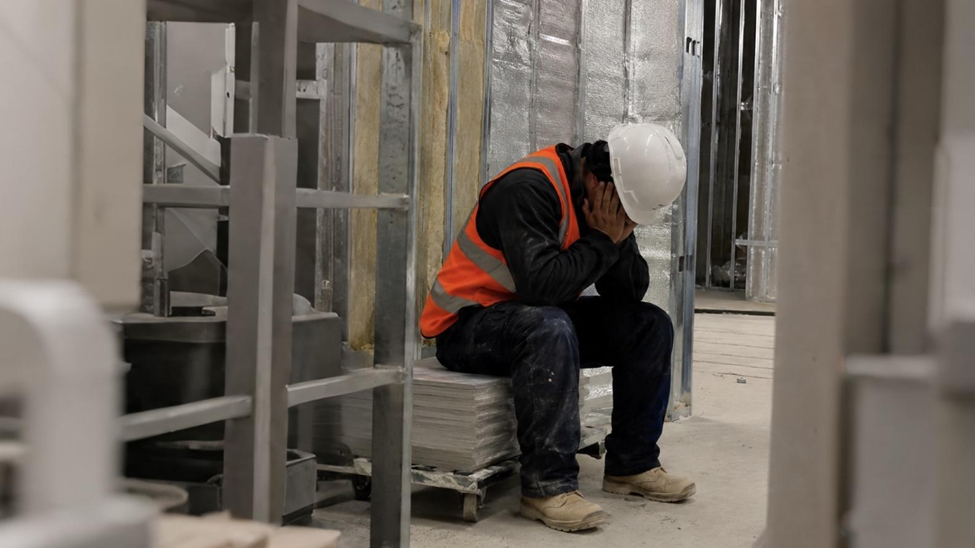
Over the past two years, many people in New Zealand’s construction industry have noticed a clear shift: passive fire protection is becoming harder to deliver, and compliance requirements have risen substantially.
The firestopping has been installed, compliant materials used and photographs taken. Yet a single response from the council, “Not compliant”, brings approval to a halt. At the less severe end, this means remedial work and delays; at the more serious end, compensation can run into hundreds of thousands or even millions of New Zealand dollars. Some projects stall altogether or fail their final inspections.
As New Zealand’s passive fire policies tighten, the industry’s approach to compliance is evolving. Matters once handled loosely have become firm assessment criteria. QA records, installation photographs, authoritative test reports, PS3 statements and evidence of system compliance are all essential.
Many projects only discover shortly before the CCC stage that “installed” does not equal “compliant”. With assessments becoming stricter, many in the industry are asking: how should passive fire protection be delivered to avoid risks and secure approval?
To address these industry challenges, PlaceMakers in collaboration with the New Zealand Chinese Building Industry Association、YIJU New Zealand, has specially invited a senior technical expert in New Zealand passive fire protection Firestop Centre , Barry Napier, to share practical experience from the field.
Barry Napier has worked extensively in New Zealand’s passive fire industry for many years, focusing on passive fire design, compliance reviews, on-site implementation and acceptance inspections for commercial and residential projects. He has a thorough understanding of the assessment standards used by councils, fire engineers and industry inspectors. In this article, Barry outlines three major passive fire compliance pitfalls in New Zealand and explains how to avoid them, helping projects secure approval safely.
Stricter passive fire assessments are not about making life difficult for builders and developers; industry rules are finally being established.
Many in the industry complain that assessments are now “too strict and too demanding”. Barry, however, sees the current compliance changes as an essential step towards a more regulated and standardised passive fire industry in New Zealand, rather than a deliberate raising of barriers.
Previously, the focus was more on:
-
Whether fire protection had been installed;
-
Whether the opening could be sealed on site
Today, the focus is on whether the installed system actually matches the tested system!
Councils now scrutinise ANARP, minor variations and building consent amendments much more closely than before. Approaches once considered “close enough” are now unlikely to be accepted.
When passive fire protection is non-compliant, substantial compensation may be only the beginning for those responsible for the project
Barry says frankly that many construction teams misunderstand the issue, assuming non-compliant passive fire protection can be resolved with a few local repairs.
But the many projects handled by Firestop Centre show that compliance problems uncovered later often trigger a chain of risks.
The most immediate consequence is that the CCC cannot be issued. Once the CCC is held up, the entire project handover schedule is disrupted.
This can lead to:
-
Project delays, with substantial costs from overruns
-
Disputes between trades over responsibility
-
Accountability proceedings and substantial compensation
-
Losses that cannot be recovered through insurance
Barry shares a scenario that is common on real projects and easy to get wrong.
The original design allows for a single pipe penetrating a fire-rated wall. During construction, however, the arrangement is changed for installation convenience so that several pipes of different sizes share the same opening.
Many construction teams assume it is enough to “seal it as well as possible”. In reality, there may be no tested, compliant system that accommodates those pipe diameters, numbers and spacings.
Projects with such inadequately managed site changes are likely to be deemed non-compliant by the council and fire engineer. Subsequent remediation is complicated and time-consuming: an EJ (engineering judgement) must be resubmitted and a building consent amendment sought. The entire process may take more than 20 working days.
Barry says candidly that by this point, the issue is often no longer merely technical.
Everyone on site starts asking: “Who made the hole?” “Who approved it?” “Who should pay?”
Everyone knows that once building compliance issues reach the later claims and remediation stage, costs can quickly spiral out of control. The hardest part often extends beyond compensation itself, with trade disputes and lengthy coordination and accountability processes following.
Barry also offers reassurance: “There is really no need to panic. Many problems stem from three common pitfalls. Avoid them, and you can prevent most risks early.”
Pitfall 1: using the wrong laboratory test report on site
Barry says one of the biggest misconceptions in passive fire protection today is that using a certified product automatically means compliance. In New Zealand, however, passive fire compliance has always applied to the complete tested system, rather than an individual product.
All approved passive fire systems must meet official standards such as AS1530.4 and AS4072.1. On-site installation must also match the test conditions used by an IANZ-accredited laboratory to achieve the relevant fire resistance rating (FRR) and pass assessment.
For example, take a certified firestopping system with the following officially tested application conditions:
-
A 50 mm PVC pipe
-
Penetrating a concrete floor
-
Specified thickness and structural conditions
But if the actual installation changes to:
-
An 80 mm PVC pipe
-
A plasterboard wall
-
A different floor structure
It is no longer the system that was originally tested. Even with the same firestopping material, it will not readily pass assessment. Barry advises: “At this stage, seek professional support to translate the approved solution into a practical on-site installation, ensuring compliance throughout.”
Pitfall 2: later trades can quietly damage the fire protection system you have already installed
After passive fire protection is completed, when electricians, plumbers HVAC and other subsequent trades begin work, it is common to see:
-
Cables being rerouted
-
Openings being enlarged
-
Seals being cut open sealant
-
Completed passive fire installations being damaged
The most dangerous issue is that many people lack awareness of passive fire compliance and do not proactively report or communicate changes. The result:
-
Nobody repairs or reinstates the protection.
-
Nobody takes responsibility.
And the outcome? On final inspection day, the entire mess lands back with the person responsible for the project.
Barry stresses that an additional inspection is needed after each subsequent trade finishes its work, followed by another reinspection before the final inspection.
Pitfall 3: compliance now means more than “it is done”; it means “can you prove it was done correctly?”
On a growing number of projects, councils may still refuse to approve the CCC even when everything on site appears satisfactory.
The reason is simple: missing documentation.
Key documents frequently missing from council assessments include:
-
Consented details and specifications
-
Installation documentation
-
Full QA documentation for the building’s penetration register
-
PS3 sign-off: a Producer Statement signed by the installer
Barry says: “The problem on many projects is not that the work has not been done, but that they cannot prove it has been done.”
As assessment requirements increase, a complete trail of compliance evidence has become an important part of CCC approval.
Practical tips from an experienced expert:
Plan ahead for smooth passive fire approval
Drawing on years of practical project experience, Barry offers actionable compliance tips addressing these three common pitfalls. The core principles are early involvement, oversight throughout and complete evidence records, avoiding the need for late remedial action.
Preparations for the early and middle stages
1. Involve the person responsible for passive fire protection early。Bring the passive fire specifier into the design and building services coordination stages. This helps ensure services are properly coordinated and an appropriate passive fire solution is developed for the whole building and its services. Involving the installer early in construction is also helpful, making coordination and communication between trades much smoother.
2. Keep complete installation records. Retain installation photographs, QA records and related documents to provide comprehensive supporting evidence for the subsequent CCC application.
3. Arrange prompt reinspections after subsequent trades finish their work.
How to remedy problems discovered late
4. Establish the nature of the problem first; do not rely on experience alone. Use methods such as destructive testing to check whether the installed system matches the tested system. There is no “close enough” in passive fire protection: it either complies or it does not. Depending on the problem, some systems can be rectified.
For example, if the only issue is incorrect screws securing a fire collar, replacing them with the correct screws will usually be sufficient.
5. Repair what can be repaired; replace what cannot. Some installation errors can be rectified, such as by replacing non-compliant fixings. But if the wrong firestopping system has been installed, the entire system usually needs to be removed and replaced with a compliant tested system.
Barry emphasises: “Passive fire installations must now comply with both the consented design and the corresponding tested system.”
“PS3 statements and QA records are also increasingly important, because they provide key evidence of system compliance.”
To help the industry better understand passive fire compliance requirements, Barry has also prepared a “Passive fire compliance evidence checklist”, covering essential documents for CCC approval. It brings together the most important items that are frequently missing from CCC applications. To obtain a copy, contact Firestop Centre’s Chinese-language customer service team.
Firestop Centre has more than 18 years of industry experience and offers 350+ tested and certified firestopping systems. It specialises in professional passive fire products, technical guidance, compliance reviews and end-to-end implementation services for local construction projects. Firestop Centre is also among the few passive fire service teams offering dedicated Chinese-language technical support, helping Chinese industry professionals overcome technical communication and compliance enquiry challenges so projects can be delivered efficiently and secure compliance approval.
Disclaimer
This article provides general industry information and opinions only. It does not constitute legal, building, fire safety, insurance or professional advice of any kind.
Individual project circumstances may differ. Before making relevant decisions, readers should consider their own project circumstances and consult appropriate professional advisers.
The views in this article are compiled from the interviewee’s industry experience and interview comments, and are provided for reference only. To learn more about passive fire compliance requirements or discuss a specific project, contact Firestop Centre’s Chinese-language customer service team.