
Early-stage development finance: the most important decisions begin before construction
In property development, attention naturally tends to focus on the construction phase.
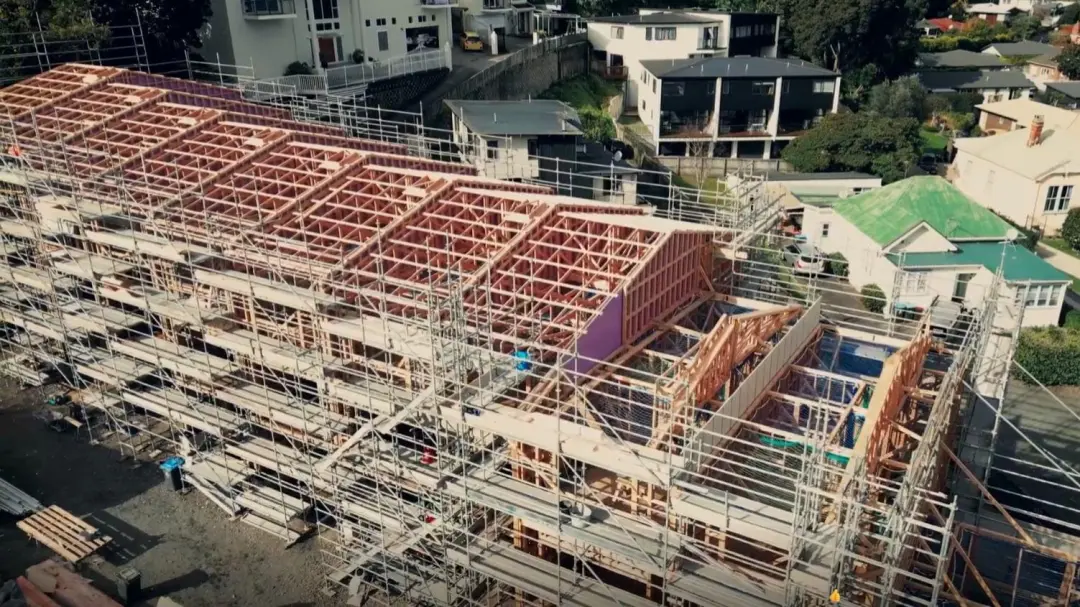
In property development, attention naturally tends to focus on the construction phase.
This is the most tangible and visible part of the development process: machinery on site, buildings rising from the ground and progress people can see for themselves.
Experienced developers, however, understand that many of the most important decisions are made before construction begins, even before anyone sets foot on site.
In fact, a development’s success or failure is often largely determined during its early stages. This phase includes land assessment, feasibility studies and stress testing, risk identification and establishing the financing structure.
This is the subject explored in Cressida Capital’s video, “Early-stage development finance: planning your funding before construction”. The video examines why early planning, rigorous assessment and realistic, rational decision-making have become essential in the current market.
Naomi of Cressida Capital explains:
“Many clients come to talk with us before they start planning a development, to understand the financing options available, whether for land they already own or land they are considering buying.”
The importance of this early involvement continues to grow.
New Zealand’s development market in 2026 is very different from the conditions many developers experienced a few years ago. Construction costs remain high, approval processes take longer, lenders are more selective, and the property market itself has become more challenging, more cautious and more price-sensitive.
In this environment, the old approach of “buy the land first and work out the rest later” has become substantially riskier.
Why early professional advice matters more than ever
A central principle of Cressida Capital’s financing philosophy is that finance should not be treated as something to consider only in a project’s final stages.
Instead, finance should be an integral part of the overall development strategy from the outset.
Andrew sums up this philosophy as a comprehensive understanding of the entire development lifecycle:
“The key is to understand the whole project thoroughly, from its initial concept through to the final exit.”
This philosophy also reflects broader changes in the current financing environment.
Increasingly, lenders are assessing more than whether a project qualifies for funding today. They are considering whether it can remain viable and stable as market conditions change over the next 12 to 24 months.
Why early planning is so critical
Naomi says a major benefit of involving a lender early is the opportunity to give the project a thorough “sense check” before the developer makes significant investments and commitments.
She explains:
“If Cressida can get involved earlier, we can help clients sense-check the project, because what worked two years ago may not work today.”
This is particularly relevant in a rapidly changing market.
Many key assumptions that previously underpinned development feasibility, such as construction costs, selling prices, interest rates and sales periods, are now less predictable than they once were.
As a result, more experienced developers are spending additional time stress-testing projects before committing substantial capital, to assess their resilience under different market conditions.
Risks that arise before construction
One of the most frequently misunderstood aspects of development finance is where the risks actually lie.
Although construction itself carries risks, many of the most significant risks arise earlier, during land acquisition, planning, design and consenting.
As Andrew puts it:
“A lot of the risk actually occurs before construction starts, primarily during planning and consenting.”
It is during this phase that a project may experience delays, incur unexpected costs or uncover constraints with a major impact on its viability.
In Cressida Capital’s experience, some of the most important early-stage issues are practical site factors that are easily overlooked when a development opportunity arises.
Warren says developers must carefully assess key factors such as site access, infrastructure connection capacity and topography before proceeding: “Early considerations should include site access, infrastructure services such as wastewater and stormwater, and the topography of the land itself.”
These issues may sound highly technical, but they can have a major impact on project costs.
Wastewater system upgrades, stormwater infrastructure, retaining structure requirements, complex foundation work and restricted construction access, for example, can all significantly alter a project’s overall economics.
Broader location factors are equally critical.
Naomi notes that a development’s success depends on more than building density or maximising returns: “Development is not just about the numbers. Location and the type of product that genuinely suits the area matter just as much.”
This means developers need a thorough understanding of what drives local market demand, including school zones, transport connections, shopping and commercial amenities, competing developments nearby and the types of homes buyers in the area actually want.
A project may look excellent on a feasibility spreadsheet, but if the finished product does not match market demand, the entire exit strategy could quickly be compromised or even face failure.
The most common feasibility assessment mistakes
Feasibility assessment remains one of the most important, and most frequently misunderstood, parts of property development.
Cressida Capital has observed that one reason many projects encounter problems is an overly optimistic estimate of final sales values.
Andrew says:
“The most common mistake is overestimating what the finished product will sell for.”
In a strong market, projects may still be completed successfully and generate healthy returns even with relatively optimistic assumptions. But in a weaker market or when sales slow, inflated sales expectations often create enormous pressure later in the project.
Meanwhile, many developers still focus too heavily on direct construction costs while underestimating the impact of soft costs.
Naomi notes that these costs often accumulate quietly and materially affect overall project viability: “Many developers focus only on construction costs and overlook soft costs such as holding costs, council development contributions and financing costs.”
Legal fees, engineering consultancy fees, architects’ fees, inspection fees, financing interest, consenting fees and other professional consultancy fees all form part of a project’s total cost.
Individually, these expenses may seem manageable. Together, however, they can significantly erode profit margins if they have not been fully allowed for in the budget.
Another key issue is contingency funding.
Warren says many developers still budget using best-case cost assumptions without allowing enough room for uncertainty: “Many people budget on the best possible prices, but what they should really do is model the worst case and see whether the project still stacks up.”
In practice, a contingency of around 5% to 10% is usually needed, depending on the complexity of the land and the project itself.
Factors such as site slope, foundation requirements, infrastructure connections and ground conditions can all create additional, hard-to-predict costs during delivery.
The crucial point is that feasibility analysis is about more than demonstrating how profitable a project could be under ideal conditions.
It should establish whether the project can survive more difficult market conditions, rising costs, longer construction periods or slower sales.
In other words, the real value of a feasibility study lies in stress-testing the project’s underlying logic to establish whether it remains sustainable and deliverable under different scenarios.
The importance of time
In the current market, time has become one of the biggest challenges facing development projects.
Approval processes that once took only a few months now often extend to nine or even twelve months, particularly for more complex developments.
Throughout this period, developers must continue paying land holding costs, financing costs, council rates, insurance and various consultancy fees.
This is why time is becoming increasingly important in feasibility analysis.
Developers need to assess not only what happens if a project proceeds to plan, but also what happens if it fails to progress as expected.
Having fallback options has become an important part of responsible project planning.
These options may include:
-
Holding the property long term rather than selling immediately
-
Adjusting the strategy for staging the development
-
Redesigning the product mix
-
Refinancing the land
-
Delaying construction until market conditions improve
In the current market, the most vulnerable projects are often those built on highly optimistic timing assumptions with insufficient flexibility.
Why demolition timing matters
One particularly practical recommendation in Cressida Capital’s video concerns demolition.
Many developers demolish existing buildings or improvements on a site too early, before obtaining approvals.
Andrew believes patience can offer both financial and strategic advantages: “Do not rush to demolish the house. Often, land is worth more with a house still on it, and it can also provide income while you wait for approvals.”
This income can help offset financing costs, particularly when planning and consenting periods may be extended.
Retaining existing buildings also gives developers more options. If consent outcomes change or the market weakens, they can still adjust their strategy without losing all control over their next steps.
This reflects another core principle behind Cressida Capital’s financing philosophy: preserve flexibility wherever possible.
Plan the entire route before construction begins
At its heart, early-stage development finance is about more than securing money to buy land or cover initial costs.
Its real purpose is to establish a realistic, achievable roadmap for the entire development.
This means developers need a thorough understanding of several key questions:
-
Is this land genuinely suitable for development?
-
Are the project’s financial projections realistic and achievable?
-
Is there genuine market demand?
-
Have sufficient contingency funds and buffers been allowed for?
-
Is the exit strategy achievable?
Naomi gives a clear summary at the end of the video:
“At Cressida, we help developers establish a complete roadmap from land acquisition to project exit, ensuring the project is genuinely viable before they commit capital.”
In today’s more cautious and disciplined development environment, this approach is becoming increasingly valuable.
The reality is that problems on many projects do not begin during construction.
Their roots often lie much earlier, in unrealistic assumptions, inadequate planning, insufficient site assessment or flawed feasibility analysis.
By the time construction formally begins, many key decisions can no longer be changed.
As a common saying in development goes: “You cannot build your way out of a bad project.”
In today’s market, therefore, the projects most likely to succeed are often not those that move fastest.
They are the ones that have prepared most thoroughly before the first spade breaks ground.