
Dream of 1200 homes shattered: Auckland’s Weiti Bay developer enters liquidation, with NZ$73,000,000 in debt following a seven-year property battle
Once regarded as one of Auckland’s most promising future coastal housing developments, the project has now reached a sobering conclusion.
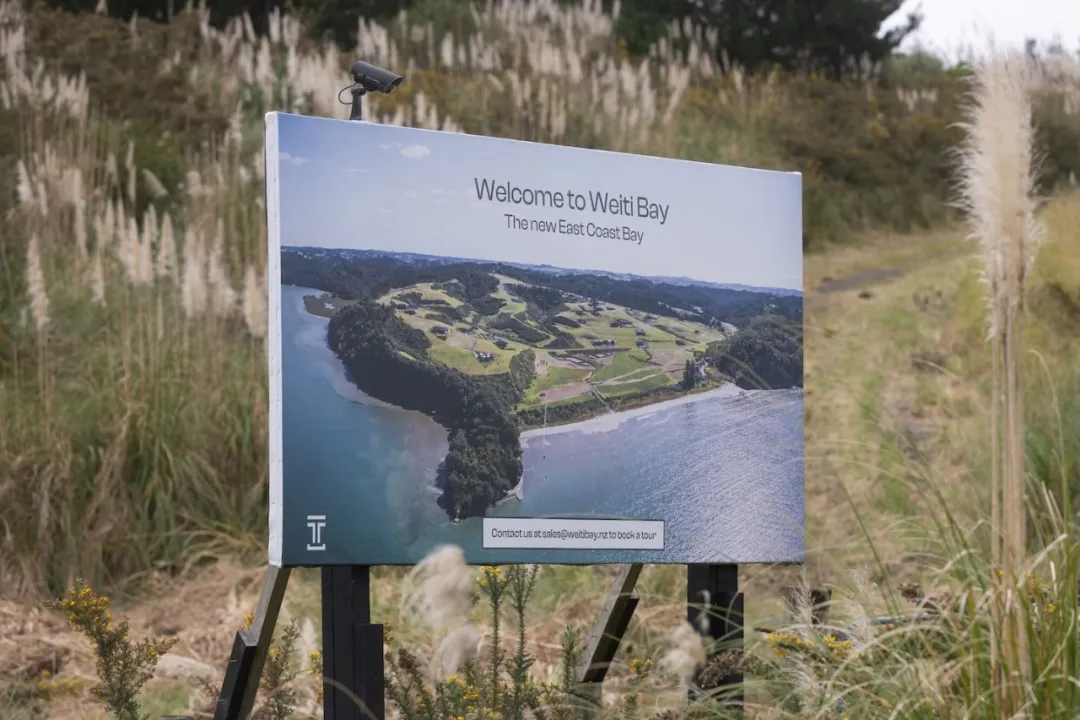
Once regarded as one of Auckland’s most promising future coastal housing developments, the project has now reached a sobering conclusion.
The latest liquidators’ report shows that Green & McCahill Holdings, the company responsible for the major Weiti Bay residential development, has formally entered liquidation, with an estimated NZ$73,000,000 owed to creditors. Strikingly, the company has only around NZ$120,000 in cash in its bank accounts, while its fixed assets have a book value of just approximately NZ$700,000.
The company’s formal liquidation has brought renewed attention from New Zealand’s property market to this major development, originally planned to deliver around 1200 homes and spanning more than a decade.
However, the NZ$73,000,000 debt is only the final outcome. The real question is how this once highly anticipated coastal development reached this point, step by step.
One of Auckland’s last large coastal landholdings
The story dates back more than thirty years.
In 1991, the Liu family from Taiwan purchased a large coastal landholding at Weiti Bay, north of Auckland, for around NZ$4,000,000. Covering approximately 909 hectares, the land borders a marine reserve and is around 30 minutes’ drive from central Auckland. It was considered one of Auckland’s last coastal landholdings with potential for development on a large scale.
In 2012, the Liu family partnered with developer Evan Williams, hoping to create a major coastal community combining homes, commercial premises and public facilities. The overall plan was for around 1200 homes, with the aim of establishing an upmarket coastal community north of Auckland.
After the project began, the development team invested heavily in roads, infrastructure and the first residential stage. Expectations for the wider project were once high.
The first stage succeeded, but proved to be the final high point
The development initially progressed smoothly.
Around 150 residential sections in the first stage of the Weiti Bay community were successfully developed and sold. These properties are now privately owned and are not involved in any current court proceedings.
Under the original business plan, first-stage sales would repay development loans and generate substantial returns for the landowners. The second and third stages would then follow, allowing the entire 1200-home project to be completed progressively.
However, the market changed faster than anyone expected.
As the property market cooled, home sales slowed, the project’s cash flow came under increasing pressure, loans could not be repaid as planned and development progressively slowed. The partners also began to disagree increasingly over the project’s future direction.
From business partners to courtroom opponents
As financial pressures mounted, relations between the parties deteriorated rapidly.
According to details disclosed in the court judgment, the developer proposed restructuring the project at a pivotal meeting in 2019, hoping to continue development. The landowners rejected the proposal, and the partnership broke down completely.
What had begun as a project to build a community then became a legal battle lasting years.
During the trial, the parties traded accusations, with heated phrases including “malevolent hatred”, “Nigerian money scam” and “sham land sale” appearing in the case. It became one of the most closely watched commercial disputes in New Zealand’s property industry in recent years.
In a judgment spanning 315 pages, the court ultimately rejected the landowners’ allegations of fraud against the developer.
Justice Andrew Becroft, who heard the case, found developer Evan Williams’ evidence more credible and expressly described the evidence of Liu family representative Tong Kuang Liu as “neither reliable nor credible”.
The court found that the landowners’ refusal to cooperate in releasing land titles, which further obstructed sales, was an important factor in the project’s eventual difficulties.
A growing snowball of debt
As litigation continued, the project’s debt kept accumulating.
Court documents show that debt originally totalling around NZ$20,000,000 rapidly grew to more than NZ$67,000,000 over several years, driven by compound interest at rates as high as 21% and mounting legal fees. At one point, it was continuing to increase by more than NZ$1,000,000 a month.
Meanwhile, the developer also faced enormous financing pressure while trying to keep the project operating, with loan interest at one stage reaching NZ$350,000 a month.
The court subsequently approved the sale of the project’s remaining land to recover the debt.
At the end of June this year, the remaining approximately 740 hectares entered the sale process. With Green & McCahill Holdings formally entering liquidation, the company’s debt has grown further to around NZ$73,000,000.
Just NZ$120,000 left in the bank as the company enters liquidation
According to the latest liquidators’ report, when the company entered liquidation it had only around NZ$120,000 in cash in its bank accounts and fixed assets with a book value of approximately NZ$700,000. Its principal asset was the roughly 740 hectares of coastal land still awaiting completion of development.
The liquidators said the main causes of the company’s insolvency included substantial judgment debt following its court defeat, accumulating interest and legal costs, creditor enforcement action and extremely limited available funds. These ultimately left it unable to continue operating.
The liquidators are now investigating the company’s assets and movement of funds, while continuing the land sale process in the hope of recovering as much as possible for creditors.
Observations and reflections:
NZ$73,000,000 in debt: who is the real loser?
It is difficult to attribute Weiti Bay’s current position simply to any single person or decision.
On paper, this was a development with enormous potential: 909 hectares of coastal land, plans for 1200 homes, a prime location and 150 first-stage homes successfully completed and sold. Everything seemed to be heading towards success.
Yet as the market cooled and sales slowed, financial pressures emerged and trust between the partners gradually broke down. Issues that could have been resolved through negotiation ultimately became a legal battle lasting years. As litigation dragged on, interest accumulated and financing costs rose, debt snowballed until the entire project was drawn into liquidation.
The court has ruled on the merits of each party’s case, but commercially, this years-long dispute has produced no real winner.
The landowners lost a valuable asset they had held for years. Although the developer won the case, it too faced a heavy financing burden. Creditors face a lengthy repayment process, while a major development that could have added around 1200 homes to Auckland has stalled for years. That is also a regrettable outcome for a city still facing housing supply pressures.
The approximately 150 first-stage homes already completed and sold are privately owned and are not involved in this liquidation or the court enforcement proceedings. Residents’ property titles will not be affected.
Weiti Bay once again shows that, while land, finance and market conditions matter in major property developments, partnerships, risk management and the ability to communicate during a crisis also determine how far a project can ultimately progress. When all parties hold to their positions but cannot find a way to resolve their differences, even excellent land and ambitious plans can fail amid escalating conflict.
Whether this approximately 740-hectare coastal site can attract new investors and resume development remains to be seen. For New Zealand’s property industry as a whole, however, the lessons of Weiti Bay may warrant deeper reflection than the NZ$73,000,000 debt figure itself.