
Better books, but slower state house building? Housing agency reforms spark fresh debate
With Kāinga Ora (New Zealand’s housing and communities agency) forecasting an operating surplus of around NZ$1,000,000,000 for the 2027 financial year, many people have focused on that impressive financial performance.
With Kāinga Ora (New Zealand’s housing and communities agency) forecasting an operating surplus of around NZ$1,000,000,000 for the 2027 financial year, many people have focused on that impressive financial performance.
Yet almost simultaneously, another announcement has also attracted attention.
Wellington’s Arlington redevelopment, once hailed as one of New Zealand’s largest social housing projects, has been confirmed for downsizing after more than NZ$50,000,000 was spent. The government now considers the original plan to build 300 social homes “not economically viable”. A revised development proposal cannot proceed until Wellington City Council agrees to amend the lease.
On one side are steadily improving financial figures; on the other, major development plans undergoing repeated adjustments.
These seemingly unrelated news stories point to the same shift: the focus of Kāinga Ora’s reforms is changing.
From “building more homes” to “spending money more efficiently”
Expanding the supply of social housing has been one of Kāinga Ora’s most important tasks in recent years.
As the housing crisis continued to worsen, the government promoted major redevelopment projects, hoping to increase density on existing land, add more social homes and shorten waiting lists.
Arlington was launched against this backdrop.
In 2022, the government of the day announced an investment of around NZ$296,000,000 to build 16 residential buildings containing 300 social homes in Wellington’s Mt Cook, with room for approximately 900 residents. The project was seen at the time as a major milestone in New Zealand’s social housing construction.
However, just a year later, rapidly rising construction costs and mounting financial pressure across Kāinga Ora forced the project to pause.
By March this year, more than NZ$50,200,000 had been spent, but the site still consisted of little more than steel foundations, with construction of the main buildings yet to get properly under way.
Housing Minister Chris Bishop recently confirmed that the original proposal was no longer economically viable. The revised plan will reduce the scale of development and require the lease to be renegotiated with Wellington City Council.
Where Kāinga Ora’s overriding task was once to “build as many homes as possible”, its greater priority today has become “spending limited public funds more efficiently”.
This is the central logic behind the current reforms.
Should a state house worth NZ$2,500,000 be sold?
Arlington is not the only project undergoing changes.
Over the past year, Kāinga Ora has sold some social housing in high-value Auckland suburbs including Westmere, Remuera and Ponsonby, while reviewing several major development plans. Redevelopments including Mt Roskill have also had their pace adjusted.
Chris Bishop argues that selling a social home worth around NZ$2,500,000 would usually fund at least four new social homes in areas where Kāinga Ora already owns land. An earlier sale of a Ponsonby property worth NZ$3,400,000 funded the refurbishment of 12 older state houses.
Previously, the government focused more on “how many more homes can we build?” Now, the first question has become “how many homes can we afford?”
From the government’s perspective, concentrating limited funds in a small number of high-value properties is not the best choice.
Rather than continuing to hold properties that are expensive to maintain and serve only a few households, selling and reinvesting the proceeds could help more people in need.
This approach is also beginning to show in Kāinga Ora’s financial performance.
According to the latest figures, the agency expects an operating surplus of around NZ$1,000,000,000 in the 2027 financial year. Annual operating costs have fallen by NZ$211,000,000, while projected peak debt has dropped from NZ$29,000,000,000 to NZ$19,500,000,000, a reduction of nearly NZ$10,000,000,000.
Over the past year, Kāinga Ora also completed or refurbished around 2100 homes, while construction costs per square metre fell from NZ$3433 to NZ$2980. The number of tenants in rent arrears also declined, from around 8600 in mid-2024 to approximately 5500 at the end of 2025.
For the government, these figures demonstrate that the reforms are working.
Why is controversy growing as the finances improve?
However, better-looking books do not mean less controversy.
For housing advocacy organisation Community Housing Aotearoa, selling high-value state houses in established neighbourhoods means more low-income families may be forced to move to the urban fringe. Children may have to change schools, older people may need to find new healthcare providers, and families’ existing community networks may be disrupted.
Gael Baldock, a tenant who has lived in Westmere for more than 30 years, is one of the most closely watched cases.
The state house she had lived in for years was put on the market. On auction day, she stood there watching the bids climb, unable to change the outcome.
Within the government’s rationale for reform, this was a reallocation of assets.
For her, it was the home she had lived in for more than thirty years.
Similar controversy has emerged in Auckland’s Mt Roskill.
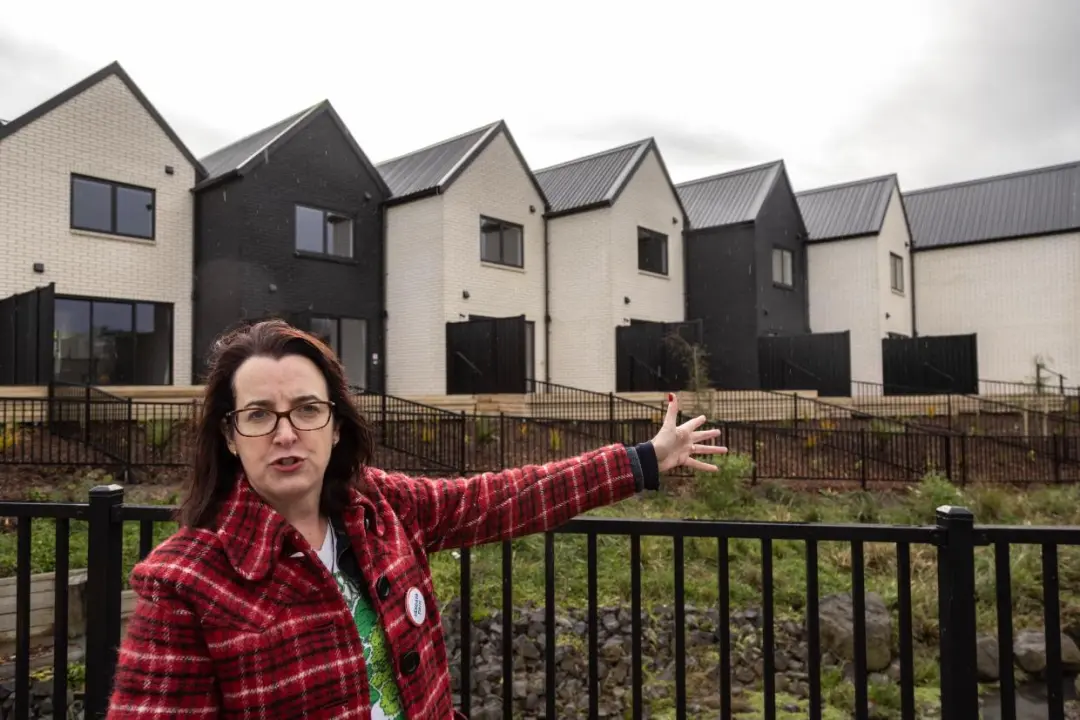
The original plan was to create a mixed community of social housing, affordable housing and market homes. Many residents moved out long ago, and older houses have been progressively demolished. Yet some land remains behind wire fencing, with new home construction proceeding markedly more slowly than originally expected.
Auckland councillor Julie Fairey believes this affects housing supply and changes the development’s original direction towards creating a mixed community.
The same reform means different things to different people.
The government counts financial costs; housing groups count social costs
A closer look at both sides’ views makes it clear that they are not really discussing the same issue.
The government is focused on financial efficiency.
With debt pressures mounting, the reforms’ main goals are to control construction costs, use land more efficiently and keep the social housing system operating sustainably over the long term.
Housing groups place greater emphasis on social equity.
They argue that social housing means more than having somewhere to live. It also concerns whether families can remain in familiar communities, children can stay settled at school, and residents can continue to access good transport, healthcare and employment opportunities.
One side focuses on getting the greatest benefit from public funds.
The other focuses on the social value behind social housing.
Both raise questions worth considering.
Observations and reflections:
What are the Kāinga Ora reforms really changing?
Many people interpret the recent series of changes as Kāinga Ora beginning to “build fewer homes”.
Yet this may not be the real focus of the reforms.
What is really changing is the standard by which the government measures success in social housing.
In recent years, social housing policy placed greater emphasis on quantity.
The most important achievements were how many homes had been built and how much waiting lists had been shortened.
Now, the government is more focused on efficiency.
How much value can each parcel of land deliver? How many families can each allocation of public funding help? How much debt must be taken on for each additional home?
In other words, the assessment criteria have changed.
Supporters see the reforms as a return to financial prudence. With public resources limited, the government must spend more efficiently to keep the social housing system operating over the long term.
Opponents argue that social housing should involve more than asset management or cost calculations. Financial statements matter, but housing also affects community stability, social mobility and whether people across income groups have opportunities to live in areas with good education, healthcare and transport services.
In fact, both perspectives have merit.
Without financial discipline, the social housing system is difficult to sustain over the long term; without social equity, it struggles to fulfil its original purpose.
The real issue to watch in these reforms, therefore, is not whether Kāinga Ora achieves an operating surplus of NZ$1,000,000,000, or simply whether the government reduces debt by nearly NZ$10,000,000,000.
The more pressing question is what kind of social housing system New Zealand wants for the future: one that pursues greater efficiency while ensuring financial sustainability, or one that continues to invest more resources to broaden access to social housing and maintain diverse communities?
There is still no clear answer as to whether Kāinga Ora’s reforms will become a successful example of improving social housing efficiency over the coming years, or affect housing supply through slower development.
What is certain is that New Zealand’s social housing policy has reached a new crossroads. As the focus shifts from “building more homes” towards “getting the greatest benefit from limited resources”, the effects of these reforms may only just be beginning.