
How is property development changing? From buyer needs to building consents, two industry sessions worth watching
In the past, residential development seemed to follow a set process: developers found land, secured finance, obtained planning approval, completed construction and finally engaged a real estate agency to handle sales.
In the past, residential development seemed to follow a set process: developers found land, secured finance, obtained planning approval, completed construction and finally engaged a real estate agency to handle sales.
That process still exists today, but the thinking behind successful projects has long since changed.
More developers are bringing planning consultants, financial institutions, architectural designers and property professionals into decision-making from the outset. They are increasingly recognising that a project's ultimate success depends not just on whether it can be built, but on whether it is designed from the start to deliver what the market actually needs.
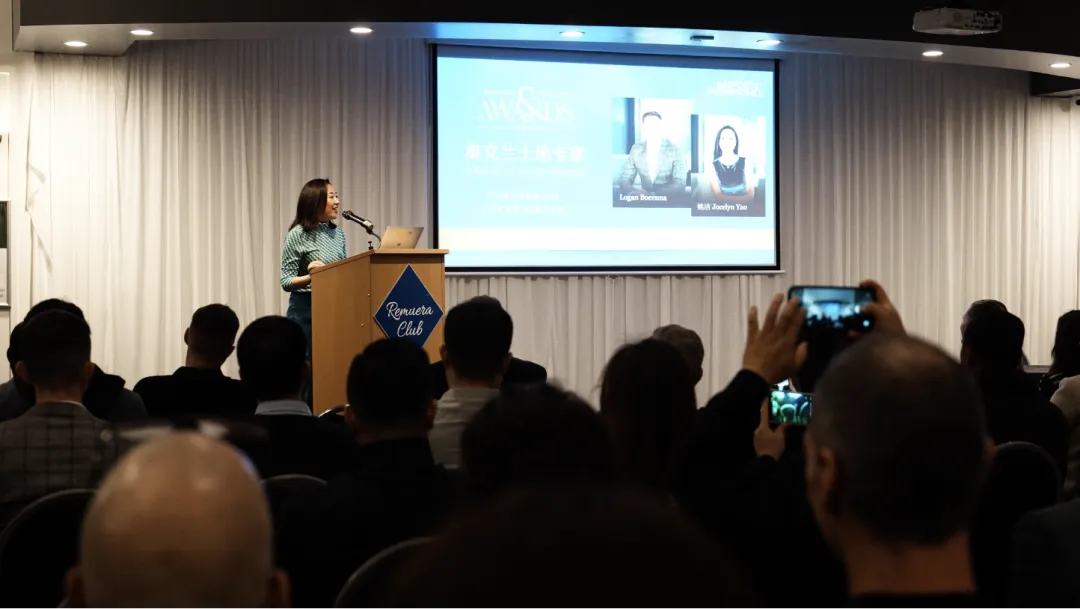
This was also the central theme of a recent industry session jointly hosted by Barfoot & Thompson and Property Development Solutions (PDS). Speakers from development, sales and project consultancy offered different perspectives, but all reached the same conclusion: truly successful developments begin with an understanding of the market and buyers.
Developers buy opportunities, not land
PDS director and adviser Dan Oliver shared a memorable observation: “Developers don’t buy land. They’re buying an opportunity.” In his view, the true value of a site lies not simply in how many homes can be built on it, but in whether it can ultimately become a commercially viable development that meets market demand.
Before construction begins, developers therefore need to assess planning approvals, construction costs and financing terms, but more importantly, answer several key questions: Does the product meet market demand? Who are the target buyers? After all risks are considered, does the project still offer an attractive commercial return?
Oliver said that, particularly following the market volatility of recent years, comprehensive feasibility analysis, rigorous financial modelling and ongoing stress testing have become essential parts of development. But he also stressed that feasibility analysis is about more than calculating costs. Even a well-planned project with smooth construction can struggle to achieve the desired sales results if the finished product does not match market demand.
The question developers should really be asking
Steve Maserow, manager of Barfoot & Thompson's Howick branch, has 35 years of property experience. He believes developers often focus heavily on planning rules, development density and construction efficiency, while overlooking the most important question: “What kind of homes do people actually want to buy?” Rather than continually asking how many more homes a site can accommodate, it is more important to consider the living experience buyers actually need.
Today's homebuyers have more choice than they did a few years ago. They compare more than price or floor area, considering lifestyle, spatial design, the neighbourhood and the experience of living there over the coming decades. A truly successful development therefore goes beyond simply increasing density to create a community that genuinely appeals to its target buyers.
Lessons from a Takapuna project
Jocelyn Yao from Barfoot & Thompson's Howick branch shared a high-end residential project in Takapuna that illustrated this point.
The planning provisions would have allowed the development team to increase density further and build more homes. However, market research revealed that the most active local buyers were not first-home buyers, but high-net-worth clients seeking a high-quality lifestyle and looking to downsize.
The team therefore chose to create more spacious homes with lifts, high-specification finishes and low maintenance costs, rather than pursuing additional dwellings. The project ultimately met its target buyers' needs precisely and achieved excellent sales results.
Successful development begins with understanding buyers
The session delivered a clear message: every stage, from planning, design and finance through construction to sales, requires collaboration between specialist teams. Property professionals are also becoming involved earlier in development, providing real market insights to inform product positioning, design direction, pricing strategy and eventual sales performance.
Major changes are coming to the building consent system,
are you ready?
While this event focused on creating developments that better meet market demand, PDS's next industry session will turn to a critical stage affecting every development: building consent approval.
With Building Consent Approvals Ltd (BCAL) officially becoming New Zealand's first nationwide, independently accredited Building Consent Authority (BCA) this year, the country's building consent system is undergoing a landmark change. How will this reform affect future development processes? Could it shorten approval times and reduce compliance costs? What new opportunities might it bring for developers, builders and the wider industry?
On 30 July, PDS has invited Ian McCauley from BCAL Building Regulatory Advisory to explain BCAL's establishment in depth and discuss how an independent Building Consent Authority will change New Zealand's building consent system.