
Why does New Zealand still worry about power shortages despite its abundant renewable energy? The Energy Minister explains
New Zealand's energy debate is often reduced to a choice between investing more in large renewable energy projects and continuing to rely on gas and coal. Yet this framing is too narrow.
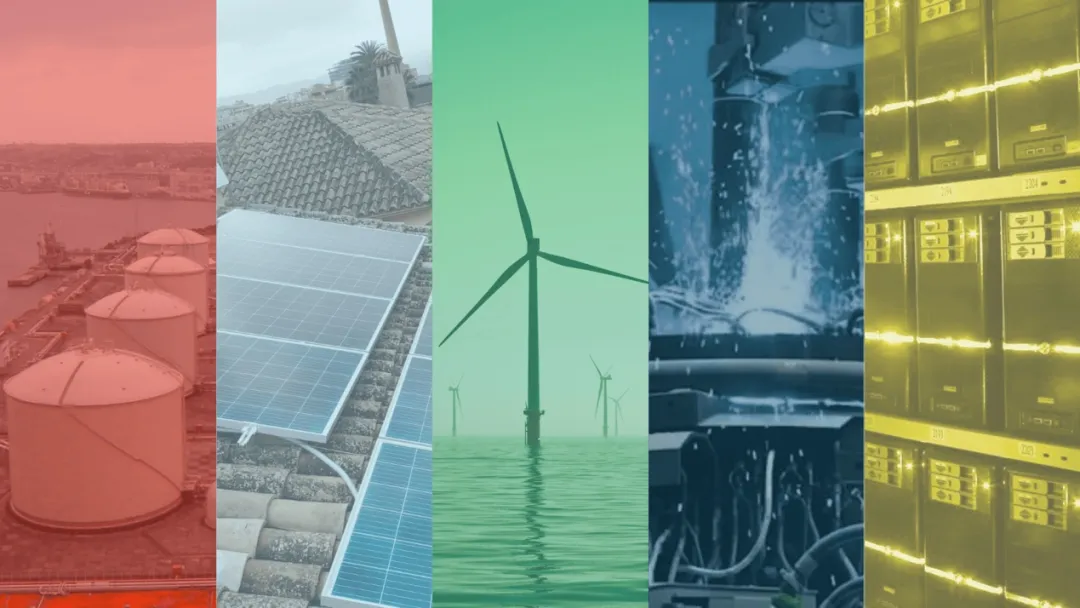
New Zealand's energy debate is often reduced to a choice between investing more in large renewable energy projects and continuing to rely on gas and coal. Yet this framing is too narrow.
The deeper issue lies in the system itself. New Zealand will need more electricity, but existing market mechanisms, transmission infrastructure and regulations make it unnecessarily difficult for new private businesses to enter the energy supply market.
Speaking at a recent event, Energy Minister Hon Simeon Brown said the Government's goal was an energy system with ample, affordable and reliable supply to support economic growth. He noted that although the electricity and gas industries directly contribute only about 2% of GDP, they underpin the entire New Zealand economy.
That is the crux of the issue. Energy is more than an operating cost. It determines whether manufacturers can expand production, whether data centres are willing to invest, whether transport can be electrified and whether New Zealand can remain internationally competitive.
Electricity demand will keep growing
As transport, industrial production and heating progressively move away from fossil fuels, New Zealand's electricity demand will continue to rise. Population growth, housing construction, digital infrastructure and the development of artificial intelligence will drive demand higher still.
The Commerce Commission believes the overall direction is clear: New Zealand is moving towards a more electrified economy powered by renewable energy wherever possible. Future scenarios published by national grid operator Transpower also project substantial growth in electricity demand, requiring corresponding increases in investment in generation, storage and grid infrastructure.
New Zealand faces an inherent structural challenge, however: a large land area and a small population. Its land area is comparable to that of the United Kingdom and Japan, but the cost of infrastructure must be shared among far fewer people.
At the event, MultiMarketing CEO Patrick English described this as one of New Zealand's most significant structural challenges. The same issue affects banking, supermarkets and energy: a small market often means a few large businesses dominate, barriers to entry are high and competitive pressure is insufficient.
In electricity, this is most evident in the four major integrated generators and retailers, or gentailers: Contact Energy, Genesis, Mercury and Meridian. All four operate both generation and retail businesses.
Gentailers are commercial businesses that need to deliver returns to shareholders, which is entirely reasonable. The real issue is that the existing market structure may allow shareholder interests to dominate while consumers have too little choice.
As English put it, New Zealand's current situation is somewhat like allowing “the fox to look after the chicken coop”. At industry conferences, large energy companies frequently discuss creating shareholder value, while consumer interests, energy affordability and market entry for new competitors receive far less attention.
The question is not whether these companies should make a profit. It is whether the market is designed to allow them to succeed commercially while also benefiting consumers and leaving room for others to compete fairly.
Creating a truly level playing field
New Zealand has no shortage of entrepreneurs and investors willing to fund solar, wind, geothermal and battery energy storage system (BESS) projects. Many businesses can raise capital, procure proven technology and complete construction faster than traditional large infrastructure projects.
What they lack is a level playing field.
Transpower operates the national transmission network, while Vector operates most of Auckland's distribution network, with local distribution businesses performing the same role elsewhere. These are natural monopolies and must therefore be regulated. Yet their connection policies, network upgrade requirements, charging mechanisms and investment arrangements often directly determine whether an independent energy project can proceed.
The problem therefore extends beyond Transpower or Vector to the entire system: access to critical infrastructure remains slow, expensive and uncertain.
Developers may already have land, finance, equipment and customer demand, yet still be held up by lengthy connection approvals or required to fund major grid upgrades that will also benefit users connecting later.
The Electricity Authority calls this the “last straw” problem: the first project to trigger a network upgrade faces such high costs that the investment cannot proceed.
The Electricity Authority is currently consulting on reforms to address this through fairer sharing of network upgrade costs, recognition of the value distributed generation brings to the grid, and measures to prevent discriminatory connection charges. These are welcome directions, but the greater priority is to move quickly from consultation to implementation.
A regulator with powers but too little influence
At the event, Patrick English put a direct question to the Minister: if private investors are ready to help close New Zealand's future energy gap, what will the Government do to ensure they can genuinely compete?
Minister Brown acknowledged that major market participants have indeed created high barriers to entry.
More notably, he described the Electricity Authority's past performance as “extremely weak”, saying it had failed to make full use of its regulatory tools to promote competition.
That is a significant assessment. The Electricity Authority does have regulatory powers, but for a long time it has appeared more adept at maintaining the existing market order than actively encouraging new entrants.
For smaller energy developers, the complex regulatory system can sometimes seem more focused on protecting large incumbents than consumer interests.
The Electricity Authority has now introduced new non-discrimination obligations requiring the four major gentailers, from 1 July 2026, to offer electricity hedge contracts to other market participants on fair and consistent terms, without favouring their own retail businesses.
This is a meaningful reform. It also signals the regulator's recognition that the previous market structure did not establish sufficient competition or market confidence.
But the Electricity Authority's future role should extend beyond market oversight.
It should actively encourage new generation projects, storage systems, flexible electricity use, microgrids and local energy markets.
The Commerce Commission has likewise identified greater diversity in energy supply sources, ownership structures and grid-edge investment as essential to improving the resilience of New Zealand's energy system, lowering costs and promoting competition.
Geothermal energy is the strongest foundation for New Zealand's long-term energy strategy
New Zealand cannot solve its energy problems through a single megaproject, nor should it base its long-term energy strategy on continued imports of coal, natural gas or liquefied natural gas.
Hydropower remains an important pillar of New Zealand's energy system, but is vulnerable to low inflows in dry years. Wind and solar generation costs continue to fall, making them increasingly competitive, but their output remains dependent on weather and the day–night cycle. Battery storage can smooth these fluctuations, storing electricity for release at peak times and easing pressure on the grid. However, the vast majority of current battery systems cannot address nationwide electricity shortages lasting weeks or even months.
Geothermal energy is different.
It can deliver a continuous, stable supply of low-emissions renewable electricity regardless of rainfall, wind or sunshine. This makes it New Zealand's most advantageous and reliable source of renewable baseload power at present.
Geothermal resources are not unlimited, of course. Known high-temperature resources are concentrated mainly in the central North Island, and their development must carefully address environmental impacts, subsurface resource risks and local community interests.
Even so, geothermal energy has considerable growth potential. In particular, as deep geothermal and supercritical geothermal technologies mature, the range of resources available for development could expand further.
The Government's recently released updated geothermal development strategy already recognises this advantage as a national strategic resource and proposes support for further investment, technological innovation and resource exploration. This is undoubtedly a good start.
In New Zealand's long-term energy planning, geothermal should therefore be a central pillar of the system, working alongside wind, solar photovoltaics, hydro, demand-side management and battery storage to create a more robust, resilient energy mix, rather than relying on any single technology.
LNG can provide insurance, but should not be the end goal
To address possible electricity shortages in dry years, the Government has proposed liquefied natural gas (LNG) import facilities as an emergency safeguard.
Minister Brown said New Zealand could face an electricity shortfall of about 3 terawatt-hours (TWh) over three months in a future dry year. The Huntly coal-fired power station can currently cover only about half of that at most, leaving a substantial supply gap.
The Government considers LNG the only relatively low-cost solution that can be operational before 2028. Imported gas should therefore be seen as a transitional energy safeguard, rather than a replacement for renewable energy development.
There is a practical basis for this assessment.
Businesses cannot maintain normal operations on the strength of renewable projects that may be built at some future date. New Zealand does need to address security of energy supply in the short term.
But LNG, a greater share of coal-fired generation and renewed expansion of gas exploration should not become long-term substitutes for energy system reform.
These measures would leave New Zealand exposed to international fuel price volatility, geopolitical risks and long-term carbon emissions pressures.
Backup fuels may be indispensable for a time, but they cannot deliver true energy independence.
A greater concern is that temporary emergency measures could become a lasting dependency, weakening the impetus for geothermal development, storage investment, distributed energy and reforms to market competition.
Moving from centralised control to distributed development
New Zealand does not need to choose between the national grid and private innovation.
It needs both to develop in parallel.
Large renewable projects and transmission network upgrades will remain important components of the future energy system.
At the same time, thousands of smaller investments, including industrial rooftop solar, local distributed generation, battery storage, microgrids and flexible electricity use, can also add generation capacity, reduce peak loads and defer some spending on network expansion.
Private businesses are ready to participate.
What they need is:
-
More transparent connection charges;
-
More reasonable and predictable approval timeframes;
-
Full recognition of the value of distributed energy;
-
And sufficient institutional safeguards to ensure incumbent large generators, retailers and network operators cannot use their market position to obstruct fair competition.
Minister Brown is right to say there is no single solution to the energy challenge.
Dry-year supply security, market structure reform, transmission investment, distribution charging arrangements and new generation capacity must all be advanced in a coordinated way.
But there is really one simple question that tests whether an energy market is healthy:
Can a capable independent business successfully develop and connect a commercially viable energy project without facing unfair treatment because of incumbent participants' ownership advantages or market dominance?
If the answer is no, New Zealand still cannot claim to have a truly competitive energy market.
New Zealand's future energy system should rely more heavily on renewables, be more distributed and be more open to private investment.
Geothermal can provide a stable, reliable foundation; hydro, wind and solar can deliver scale and diversity; battery storage and demand-side flexibility can balance the system; and thermal generation can provide short-term security, but should not define New Zealand's energy future.
The Government's most important task is not to decide who builds every energy project.
What matters is establishing fair, transparent market rules, ensuring open access to infrastructure and giving regulators sufficient power and willingness to act so they genuinely uphold fair competition.
Without this, energy will increasingly become a bottleneck constraining New Zealand's economic growth.
If these reforms can be achieved, however, New Zealand's entrepreneurs and investors are fully capable of jointly building a more economical, reliable and sustainable electricity system, providing the energy security households and businesses will urgently need in the future.