
Plenty of listings and a construction recovery, so why are homes still not selling? New Zealand’s property chains are grinding to a halt
As spring begins, New Zealand’s housing market has yet to show a clear recovery.
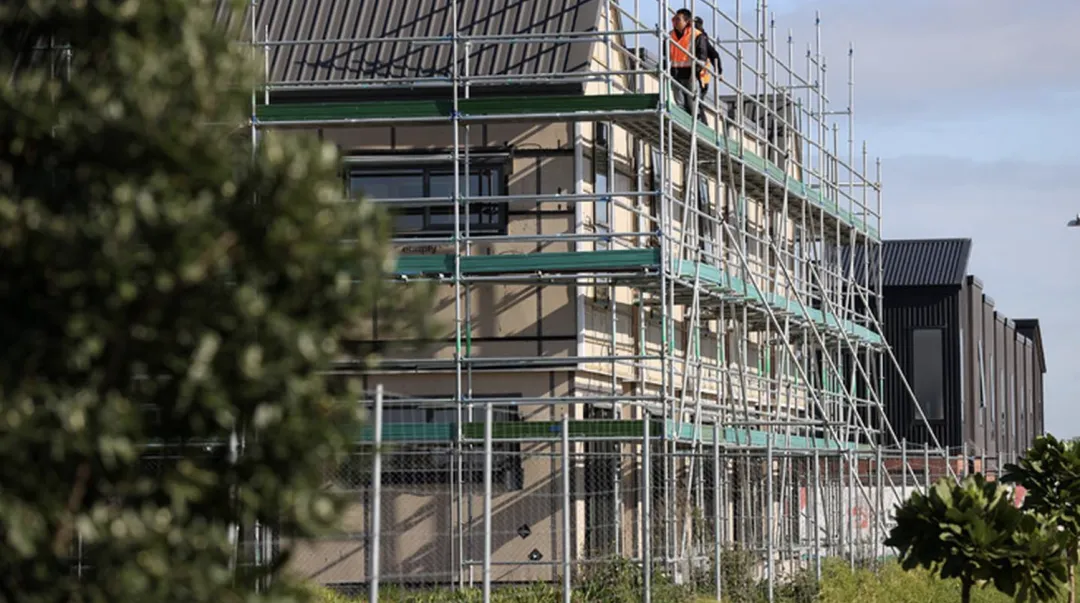
As spring begins, New Zealand’s housing market has yet to show a clear recovery.
The latest figures from Cotality show that nationwide residential sales in August fell nearly 12% year on year, marking the eighth consecutive monthly decline this year. Apart from 2022, this was also the lowest sales volume for August since 2011.
However, buyers have not disappeared entirely: more than 89,000 homes still changed hands over the past 12 months. Both buyers and sellers have clearly become more cautious. An uncertain economic outlook, weaker job security, rising mortgage rates and a wait-and-see attitude towards policy as the election approaches are all extending the time buyers take to make decisions.
More notably, there is currently no shortage of homes on the market, construction activity is beginning to recover, and some banks are even offering more attractive fixed mortgage products.
With homes available and construction recovering, why are sales volumes still falling month after month?
The answer may lie with homeowners moving from one property to another, who previously underpinned a large share of property transactions.
When homeowners stay put, more than a single transaction stalls
Cotality chief economist Kelvin Davidson believes a key reason for slowing sales is that owner-occupiers are more inclined than usual to remain in their current homes.
When listings are scarce, homeowners may hold off moving because they cannot find a suitable next home. But with plenty of listings to choose from now, the main constraint has shifted from a lack of options to concerns about the economy, incomes, house prices and interest rates.
First-home buyers usually only need to decide whether to buy, whereas households moving home must manage a sale and a purchase at the same time. They need to assess how much their current home could sell for, whether the next home is worth buying, whether the transactions can line up smoothly, and whether the household can afford the additional borrowing.
Buying before selling may mean taking on bridging finance or the pressure of owning both homes at once. Selling before buying, meanwhile, may leave them temporarily without a home or facing a prolonged search for a suitable property.
Price adjustments also create a psychological barrier. Although their next home may also have fallen in price, many owners still use past valuations or their purchase price as a reference point. When their current home cannot fetch the price they expect, they prefer to delay selling.
When homeowners put their moving plans on hold, the impact extends beyond a single property. A first-home buyer might purchase a home, its former owner then buy a larger family home, and that seller subsequently downsize or move to another region, potentially creating a chain of several transactions.
If any link stalls, the entire chain can break.
A two-year rate of 5.29% does not mean mortgage rates are falling across the board
Interest rates remain a major reason homeowners are reluctant to move.
Westpac recently adjusted all its fixed mortgage rates, raising most terms by around 0.20 percentage points while cutting its two-year special by 0.16 percentage points to 5.29%. Below the rates offered by its main competitors, the two-year rate has become a key product in the bank’s bid to win mortgage customers.
Viewed in isolation, 5.29% might look like a fresh signal of falling rates. But Westpac has not cut mortgage rates across the board: it has offered a discount only on the two-year term while raising rates for most other terms.
The bank also raised some term deposit rates for terms of a year or longer by 0.10 to 0.25 percentage points, while leaving its two-year term deposit rate at 4.30%. Higher deposit rates indicate that the bank’s funding costs remain elevated.
This adjustment therefore looks more like targeted product pricing than a return to a downward cycle in financing costs.
Challenger banks, particularly some Chinese-owned banks, may still offer lower rates. Pricing at banks such as SBS and TSB may also not move entirely in step with the major banks. But for households moving home, the question is not simply whether they can find the lowest rate on the market, but whether their repayment costs will remain stable over the coming years.
Moving home often means borrowing more. Even if a two-year rate of 5.29% eases the immediate pressure, borrowers still need to consider the cost of refixing when that term ends. A single special rate may encourage customers to enquire, but it may not be enough to restore households’ confidence in their ability to meet repayments over the long term.
The economy is not contracting, but it is not strong enough to encourage households to take risks
New Zealand’s GDP grew 0.2% in the second quarter, avoiding another economic contraction. But the increase remained modest, indicating that the broader economy lacks strong momentum.
The economy is neither weak enough to give people confidence that interest rates will soon fall sharply, nor strong enough to quickly improve job security and household income expectations.
Modest GDP growth and spare capacity in the economy should, in theory, help inflation ease over the medium term. However, fuel prices are rising again and other economic indicators have improved, leaving uncertainty around the next adjustment to the Official Cash Rate.
For homeowners considering a move, an economy that is neither deteriorating further nor clearly strengthening is more likely to prolong the wait-and-see period.
If households were confident that interest rates would keep falling, they might be willing to buy sooner. If they were confident that the economy and employment were about to recover strongly, they might also feel more comfortable taking on additional borrowing. Neither certainty exists at present, making waiting the lower-risk choice.
The construction recovery has not immediately lifted home sales
In contrast to subdued home sales, the construction industry is beginning to show signs of recovery.
While overall GDP grew 0.2% in the second quarter, construction output rose 2.7%, making it an important driver of economic growth. This was the first notable quarterly increase since the current construction downturn began.
On a seasonally adjusted basis, construction activity increased 6% in the second quarter compared with the first, while building consents were also up 7.7% from their low in the first quarter of 2024.
As of July, construction employment exceeded 192,500, up around 4900 from the start of the year, but still below the nearly 210,200 people employed in November 2023.
Master Builders says many members have stable or strong project pipelines. Canterbury is performing particularly well, with demand supported by first-home buyers, families moving from areas such as Auckland, and buyers seeking homes with low maintenance costs.
However, growth in construction does not mean the nationwide residential property market has recovered.
BNZ head of research Stephen Toplis believes a substantial share of current construction growth may be coming from hospitals, schools and other public and private infrastructure. These projects can boost construction output, orders and employment, but do not immediately translate into sales of existing homes.
Construction activity addresses projects and supply, while property transactions are waiting on household confidence. The trends can move in completely different directions for a time.
A rebound in migration has not immediately pushed up house prices either
In the year to July, New Zealand recorded a net migration gain of 20,351 people, up from a low of 9,230 in August last year and the highest level since December 2024.
However, net migration remains relatively low compared with the peaks of recent years, and there is no clear evidence yet that it is pushing up house prices or rents.
Higher migration generally supports housing demand, but the effect takes time to flow through. New migrants may initially rent or concentrate in a small number of employment centres. Without sufficient incomes and access to credit, population growth does not automatically translate into demand to buy homes.
A housing market recovery needs property chains to start moving again
The next developments to watch include not only house price movements, but also the Reserve Bank of New Zealand’s mortgage lending data for August.
Overall lending had already slowed markedly in July. Continued weakness in August would provide further evidence that falling sales are flowing through to financing. Whether banks’ refinancing business remains resilient, and whether lending to first-home buyers and homeowners moving home picks up, will also reflect underlying market demand.
At present, loan-to-value and debt-to-income restrictions do not appear to be the main factors holding the market back. The greater obstacle remains borrowers’ uncertainty about future interest rates, repayment costs and household incomes.
New Zealand’s housing market still has sources of support. Ample listings give buyers more choice; construction activity and employment are beginning to recover; net migration has rebounded from its low; and mortgage competition between banks has not disappeared.
But more listings only address the issue of choice, construction growth reflects project activity, and bank specials can only reduce costs for a particular fixed term. What really determines whether sales recover is whether households have the confidence to sell their current home, take on new borrowing and complete their next purchase.
With weak economic growth, limited job security and mortgage rates rising again, many homeowners are choosing to stay put. They still want to improve their housing situation and can find suitable properties, but they are unwilling to take on the risks of buying, selling and financing simultaneously during a period of considerable uncertainty.
Assessing whether the housing market is truly recovering requires more than looking at how low individual banks’ rates are or how much construction has grown. The more important signals are whether sales volumes can end their consecutive declines, whether mortgage lending recovers, and whether homeowners looking to move return to the market.