
An expert reveals the reality: how can builders reduce rework and delays before building inspections?
In New Zealand, a failed building inspection can mean rebooking, work stopping, subcontractors standing idle and subsequent stages being delayed, ultimately adding time, labour and communication costs.
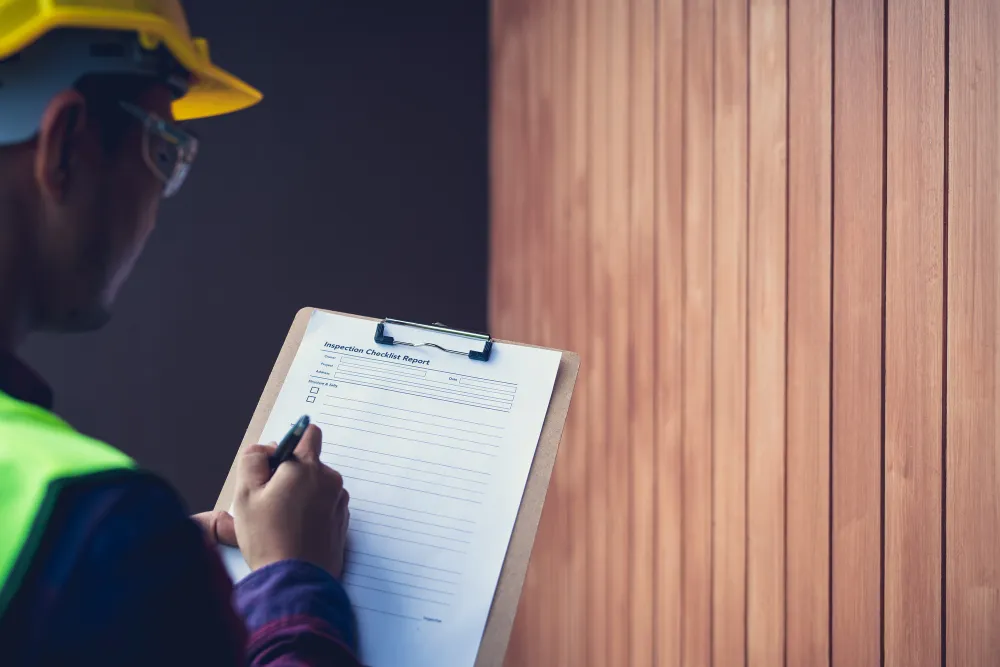
In New Zealand, a failed building inspection can mean rebooking, work stopping, subcontractors standing idle and subsequent stages being delayed, ultimately adding time, labour and communication costs.
Meanwhile, building inspections themselves are changing. Remote inspections are becoming more common, building products and systems are growing more complex, and councils are making their expectations of builders’ own quality management increasingly clear. The old approach of finishing the work and waiting for the inspector to find problems is no longer well suited to today’s projects.
Much of the work behind a truly efficient building inspection is often done before the inspector arrives.
For this article, PlaceMakers, together with the New Zealand Chinese Building Industry Association and YIJU New Zealand, has invited Jeff Fahrensohn, head of Fahrensohn Building Consultants, to share how builders can reduce rework and project delays through site self-checks, construction records and inspection preparation.
Jeff has nearly 30 years of experience in building inspections and related industry work. He previously led Auckland Council’s building inspections team for many years and has extensive practical experience in building compliance, site inspections and construction quality management.
For more practical insights into New Zealand building compliance and LBP continuing education, follow our PlaceMakers WeChat official account.
1 Do not treat building inspections as your own QA
The core purpose of a building inspection is to confirm whether work on site meets the requirements of the approved building consent, rather than to carry out quality assurance (QA) for the builder. Increasingly, councils do not want inspectors to become builders’ defect inspectors. It is not uncommon for an inspector to terminate an inspection if the site is clearly not ready.
For builders, treating a building inspection as the final quality check is actually an expensive approach.
Before booking an inspection, it is therefore best to walk through the work yourself. In particular, recurring problems within the team are worth incorporating into a simple internal quality checking process.
-
For example, are fixings often missed?
-
Do flashing details repeatedly go wrong?
-
Are service penetrations often inadequately addressed?
If the same issue has already occurred several times, you should no longer rely on the inspector to point it out. Including these recurring issues in routine checks may seem like an extra step, but it often saves time compared with rework.
If you want a more systematic approach to site QA and construction records, you can use BRANZ’s free tool, Artisan, to help the team retain project records during construction and support some types of remote inspection.
2 First, understand: what will the inspector actually look at?
Time for site inspections is limited, so inspectors cannot spend the same amount of time on every detail.
In practice, inspections tend to focus more closely on high-risk areas,such as structure, weathertightness, waterproofing and fire safety; lower-risk areas may be checked on a sampling basis.
Before booking an inspection, builders can consider the project from another perspective: if I were the inspector, which aspects of this project would concern me most?
-
For a wet area, have the waterproofing substrate and membrane been properly prepared and installed?
-
For structural work, have any critical structural connections, reinforcing steel or fixings been missed?
-
If an area is about to be enclosed, has it been thoroughly checked now?
Often, improving inspection pass rates does not require a particularly complex system. The key is to thoroughly check all high-risk details yourself before the inspector arrives.
3 More photos do not necessarily mean better records
Photos are taken on almost every building site. But having 300 site photos on your phone and having 300 useful construction records are entirely different things.A close-up photo may clearly show how fixings have been installed, but years later, if the location cannot be identified, its value as evidence is very limited.
The priority when taking site photos is therefore not quantity, but making sure their locations can be identified later.
A very practical approach is: location first, then detail.
First take a photo that identifies the overall location, then add close-ups of the construction details. When reviewing them later, you can still establish which wall, room or construction detail they relate to.
This approach to record-keeping is particularly useful for work about to be covered up, such as:
-
Waterproofing substrates and membranes
-
Structural connections, reinforcing steel and fixings
-
Flashing and cavity details
-
Fire Stopping
-
Services and equipment within walls
For these details, photos that clearly establish the location are more valuable than simply taking a few extra shots.
4 Need to substitute a product? Confirm the requirements early
Products may need to be substituted during construction because of stock shortages, supply delays or changes in site conditions. However, similar functionality does not mean products are directly interchangeable.Some product substitutions can be handled as minor variations, while others may require a formal building consent amendment.
A simple rule of thumb on site is that if a product change requires an engineer’s review or other approval, it generally cannot be handled as a straightforward minor variation. It is advisable to confirm this in advance.
Documentation is another easily overlooked aspect. When choosing a substitute product, builders will naturally consider stock availability, price and delivery times, but they also need to confirm that the relevant technical documentation is complete. When dealing with designers, inspectors and building consent authorities (BCAs), specialist technical information carries far more weight than a general promotional brochure.
5 Minor variations are best resolved before the site inspection
If a construction change needs to go through the minor variation (MV) process, the more reliable approach is to prepare the supporting material and communicate in advance, avoiding last-minute arrangements on inspection day wherever possible.This is because inspection time is limited. If the inspector must complete the booked inspection while also spending considerable time assessing a relatively complex minor variation, the day’s inspection can easily fail to finish as planned. For a more complex variation, booking a separate inspection to assess it is often more efficient than dealing with it on the spot.
6 Remote inspections also need careful preparation
Remote inspections are becoming increasingly common and, when used well, can reduce waiting and travel time.Simply sweeping a phone camera around the site is unlikely to deliver a satisfactory remote inspection. A more reliable approach is to prepare to the same standard as an in-person site inspection, without casually cutting steps.
-
Review the building consent documents beforehand and clarify the scope and key points of the inspection
-
Clear the inspection area to ensure unobstructed views and good visibility
-
Have measuring tools ready and check that site lighting and the network connection are reliable
-
Wear a headset to minimise site noise, reduce misunderstandings and avoid repeated clarification
Remote inspections change only the way verification is carried out. The standards for assessing construction compliance remain the same, and assessments should still be based on the approved drawings and technical specifications.
A building inspection reflects more than the compliance of a particular stage of construction; it also reflects how well the whole project is managed. For today’s builders, this may be the real meaning of getting building inspections right.
Disclaimer
This article provides general industry information and views for reference only. Individual project circumstances may vary. Before making relevant decisions, readers should consider their own project circumstances and consult the appropriate professional advisers. To discuss a specific project further, visit http://fahrensohnbuildingconsultants.co.nz/。