
Revealed: national house prices have fallen about 17% over five years, yet some areas are up more than thirty per cent. Where can young New Zealanders still buy a home?
Falling national house prices do not mean prices are falling everywhere. Nor does growth against the trend in some areas mean it is easier for young people to settle there.
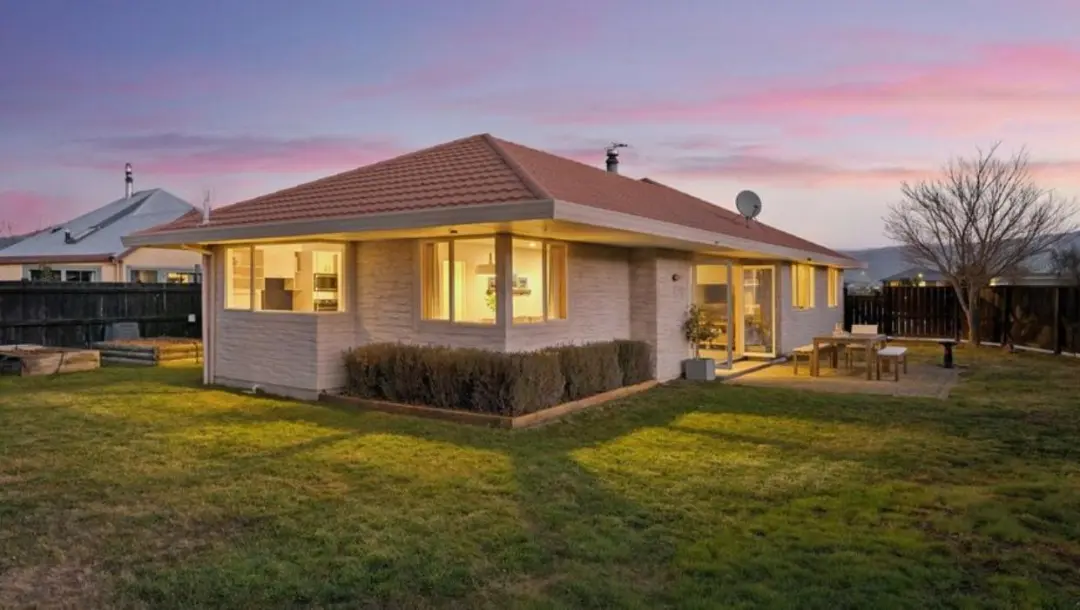
Falling national house prices do not mean prices are falling everywhere. Nor does growth against the trend in some areas mean it is easier for young people to settle there.
Two recently released housing market analyses highlight these differences: one looks back over five years to identify the areas with the strongest price performance during the national market correction; the other focuses on younger communities, examining where home ownership rates are higher.
So, are places with strong house price growth also places where young families can afford to buy and make a home?
Several South Island areas strengthen despite the national downturn
According to a Stuff report published on 18 October, analysis conducted for it by REINZ compared residential sales data for the six months to 31 August in 2026 with the same period in 2021. Over this comparison period, national house prices fell about 17%, but prices in some areas performed quite differently.
Wanaka in Otago recorded the largest increase, rising 32.2% over five years, followed closely by Cromwell, also in Otago, at 30.7%.
Both places have distinct lifestyle appeal. Wanaka is close to ski fields, with its lake and outdoor recreation attracting buyers from New Zealand and Australia. Cromwell offers lakeside living at more affordable prices than Wanaka and Queenstown.
However, the list has more to offer than tourism and holiday destinations. Christchurch and surrounding areas feature several times, with established family neighbourhoods, relatively affordable residential areas, and towns offering more land and living space all making the list.
These areas appeal for different reasons: Ilam offers sought-after school zones and larger family homes; Kaiapoi provides an option for families wanting more space while maintaining ties to Christchurch; and Hornby has a relatively accessible entry price for first-home buyers.
This shows that different local markets sit beneath the national figures. Buyers’ budgets, housing requirements and lifestyle needs may continue to support some areas through the wider correction.
Leading price growth does not mean an easy way into the market
For existing property owners, price increases over the past five years may mean greater wealth on paper. For young people yet to buy, however, the same gains may put their deposit target further out of reach.
A OneRoof report published on 16 October outlined research by Ray White economist Atom Go Tian. Using 2023 Census data and community statistical areas defined by Stats NZ, the study selected areas with a median age below 35 years and a home ownership rate of at least 66%. To compare price changes over ten years, it also required at least 30 sales in each of the twelve-month periods ending in September of 2016 and 2026.
Ultimately, 30 communities across seven regions met the criteria.
This list is best understood as an examination of younger communities with relatively high home ownership rates, rather than a ranking of places to buy for everyone under 35. It also cannot, on its own, establish that young buyers are moving from one city to another in large numbers. It can, however, help readers identify places that combine a young population with relatively high home ownership.
One notable finding is that around half the communities on the list had median sale prices below NZ$700,000, lower than the national median of NZ$770,000 cited in the report.
For families on limited budgets, these price differences often have a more direct influence on buying decisions than historical price growth.
Canterbury: a connection between the two lists
Canterbury is a region worth examining in both studies.
Several Christchurch communities, along with Kaiapoi and Allenton in Ashburton, made the top ten for five-year price performance. On the list of younger communities, Canterbury had nine of the 30 entries, the most of any region.
However, the specific communities on the two lists differ. They offer two perspectives: some established communities have recorded stronger price performance over the past five years, while other emerging or relatively affordable communities have younger populations and higher home ownership rates.
The younger communities listed include Rolleston South East, Rolleston North Central, Faringdon, Lincoln West and Halswell West, as well as Branston, Mairehau South, Malvern and Hoon Hay East.
Among them, Rolleston South East had a median age of 31.4 years, while Rolleston North Central had a home ownership rate of 81%.
Local agents quoted in the report said some newer homes in Rolleston were priced at around NZ$674,000 to NZ$767,000. Some young people who grew up locally choose to stay and buy, while buyers from Auckland and overseas are also attracted by the housing on offer and its price.
The appeal of these communities comes down to practical lifestyle choices: buying a newer home within budget, finding room for a growing family, and staying close to work or existing social connections.
Of course, newer homes and more space are only part of the buying decision. Commuting distances, transport options, schools and nearby amenities also shape the experience of living somewhere over the long term.
Wellington’s contrast: Falling prices and younger communities can coexist
While Canterbury illustrates different aspects of price performance and the development of younger communities, Wellington offers another contrast.
Stuff reported substantial falls across several Wellington areas over the five-year comparison period: Te Aro fell 28.4%, Karori 25.7%, Wainuiomata 24.1%, Johnsonville 23.3% and Tawa 20.4%.
According to OneRoof, the selected Wainuiomata communities had median sale prices of around NZ$520,000 to NZ$595,000. Local agents said buyers could get more space for their budget here than elsewhere in Wellington, for example moving from a two-bedroom home with no parking to a three-bedroom family home.
These two situations are not contradictory.
An area can experience a substantial price correction while continuing to offer relatively affordable buying options for young families.
The timeframes also need to be distinguished: the report noted that prices in the four selected Wainuiomata communities rose between 101% and 126% over ten years. An overall increase over ten years can coexist with a decline over the past five. Nor can price performance across Wainuiomata as a whole be directly equated with that of four statistical communities within it.
For first-home buyers, the more practical question is whether current sale prices, mortgage costs and housing conditions meet their family’s needs.
Only three Auckland areas qualify, and younger communities are not necessarily cheap
Only three Auckland communities made the younger communities list:
These figures show that a young population and relatively high home ownership do not necessarily mean low house prices.
Local agents quoted in the report linked the appeal of Ormiston South and Mission Heights South to their schools and housing. Some homes in these areas can accommodate multiple generations living together.
Swanson is the relatively lower-priced option among the three communities. It offers newly built homes alongside homes in established neighbourhoods, larger sections and semi-rural properties, attracting buyers who want more space while retaining access to Auckland city life.
However, a median sale price only represents the middle price of properties sold over a given period. Differences in floor area, condition, section size and location can still produce substantial price variations within a community.
Having only three Auckland areas qualify therefore does not mean other communities lack young homeowners or buying opportunities. It reflects the limited number of communities meeting this study’s criteria for age, home ownership and sales volumes.
Lower entry prices can also be found in Waikato and elsewhere
In Waikato, Nawton was the only Hamilton community to qualify, with a median sale price of NZ$682,000.
Other qualifying areas included Tuakau, at around NZ$698,000; Kihikihi near Te Awamutu, at around NZ$630,000; and Strathmore and Moananui in Tokoroa, at around NZ$341,000 and NZ$389,000 respectively.
Castlecliff in Whanganui also offers a lower entry price. The report noted that its median sale price rose from NZ$90,000 to NZ$390,000 over ten years, giving it the largest ten-year price increase of any community on the list.
The same pattern emerges again: Even after strong historical growth, current prices may remain below those in other cities. A lower entry price, meanwhile, does not mean a place will suit every family.
Buying in another region requires weighing housing and everyday life together. How much would the house price saving be, and would it come with a change in income, a longer commute or less family support? Can the area provide stable employment, along with the education and everyday services the family will need in future? These questions all influence buyers’ decisions.
Yet five communities in the Wellington region still qualified for Ray White’s younger communities study: four in Wainuiomata, Lower Hutt, and the other in Postgate, Porirua.
Buying a home ultimately means looking beyond the rankings to everyday life
The national house price correction does not obscure the strong performance of some areas, and past growth in a particular place cannot guarantee future returns. Higher home ownership rates in younger communities warrant examination, but cannot directly serve as personal home-buying advice.
For young families preparing to buy, historical price performance can provide context. Current budgets, income stability, mortgage costs and actual housing needs determine whether their choice will be sustainable.
From Wanaka’s lifestyle appeal to Canterbury’s emerging family communities and the entry prices in Wainuiomata and parts of Waikato, different places offer different answers. For buyers, however, the place truly worth finding is one that supports work, family and long-term living at a cost they can afford.