
Surprise pause in rate hikes! Reserve Bank of New Zealand holds OCR in 4–3 vote, sending NZ dollar lower
Markets widely expected a 25 basis point rise, but the Reserve Bank of New Zealand opted to hold. Households with mortgages have avoided another rate rise for now, but the single-vote margin also shows that the future path of interest rates remains far from clear.
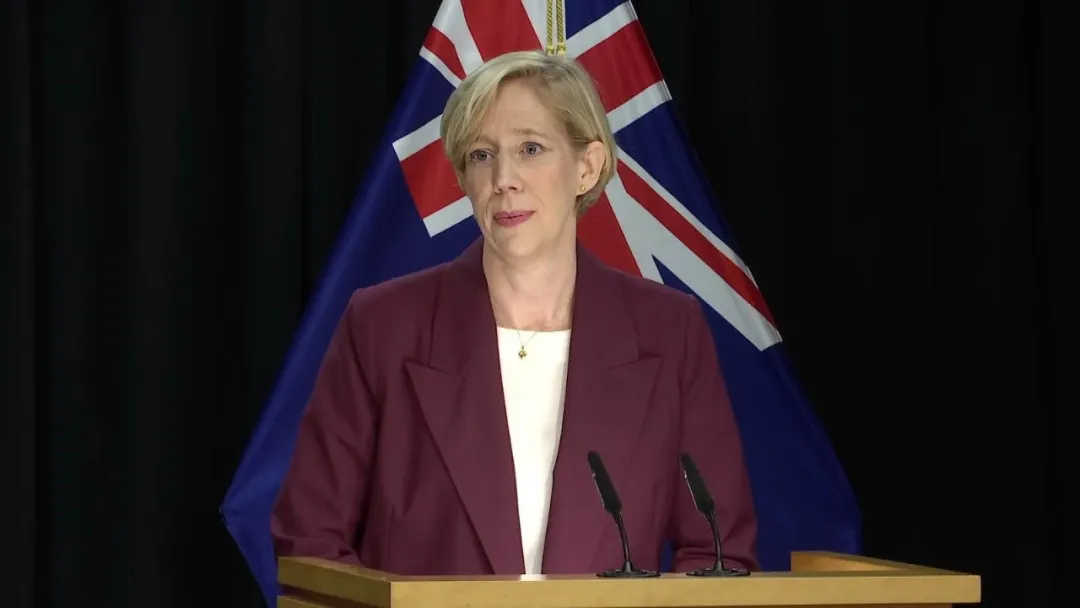
Markets widely expected a 25 basis point rise, but the Reserve Bank of New Zealand opted to hold. Households with mortgages have avoided another rate rise for now, but the single-vote margin also shows that the future path of interest rates remains far from clear.
On 28 October, the Reserve Bank of New Zealand announced it would hold the Official Cash Rate (OCR) at 2.75%, surprising economists at several major banks.
Economists at banks including ANZ, ASB, BNZ and Westpac had widely expected the Reserve Bank of New Zealand to raise the OCR by 25 basis points to 3%, delivering a third consecutive increase.
Ultimately, the Monetary Policy Committee decided to wait for now, with a narrow majority of 4 votes to hold against 3 votes to raise the rate.
Following the announcement, the New Zealand dollar and wholesale interest rates fell rapidly, reflecting the market's reassessment of the path of future rate rises.
However, the Reserve Bank of New Zealand did not declare the rate-hiking cycle over. All seven members agreed that further monetary policy tightening would probably be needed, depending on the economic outlook.
The decision bought time to assess the fragile economic recovery, but inflation-related pressure on interest rates remains.
A single-vote margin: raise rates now, or wait another six weeks?
The four members supporting a hold were Reserve Bank of New Zealand Governor Anna Breman, Carl Hansen, Rebecca Williams and Prasanna Gai.
They believed more time was needed to assess the effects of the previous two rate rises. The latest inflation reading was below expectations, wage growth was moderate and medium-term inflation expectations remained stable, suggesting that the pass-through of higher energy prices to other prices and wages remained relatively limited.
Meanwhile, the recovery in household spending and investment remained fragile. Further rate rises could place an additional burden on households and businesses already under pressure.
Paul Conway, Hayley Gourley and Karen Silk, who supported a rate rise, were more concerned about the cost of waiting.
They noted that core inflation had been above levels consistent with the 2% target midpoint for some time. If international conflicts persisted and energy, freight and shipping costs continued to rise, higher inflation could gradually become embedded in businesses' pricing behaviour.
In their view, raising rates by 25 basis points now would help guard against persistent inflationary pressure and could avert the need for larger increases later.
Both sides broadly agreed on the overall inflation outlook. Their differences centred on how to weigh the risks and when to act: raising rates now could damage the recovery, while waiting could make inflation harder to control.
Inflation has eased, so why is there still cause for concern?
New Zealand's annual Consumers Price Index (CPI) inflation rate fell to 3.7% in the third quarter, below the second quarter's 4.1% and the Reserve Bank of New Zealand's earlier forecast.
But a decline in headline inflation does not mean price pressures have eased across the board.
The Reserve Bank of New Zealand noted that core inflation measures had risen close to the upper end of the 1% to 3% target range, while price increases had become more widespread. By weight, 56% of items in the CPI basket rose by more than 3% in the year to September.
External cost pressures have not disappeared either. Continued disruption to global energy markets has pushed fuel prices higher, while the New Zealand dollar's trade-weighted exchange rate has fallen by around 3% since early September, increasing the local-currency cost of imported goods.
The Reserve Bank of New Zealand expects annual inflation could rise again to 4.4% in the fourth quarter, mainly reflecting cost pressures indicated by current fuel futures prices. However, substantial volatility in international crude oil and refined fuel prices leaves considerable uncertainty around this forecast.
The Reserve Bank of New Zealand is particularly focused on whether persistently high energy and transport costs will further influence business pricing, wage negotiations and public expectations of future prices. If these behaviours change, inflation could become more persistent.
For now, wage growth and medium-term inflation expectations remain relatively stable, providing room to wait. But if that changes, the case for further rate rises will strengthen.
Weak spending is limiting businesses' ability to raise prices
Another important reality underlies this pause: New Zealand's economy is recovering, but the experience varies considerably across regions, industries and households.
Higher commodity prices, strong demand for goods exports and rising international visitor numbers have supported export-related industries.
However, businesses serving domestic consumers still face weak demand. Household spending growth is limited, employment is recovering slowly and house prices continue to fall, weighing on consumer confidence and spending.
The Reserve Bank of New Zealand estimates the overall household saving rate at 3.7%, above the average of around 1% over the past decade. Business investment is also focused more on improving efficiency and reducing costs, while hiring intentions remain weak.
Stronger performance in the export sector does not mean the recovery has fully flowed through to employment, incomes and household spending.
Weak demand is also limiting businesses' ability to pass cost increases on to consumers to some extent. The Reserve Bank of New Zealand noted that the extent of cost pass-through depends on economic conditions, and persistently weak demand could restrain it.
The four members supporting a hold also considered whether businesses were using rising costs as an opportunity to expand profit margins. They believed there was no evidence of this so far.
This provided a reason to keep watching. However, if high costs persist, how much pressure businesses can absorb themselves, and whether they will need to raise prices further, remain questions for the Reserve Bank of New Zealand to monitor.
NZ dollar and swap rates fall as markets reprice
Financial markets reacted swiftly to the announcement of the unexpected pause.
According to reports immediately after the decision, the New Zealand dollar briefly fell to around 0.5607 against the US dollar, equivalent to 56.07 US cents for NZ$1. The two-year swap rate fell 12 basis points to 3.99%.
With markets having widely expected an increase, the decision to hold the OCR prompted traders to revise their assessments of the future interest rate path.
This also illustrates a complex relationship facing the Reserve Bank of New Zealand: holding rates can ease pressure from further increases in domestic borrowing costs, but a persistently weaker NZ dollar could raise import costs, creating fresh challenges for controlling inflation.
Whether these market moves persist will depend on subsequent economic data and market expectations for the December decision.
Does an unchanged OCR mean mortgage rates will fall?
For households with mortgages, today's decision at least means the anticipated OCR increase did not happen.
But this does not directly imply that fixed mortgage rates will fall immediately, or that banks will leave their advertised rates unchanged.
Floating mortgage rates are usually more closely linked to the OCR. Fixed mortgage rates are also influenced by wholesale funding costs, swap rates, overseas interest rates and market expectations of the future OCR path.
The decline in the two-year swap rate could ease some pricing pressure on fixed mortgages. However, whether banks adjust their rates, and by how much, still depends on several factors, including funding costs and market competition.
Before this decision was announced, some mortgage advisers reported that borrowers had already locked in rates early or split their loans across different fixed terms to reduce uncertainty about future interest rate changes.
However, these approaches each come with costs and conditions. Breaking a fixed term early may incur fees, while fixing for longer can affect the flexibility to adjust a loan in future.
For households approaching refixing, actual rate offers, repayment affordability and future funding needs remain important considerations when assessing mortgage arrangements.
Today's outcome again shows that interest rate decisions can surprise even when economists' expectations are closely aligned. There are clear limitations to judging mortgage rate trends over the coming years from a single OCR announcement.
A pause before the election: how are political parties interpreting it?
With just 10 days until the 7 November general election, the unexpected pause quickly entered the campaign debate.
National Party finance spokesperson Nicola Willis said in a statement that holding the OCR at 2.75% showed National's economic plan was working. She emphasised that the current OCR was half the 5.5% peak reached under the previous Labour government, and warned that a change of government could reverse the gains made.
However, this is National's political interpretation of the interest rate decision. The OCR is set by the Reserve Bank of New Zealand's Monetary Policy Committee, and its path is influenced by factors including inflation, domestic demand, international energy prices and global financial conditions. A single decision to hold rates is insufficient to attribute the outcome to one party's policies.
The minutes published by the Reserve Bank of New Zealand show that members focused on inflation pass-through, domestic demand, global risks and policy timing. The available material also provides insufficient support for the view that rate rises were paused for the election.
The 4–3 vote reveals substantial differences in economic assessments themselves. Some members were more concerned about persistent inflation, while others were more concerned about the recovery stalling.
Particularly noteworthy is that all seven members agreed further monetary policy tightening would probably be needed, with action dependent on the economic outlook. This means today's pause does not signal that interest rate pressure has passed.
YIJU's perspective — a rate pause does not signal a housing market turning point
What deserves attention in this pause is more than the 2.75% OCR: it is the dilemma facing New Zealand's economy, with inflationary pressure still unresolved and the economic recovery still fragile.
For the property and construction sectors, changes in interest rate expectations matter, but a recovery in market confidence still requires support from employment, incomes, financing conditions and actual demand.
Three signals warrant continued attention:
First, whether mortgage rates can stabilise. An unchanged OCR does not guarantee that banks' fixed mortgage rates will fall. Wholesale funding costs, bank competition and expectations of future interest rates will continue to influence the rates borrowers are ultimately offered.
Second, whether property demand can continue to improve. Whether buyers return to the market, sales volumes recover and developers are willing to launch new projects provides a better indication of actual market conditions than a single interest rate decision. The Reserve Bank of New Zealand has noted early signs of a recovery in residential investment, including in Auckland, but subsequent data is needed to establish whether it can continue.
Third, whether construction costs and financing pressures can ease. A weaker NZ dollar could increase the cost of some imported building materials and equipment, with the actual impact depending on purchasing contracts, inventories and supplier pricing. Continued pressure on financing costs could also affect project margins and development feasibility.
The Reserve Bank of New Zealand's next interest rate decision will be announced on 9 December. New economic forecasts and policy assessments will then provide further guidance for the market.
YIJU believes interest rate decisions influence market expectations, while the extent of the industry's recovery ultimately depends on sustained demand, affordable financing and projects' ability to generate stable cash flow.
For the property and construction sectors, a better basis for decisions than betting on the next rate rise or cut is actual financing offers, progress on sales and receipt of payments, and changes in project costs.