
Protecting the environment: New Zealand government’s major move could cut these vehicle prices by up to NZ$8000
The New Zealand government has announced another major move to protect the environment and reduce pollution. Yesterday it announced plans for a new vehicle tariff system, with reductions for electric, hybrid and low-emission
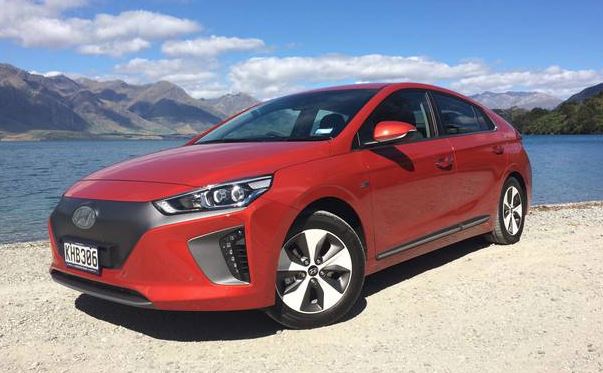
The New Zealand government has announced another major move to protect the environment and reduce pollution.
The government announced yesterday that it would introduce a new vehicle tariff system, reducing tariffs on electric, hybrid and low-emission vehicles.
A brand-new Hyundai Ioniq electric vehicle would cost NZ$8000 less than it does now;
A brand-new Rav4 petrol-electric hybrid would cost NZ$2800 less than it does now;
Tariffs on high-emission off-road vehicles would rise accordingly. For example, a Ford Ranger four-door ute would cost NZ$2750 more than it does now.
Public consultation on the new tariff policy opened yesterday and closes on 20 August. The policy is expected to take effect in 2021.
The tariffs would affect only new vehicles and used vehicles newly imported into New Zealand. Vehicles already registered in New Zealand would be unaffected.
Supporters welcomed the policy, saying New Zealand lacked incentives for alternative-energy vehicles.
Associate Transport Minister Julie Anne Genter
New Zealand Associate Transport Minister Julie Anne Genter said the policy would encourage more New Zealanders to buy cleaner vehicles for financial reasons.
{Ad}
How prices of common vehicles would change under the new policy
People on low incomes are usually the most sensitive to prices. How would the new tariffs change the prices of the vehicles they commonly buy?
Media compared the prices of the 10 imported used vehicle models most popular with low-income households in New Zealand. Under the new tariff policy, 7 would become cheaper, 2 would become more expensive and 1 would stay the same price.
The cleanest and least environmentally friendly cars
Most cars with the highest carbon dioxide emissions are luxury brands, while the cleanest are mostly European cars and small Japanese and Korean cars.
The most polluting cars are those of luxury brand Rolls-Royce, with average carbon dioxide emissions as high as 326.1 g per kilometre, well above the New Zealand average of 180.7 g/km.
The cleanest brand, France’s Citroën, has average emissions of just 122.9 g/km, less than half those of Rolls-Royce.
This does not mean Rolls-Royce’s technology is inadequate; as luxury cars, its vehicles have large-displacement engines.
All-electric Tesla cars have zero emissions, but greenhouse gases are generated during battery production and electricity generation. This is why some people question whether electric vehicles are really clean, arguing that they merely shift pollution from vehicle exhausts to electricity production.
Still, with petrol prices remaining high, switching to a car with a smaller engine makes financial sense!